
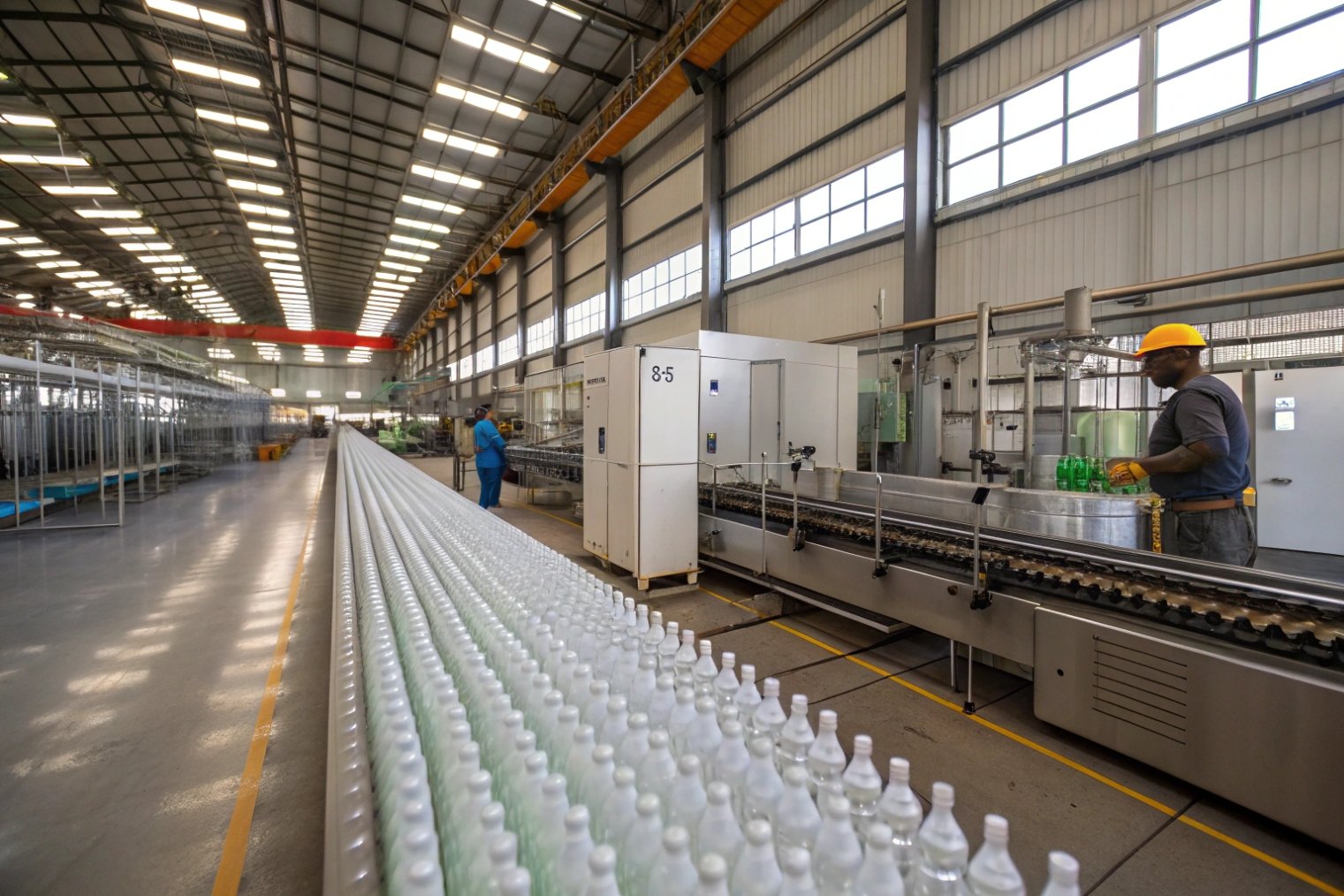
Frosted bottles look simple on the shelf, but behind that soft matte surface sit chemicals, coatings, and QC steps that can make or break a premium launch.
The frosted finish comes from either chemically etching the glass surface or adding a frosted coating by spray; the choice affects appearance, durability, label behavior, cost, and even how your brand feels in hand.

Once we understand how each frosting method changes the glass surface, it becomes easier to choose the right process for your brand, set realistic budgets, and write a spec that your supplier can actually deliver every time.
What are the differences between acid etching and spray frosting?
Many buyers only say “I want frosted,” and leave the rest to the factory. That is how you end up with one batch that looks like satin and the next that looks like painted plastic.
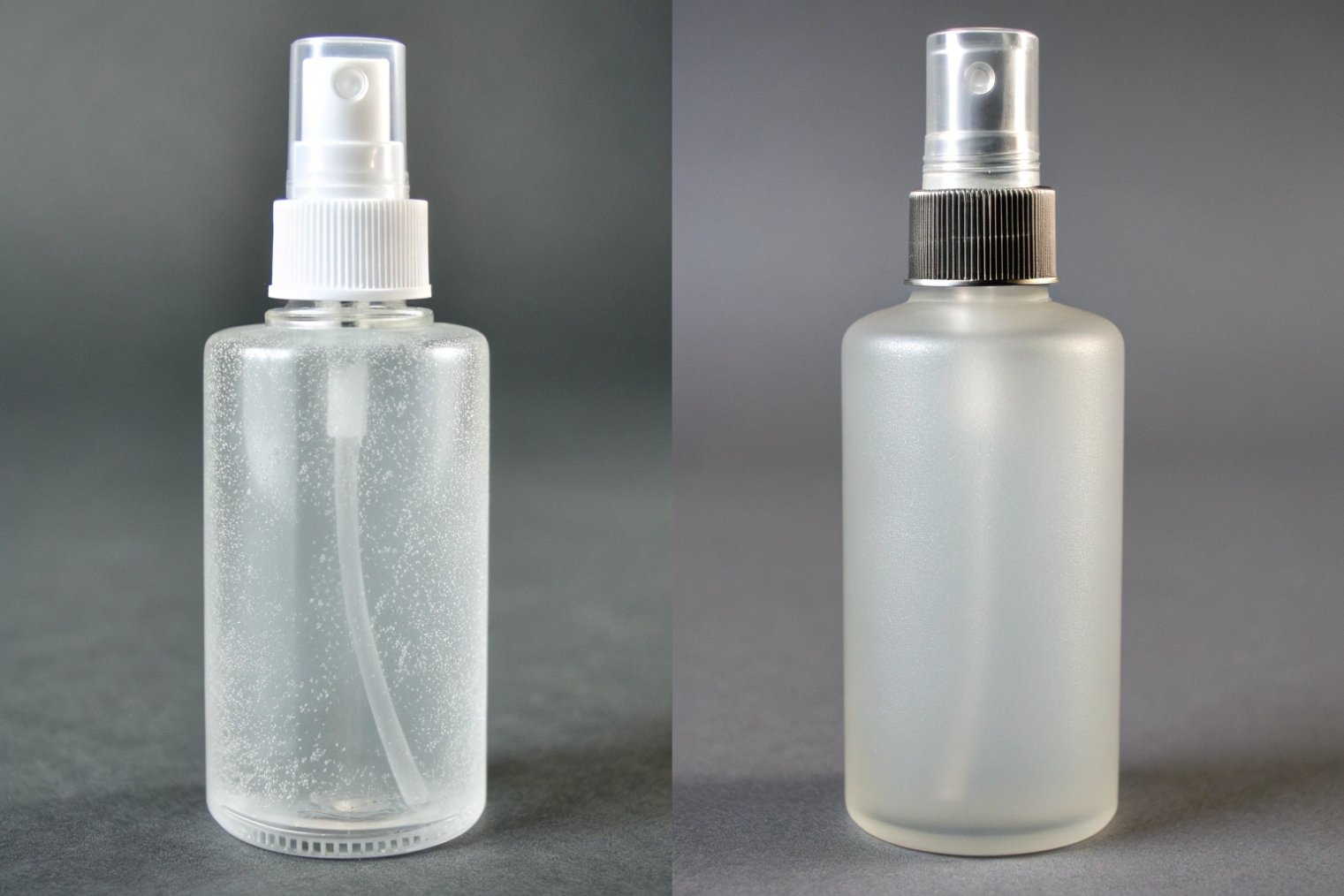
Acid etching removes a thin layer of glass and builds a permanent satin surface, while spray frosting adds a cured coating that can mimic the look but behaves more like paint on the glass.
How each process works on the line
Acid etching is a chemical process. After forming and annealing, bottles are cleaned and then sent through an etching line. A fluoride-based acid solution attacks the outer skin of the glass. It dissolves a microscopic layer and leaves behind a very fine, uniform roughness—this is the classic acid etching of glass 1. {#fnref1} After the set time, bottles are rinsed, neutralized, and washed again. The result is a satin, translucent surface that is part of the glass itself.
Because fluoride-based systems are hazardous, any project using etching should require documented hydrofluoric acid handling protocols 2 as part of supplier qualification—not just a pretty sample. {#fnref2}
Spray frosting is a coating process. Bottles pass through a washing and drying section first. Then spray guns apply a liquid coating that contains fine matting particles. The coating is usually water-based or solvent-based. Bottles then go through an oven to cure the layer. Once cured, the frosted look comes from the coating, not from the glass surface. If you need performance targets (alcohol resistance, film thickness, cure windows), reference a spec-style example like spray-applied glass bottle coatings 3. {#fnref3}
Here is a simple comparison:
| Aspect | Acid etching | Spray frosting |
|---|---|---|
| Principle | Chemically dissolves glass surface | Adds a frosted coating layer |
| Look | Very smooth, satin, “premium” | Can be satin or heavy matte, even colored |
| Thickness | Microns of glass removed | Coating thickness controls effect |
| Feel | Cool, “glass-like” touch | Slightly softer, sometimes more plastic-like |
| Main use | High-end spirits, perfume, cosmetics | Color effects, gradients, smaller runs |
In practice, many high-end brands still choose acid etching for flagship SKUs because the effect is hard to copy with cheap coatings. Spray frosting wins when the project needs color, gradients, or fast changes with lower setup cost.
Where sandblasting fits in
There is also mechanical frosting, usually called sandblasting or abrasive blasting. High-speed abrasive particles hit the glass surface and roughen it. This method gives a slightly coarser matte look than acid etching and is often used for local effects or smaller runs; a practical process overview is in this introduction to sandblasting 4. {#fnref4} It needs more manual or semi-automatic handling, so it usually costs more per piece for mass-market bottles.
For large B2B volumes, most customers choose between pure acid etch, pure spray, or a mix: etched base look plus local sprayed color or print. The right choice depends on the price point and how “luxury” the touch and look must be.
How do durability and chemical resistance compare after frosting?
A frosted bottle that looks perfect on day one but scratches, stains, or fails in alcohol is a nightmare on the shelf. The surface treatment must survive filling, packing, transport, and daily use.
Etched and blasted bottles keep the original glass chemistry and handle alcohol and most cosmetics well, while spray coatings need careful selection and curing to avoid scratching, chipping, and chemical attack.
Mechanical strength and scratch resistance
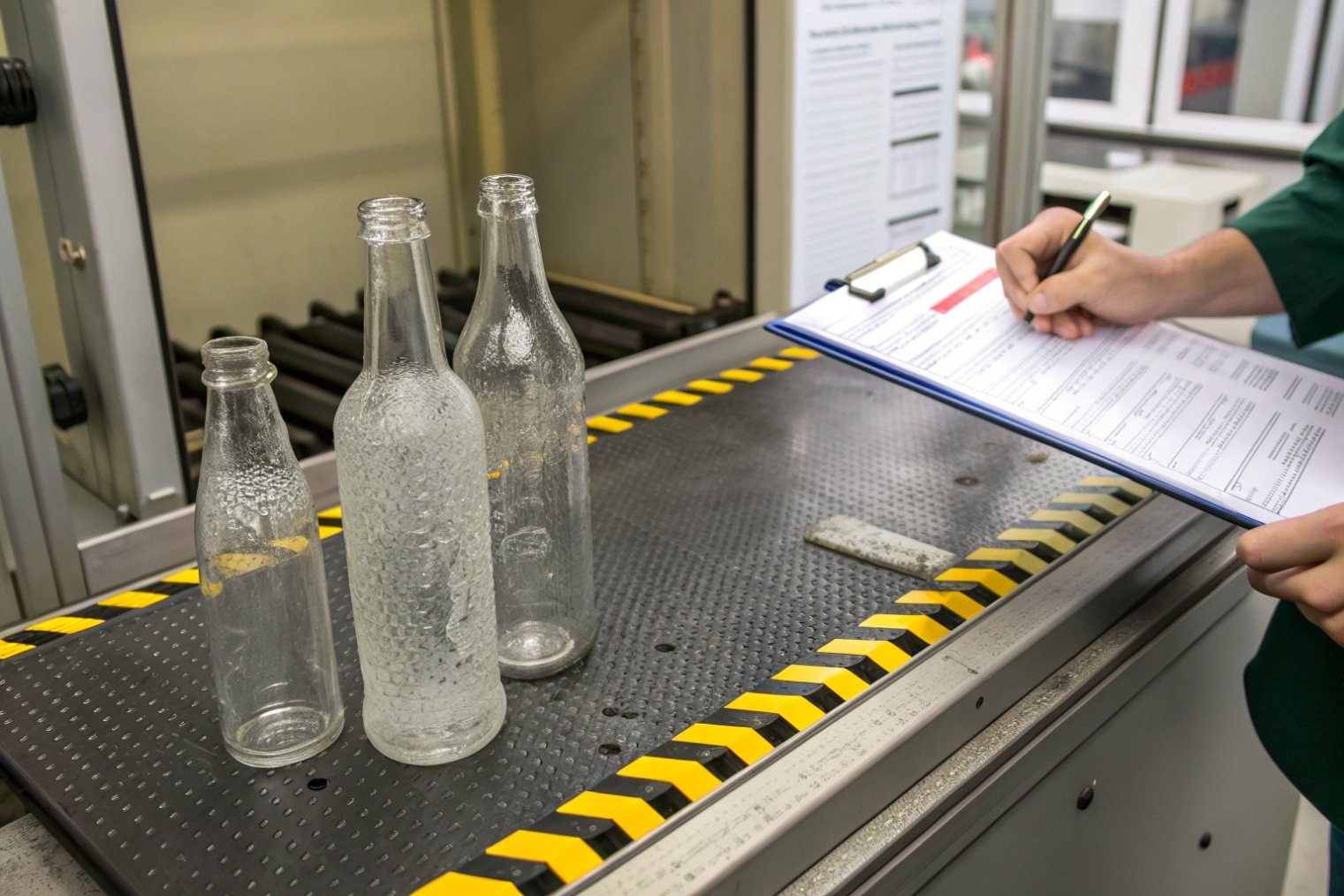
When we etch or blast glass, we roughen the surface. This breaks some of the natural compressive layer and slightly reduces tensile strength. If the process is too aggressive, it can create micro-cracks that lower impact performance. So we control:
- Acid strength and exposure time
- Sandblasting media, pressure, and angle
- Any post-process coatings for protection
With good control, the drop in strength is small and sits inside safety margins. Many spirit and cosmetic bottles that pass standard impact tests use etched or frosted surfaces.
Spray frosting changes the story. The coating can protect the glass against small scratches because small contacts hit the coating first. But if the coating itself is soft or too thick, it can scratch, flake, or chip. This is very visible on dark or colored coatings. Harder, oven-cured coatings and clear topcoats improve performance, but they also raise cost and cure time.
Chemical and thermal behavior
Chemical resistance is another key point, especially for alcohol, oils, perfumes, and aggressive cleaners.
- Acid-etched or blasted glass keeps almost the same chemical resistance as clear glass, because the bulk is unchanged. The surface is more open, but it is still glass.
- Spray coatings behave like paint or varnish. Some resist alcohol and oils very well. Others swell, turn white, or soften over time.
For hot filling, pasteurization, or strong detergents, etched glass normally wins. The frosted surface has no coating that can soften in heat. Of course, we still respect the normal thermal shock limits of the bottle.
A simple way to think:
| Method | Impact on strength | Chemical resistance | Typical use |
|---|---|---|---|
| Acid etching | Slight reduction if well controlled | Very close to raw glass | Spirits, perfume, cosmetics |
| Sandblasting | Slight to medium reduction | Very close to raw glass | Special editions, local effects |
| Spray frosting | Depends on coating system | Depends on resin and curing | Color, gradient, cost-flexible |
On one fragrance project, we saw early peeling of a spray frost when the formula had high solvent content. After testing, we moved to a higher-grade coating and changed the cure schedule. The problem disappeared, but the case was a clear reminder: always test the real formula on the real frosted surface before final approval.
Which masking and gradient effects are possible for branding?
Many brands want more than a uniform matte bottle. They ask for clear “windows,” logos in gloss, or a soft fade from clear base to frosted shoulder to stand out on shelf.
Both acid etching and spray frosting can use masks, resists, and screen-printed lacquers to create clear windows, logos, and gradients; spray systems add more freedom for multi-color and soft transition effects.
Masking and windows with etching and blasting
For acid etching and sandblasting, masking is the main tool for design.
We can use:
- Vinyl or film masks applied by machine or hand
- Screen-printed resist inks or lacquers
- Shrink sleeves as temporary resists for special patterns
The process looks like this:
- Clean bottle.
- Apply mask where we want to keep the glass clear or glossy.
- Etch or blast the exposed areas.
- Remove mask and wash.
This method creates:
- Clear level windows on one side of a frosted bottle
- Gloss logo areas standing out from the matte background
- Bands or geometric patterns that stay transparent
Sandblasting gives more depth for local artwork, while acid etching gives a smoother contrast between frosted and clear zones.
Gradients, color play, and advanced effects
Spray frosting takes masking further. Because we control spray flow, angle, and movement, we can build:
- Vertical gradients (clear base to frosted shoulder)
- Horizontal bands with soft edges
- Only-neck or only-shoulder frosting
- Local color accents over or under the frost effect
With the right equipment, we can mask part of the bottle with mechanical shields, then spray at controlled distance. The further from the surface or the faster the movement, the softer the gradient. Robotic arms give consistent paths, so thousands of bottles share the same fade.
Laser frosting is a newer tool in some plants. A CO₂ laser locally microtextures the glass without chemicals. This allows:
- Fine grayscale artwork
- Serial numbers or batch codes inside frosted patterns
- Very sharp edges and high registration on curved bodies
Laser is not yet the cheapest option for large volumes, but it can add unique branding on premium lines.
For branding, the key is to keep the design simple enough for stable production. A clear window for fill-level, a frosted shoulder, and a crisp logo often do more for a brand than very complex multi-zone artwork that is hard to repeat.
When you brief your supplier, it helps to send:
- Drawings that clearly show frosted vs. clear vs. printed areas
- Photos or physical samples of finishes you like
- Priority list: what must be perfect (logo, window) and what can vary slightly (background haze)
This allows the glass decorator to choose the right mix of masking, etching, and spray to deliver a realistic result.
What QC tests prevent haze variation and label adhesion issues?
The biggest complaints with frosted bottles are often not about breakage. They are about “patchy” appearance, different opacity between batches, or labels that bubble and peel on the matte surface.
Good QC on frosted bottles checks haze uniformity, color, and surface energy, then validates label adhesion and print durability with standardized tape, friction, and aging tests before mass shipment.
Controlling haze and visual uniformity
For acid-etched and blasted bottles, uniformity comes from tight control of process parameters:
- Bath concentration and temperature for etching
- Exposure time and line speed
- Media type, pressure, and distance for blasting
QC then checks:
- Visual comparison against a golden sample under standard light
- Haze or gloss measurements with a glossmeter or haze meter
- Color and opacity checks if tinted coatings are used
If your project needs measurable haze targets, align on a method such as ASTM D1003 haze and luminous transmittance 5 so “matte level” doesn’t become a subjective argument. {#fnref5}
For spray frosting, we add more variables:
- Coating viscosity and mix ratio
- Spray gun pressure and nozzle type
- Oven temperature and cure time
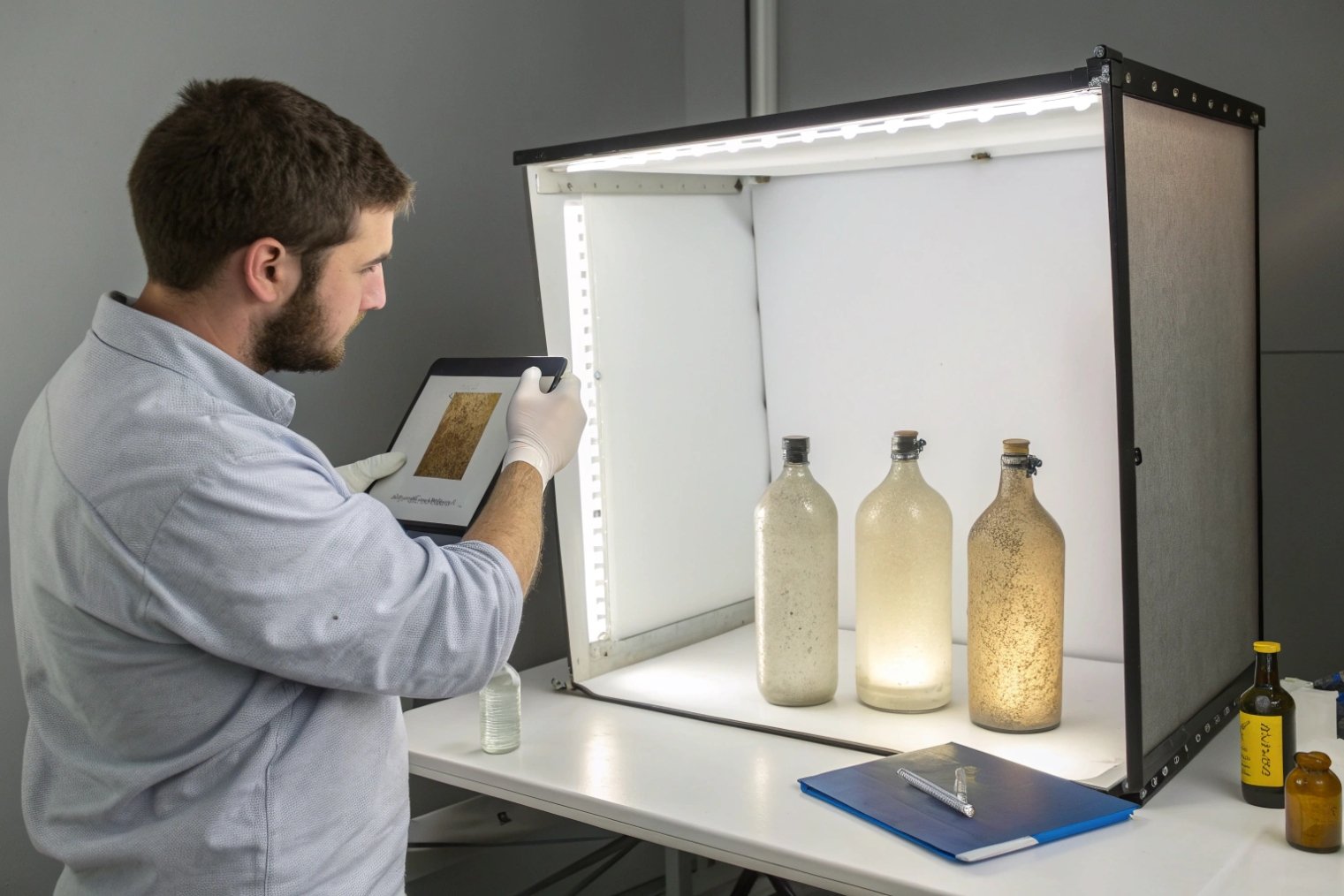
Any drift in these points can cause streaks, runs, or different opacity. Inline vision systems can catch severe defects, but for fine haze differences we still rely on controlled samples and light boxes.
A simple QC table looks like this:
| Check type | Purpose |
|---|---|
| Visual inspection | Streaks, spots, uneven frosting |
| Gloss / haze test | Measure matte level vs. standard |
| Color shade check | For tinted or colored frosting |
| Surface clean test | Detect oil, dust, or fingerprints |
Setting clear acceptance standards in advance avoids arguments later. For example: “No visible streaks at 40 cm under 6500 K light; haze within ±5 units of master sample.”
Label adhesion, printability, and handling tests
Frosted surfaces usually give better “bite” for adhesive, but they also trap dust and fingerprints more easily. If bottles are not cleaned, labels can lift or form bubbles. So we run both surface and adhesion tests.
Common tests include:
- Contact angle or simple wetting tests to see if water or ink spreads well
- Cross-hatch and tape tests on printed or coated areas
- Label adhesion tests with the actual label stock and adhesive
- Hot-cold cycle tests to see if labels move in temperature changes
For coated (spray-frosted) bottles, many teams reference an adhesion check like the ASTM D3359 tape test 6 to verify coating bond before approving mass production. {#fnref6}
For labels and pressure-sensitive materials, methods under FINAT test methods 7 help structure peel, shear, and aging validation using repeatable lab setups. {#fnref7}
For example, we apply the chosen label, let it cure, then expose the bottle to cycles such as:
- Cold storage, then room temperature
- High humidity, then dry storage
After each cycle we check for edge lift, bubbles, or slip.
Friction and abrasion tests also matter. Frosted bottles rub against each other on conveyors and pallets. If the frosting is a coating, we test how much it scuffs under controlled load and time. If it is acid-etched, we check if labels stay in place when bottles slide against each other.
From a buyer’s side, the best way to avoid surprises is to:
- Share the real label material and adhesive with the glass supplier
- Agree on simple, practical test methods and pass/fail criteria
- Approve a frosted and labeled pre-production batch before full order
Once these QC routines are in place, haze variation drops, labels behave better, and the frosted bottle does what it should do: make the product look clean, calm, and premium on the shelf.
Conclusion
A good frosted bottle is not only about “nice matte.” It is about the right process, smart design, and strict QC so every shipment matches your brand vision in real life.
Footnotes
-
Defines acid etching and why it creates a permanent matte surface in the glass itself. ↩ ↩
-
Explains hydrofluoric acid hazards and lab-grade handling controls relevant to etching lines. ↩ ↩
-
Example performance specs for spray coatings on glass, including cure limits and alcohol resistance. ↩ ↩
-
Practical overview of sandblasting variables (media, angle, pressure) that change matte look and repeatability. ↩ ↩
-
Standard method reference for measuring haze so “frost level” can be specified and audited. ↩ ↩
-
Widely used tape-test framework to rate coating adhesion and catch weak curing or contamination. ↩ ↩
-
Label test method list covering peel, shear, and aging checks for pressure-sensitive label performance. ↩ ↩






