
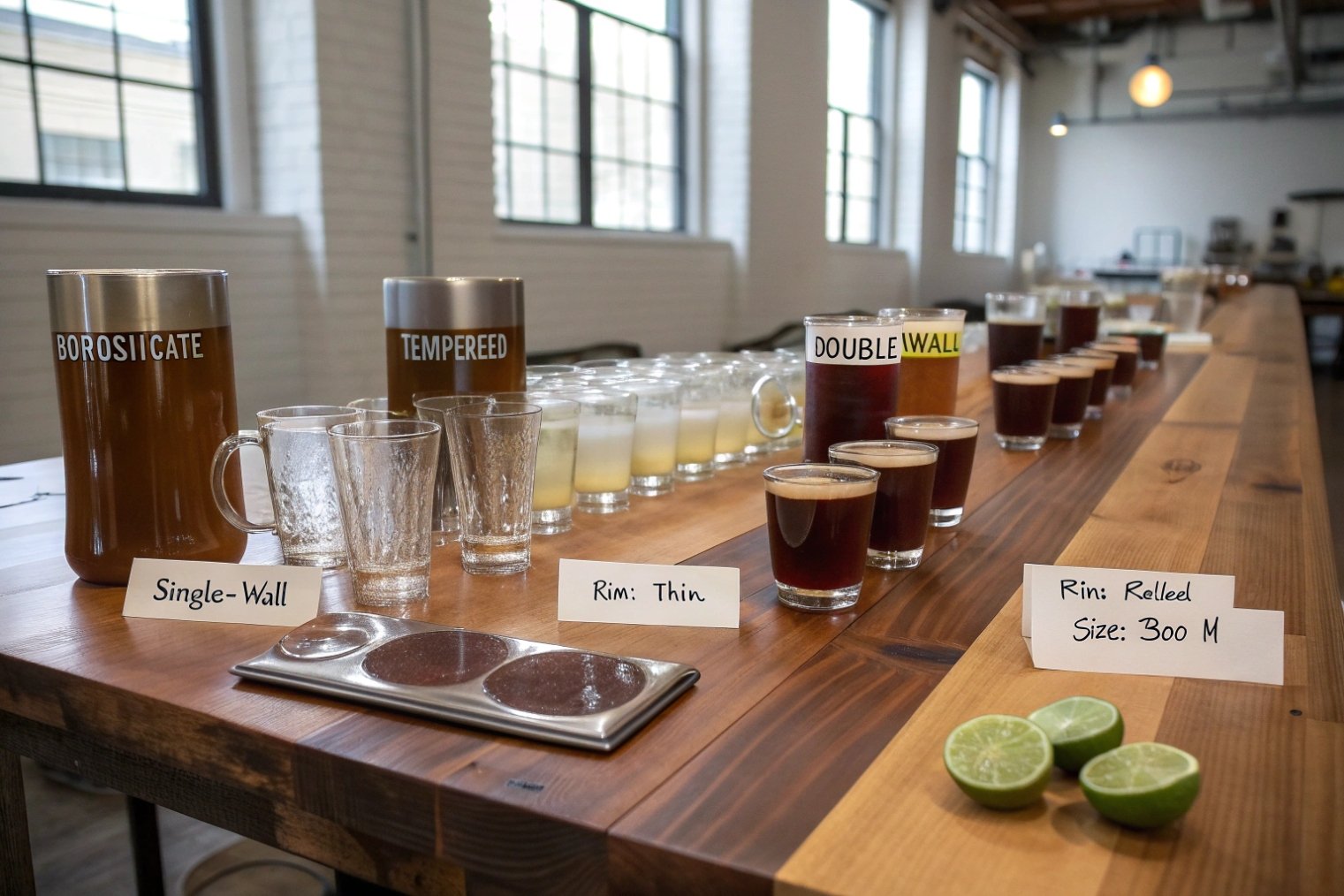
The same drink can feel cheap or luxurious depending on the glass. Comfort, temperature, and even flavor all change just from that one choice.
To choose the best glass for hot and cold drinks, match material (borosilicate or tempered glass), wall structure, rim design, and size to your drink temperature, drinking speed, and handling habits.
In practice, I start from three questions: how hot or cold will the drink be, how fast will someone drink it, and how rough is the daily use. The answers point very clearly toward single-wall, double-wall, borosilicate, or tempered soda-lime.
When does double-wall glass really improve insulation and comfort?
Double-wall cups look cool, but they are not always the best option. Sometimes they are overkill, sometimes they are the smartest upgrade in the whole drinkware drawer.
Double-wall glass makes sense when you drink slowly, want your hands protected from heat or cold, and dislike condensation, but it adds fragility and price you may not need for quick drinks.
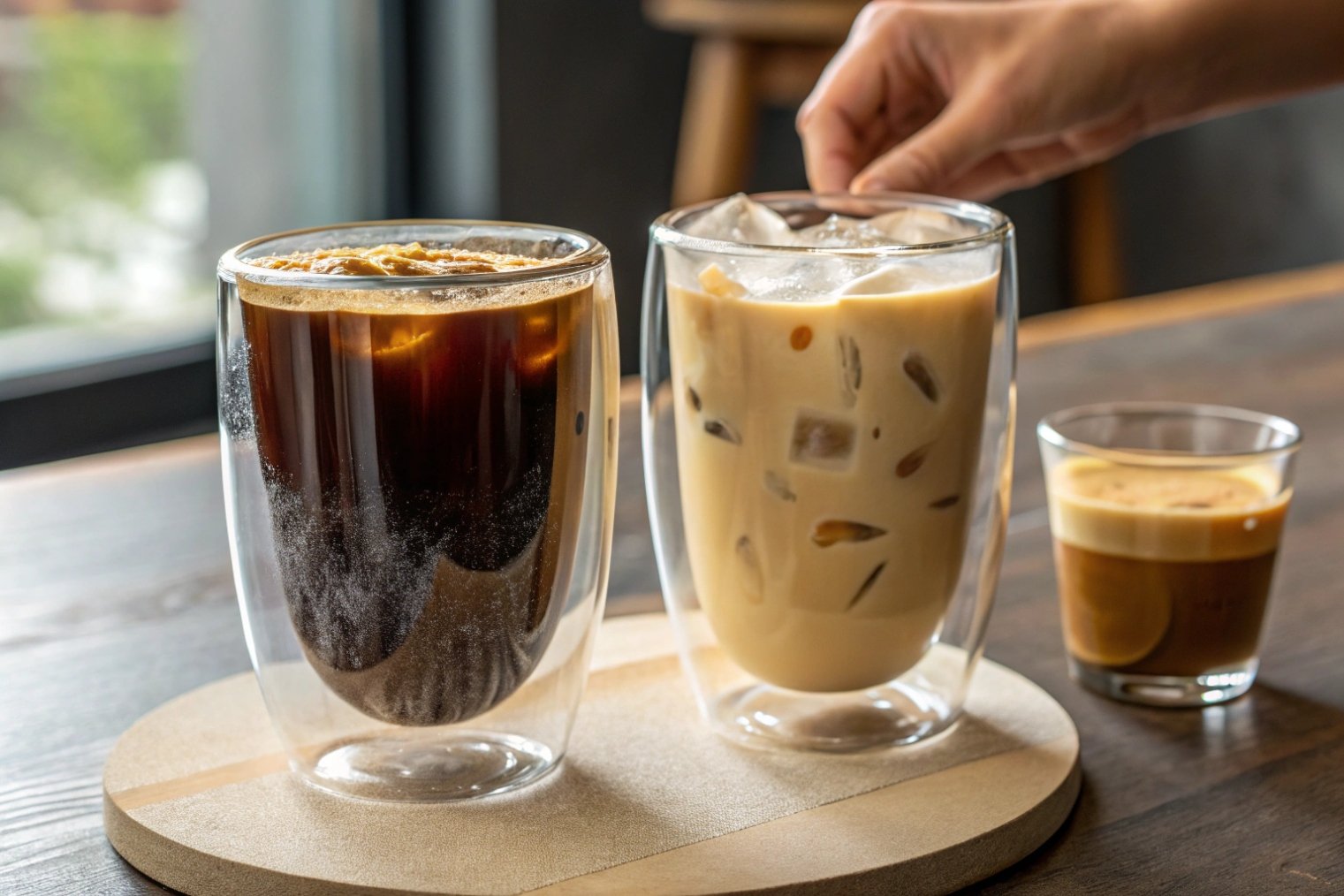
Double-wall glass works by trapping a layer of air between the inner and outer walls. Because of air’s low thermal conductivity 1, heat flows more slowly from drink to hand, and from room to drink. This gives three clear benefits.
First, comfort. With hot drinks, the outside of a double-wall glass stays much cooler. You can hold an espresso or black tea in your fingers without burning them. With iced drinks, the outside stays warmer, so your hand does not freeze.
Second, performance. Hot drinks stay hot longer, and cold drinks stay cold longer. This matters most when someone sips slowly. For a short espresso, the difference is small. For a big latte on a call, or an iced latte in the sun, the extra time is noticeable.
Third, cleanliness on the table. Because the outer wall stays near room temperature, you see far less condensation. Cold drinks do not leave big water rings, and you need fewer coasters. For cafés and offices, this is a quiet but real plus.
Still, there are trade-offs. Double-wall glasses are usually borosilicate, thin, and more complex to manufacture. That means higher price and less impact resistance than thick, single-wall tempered tumblers. The sealed area between walls can also fail if the design is poor or if the glass is not really dishwasher-safe. In hard water or aggressive detergents, glass corrosion 2 can also show up as permanent haze over time.
A simple comparison:
| Feature | Single-wall glass | Double-wall glass |
|---|---|---|
| Heat at outer surface | Hot with hot drinks, cold with ice | Much closer to room temperature |
| Insulation | Basic | Strong for both hot and cold |
| Condensation | Normal to heavy with iced drinks | Greatly reduced |
| Durability | Better against knocks and drops | More fragile, careful handling needed |
| Price | Lower | Higher |
So I reach for double-wall glass when I know the user will nurse a drink, cares about no condensation, and likes the floating-liquid look. For fast shots, busy cafés, or rough environments, a good single-wall tempered glass usually wins.
Which glass materials tolerate boiling water and iced shock best?
Not every “pretty glass” is ready for boiling water or a handful of ice. Choosing the wrong material is how cracks and sudden failures happen.
Borosilicate glass handles boiling water and mild hot–cold swings better than soda-lime, while tempered soda-lime trades some thermal-shock resistance for stronger impact resistance, so your choice depends on whether heat or knocks are the bigger risk.
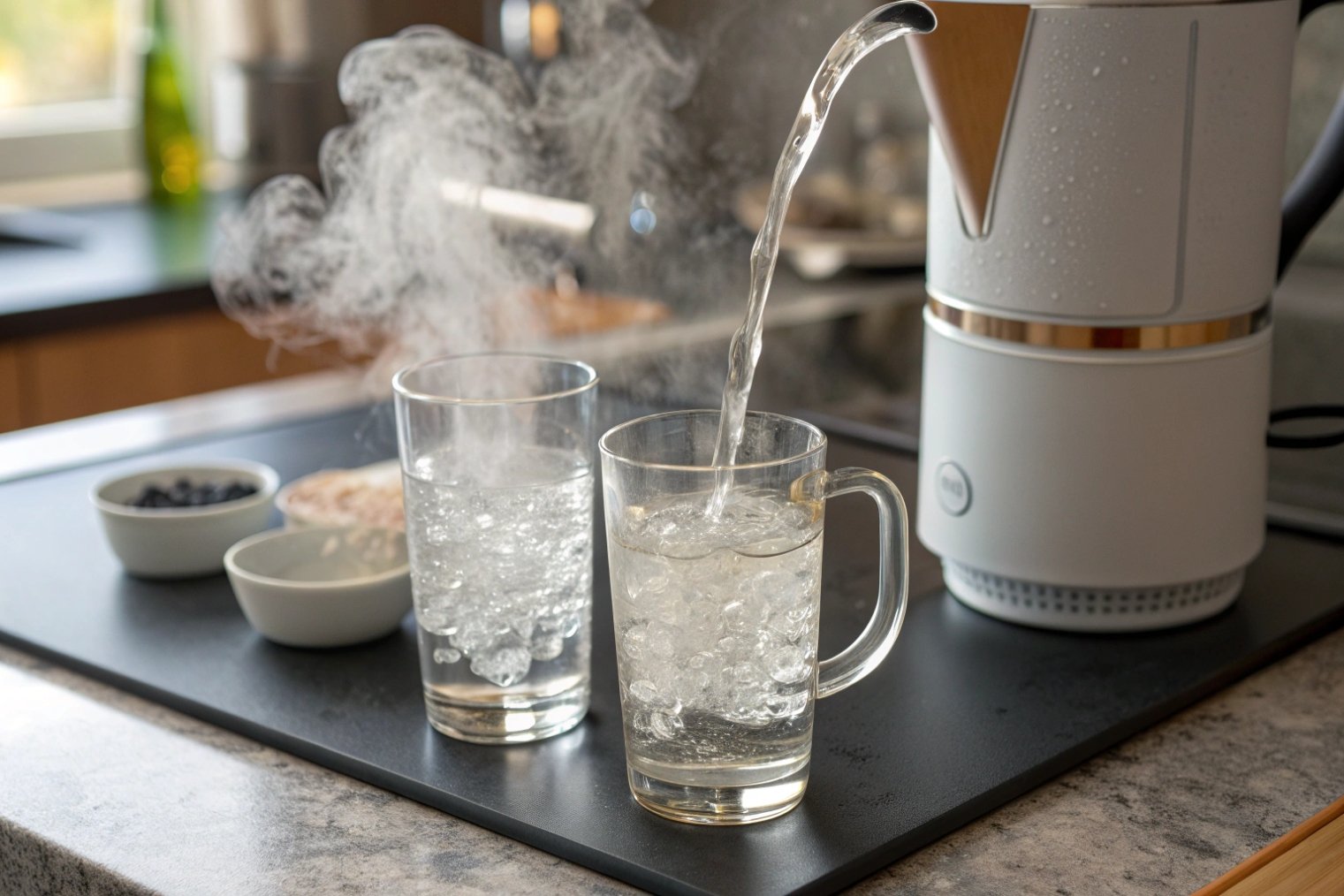
Borosilicate glass has a very low coefficient of thermal expansion 3. It changes size less when heated or cooled. This is why lab beakers and many double-wall mugs use it. You can pour near-boiling water into a room-temperature borosilicate mug with much lower risk than with normal soda-lime. If you want a datasheet-level reference, Corning® borosilicate 7740 properties 4 show the typical low-expansion behavior behind the label.
Tempered soda-lime starts from regular glass and adds a heat treatment that builds surface compression. That makes it stronger against impact. You see this in classic café tumblers and many restaurant glasses. They can hit each other, go in and out of dishwashers all day, and keep going—because toughened (tempered) glass 5 is engineered to resist surface crack growth better than annealed glass.
However, tempered soda-lime still has a higher thermal expansion than borosilicate. It can handle reasonable temperature changes, but it is not ideal for extreme shocks like boiling water into a glass that just came from the freezer.
A useful overview:
| Material | Boiling water safety (from room temp) | Ice shock safety (hot → iced) | Impact strength | Typical use |
|---|---|---|---|---|
| Borosilicate | Very good | Good with sensible care | Good | Double-wall cups, teapots, lab |
| Tempered soda-lime | Good | Moderate, avoid extreme jumps | Very good | Cafés, pubs, restaurant glassware |
| Regular soda-lime | Limited | Poor for hard shocks | Moderate | Cheap mugs, basic drinkware |
| Lead crystal | Not ideal for hot daily use | Not recommended | Heavy but brittle | Special wine and spirits only |
For routine hot and cold drinks, I like this simple rule:
- Choose borosilicate for direct boiling-water applications, like teapots, pour-over coffee, and double-wall cups used for very hot liquids.
- Choose tempered soda-lime for busy environments where glasses are clinked, stacked, and washed hard, and where drinks are hot or cold but not “boiling into frozen”.
With any glass, basic thermal-shock discipline still helps: let boiling water sit a few seconds after the kettle clicks, avoid pouring it into ice-cold glass, and do not go straight from hot rinse to a glass packed with ice.
Do rim design and thickness really change flavor perception?
Many people think rim design is only a style choice. In practice, it changes how liquid flows, how aromatics hit your nose, and even how we judge body and bitterness.
Rim thickness and shape change how the drink enters your mouth, how aroma escapes, and how the glass feels on your lips, so they do influence perceived flavor, texture, and “quality” more than most people expect.
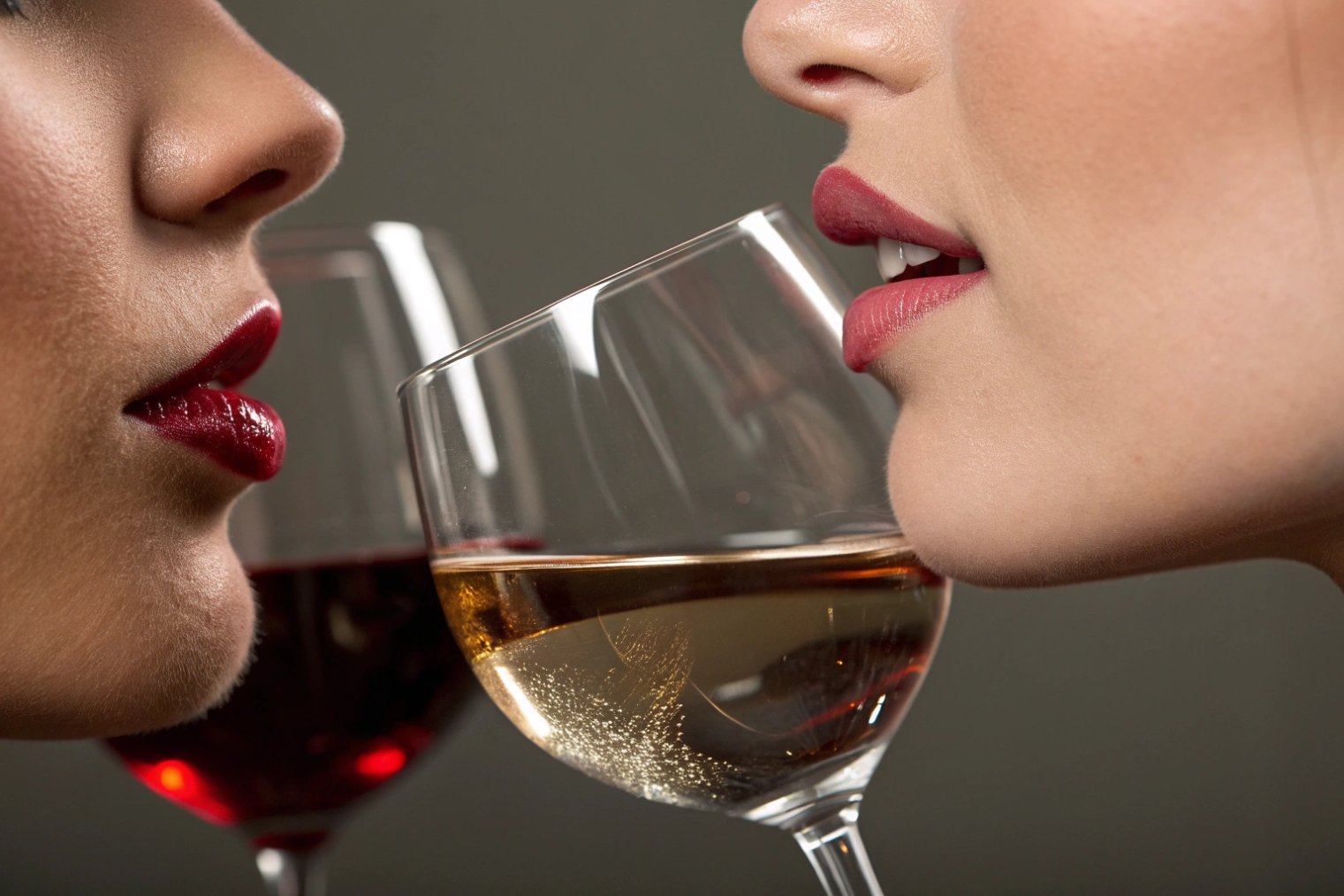
A thin, fine rim lets liquid roll almost directly onto your tongue. There is very little “edge” between lips and drink. This often makes coffee, tea, and wine feel more delicate and smooth. The downside is mechanical: very thin rims chip more easily, especially in dishwashers.
A thicker, rounded rim feels sturdier. When you sip, the liquid path is slightly different. Some people feel the drink is a bit heavier or more “rustic”. Thick rims also make glasses feel more casual and durable, which fits beer and everyday tumblers.
The rim also controls aroma. A narrower opening holds volatile aromatics in the glass a bit longer. A wider mouth lets them escape quickly. This is why many wine and beer glasses taper slightly toward the top, while iced-drink glasses have wider mouths to accept ice and release aroma more aggressively. If you want a neutral benchmark for aroma-focused shape, the ISO wine tasting glass 6 is a useful reference point.
A simple map:
| Rim feature | Sensory effect | Where it fits |
|---|---|---|
| Very thin rim | Precise flow, delicate mouthfeel | Specialty coffee, fine tea, cocktails |
| Medium rolled rim | Balanced comfort and durability | Daily coffee mugs, water glasses |
| Thick chunky rim | Heavier feel, robust impression | Beer, casual tumblers, outdoor use |
| Narrow opening | Concentrates aroma, keeps heat | Coffee, tea, aromatic beers and cocktails |
| Wide opening | Releases aroma, easy ice access, cooler faster | Iced coffee, long drinks, beer steins |
For hot drinks, I usually like a slightly rolled medium rim. It protects lips from sharp edges and makes sipping feel secure even when the drink is very hot. For tasting-style coffee or cocktails, a finer rim can be worth the extra care and potential fragility.
So yes, the rim does not change the chemistry of your drink, but it changes how that drink meets your senses. In product development, I treat rim design as part of the recipe, not just decoration.
Which sizes and finishes work best for coffee, tea, beer, and cocktails?
One universal tumbler for everything is tempting, but it often means “acceptable for all, perfect for none”. Different drinks want different volumes, profiles, and finishes.
Match size and finish to each drink style: smaller, narrower glasses for hot coffee and tea; larger, wide-mouth glasses for iced drinks and beer; and clear, well-shaped glasses for cocktails where color and layering matter.
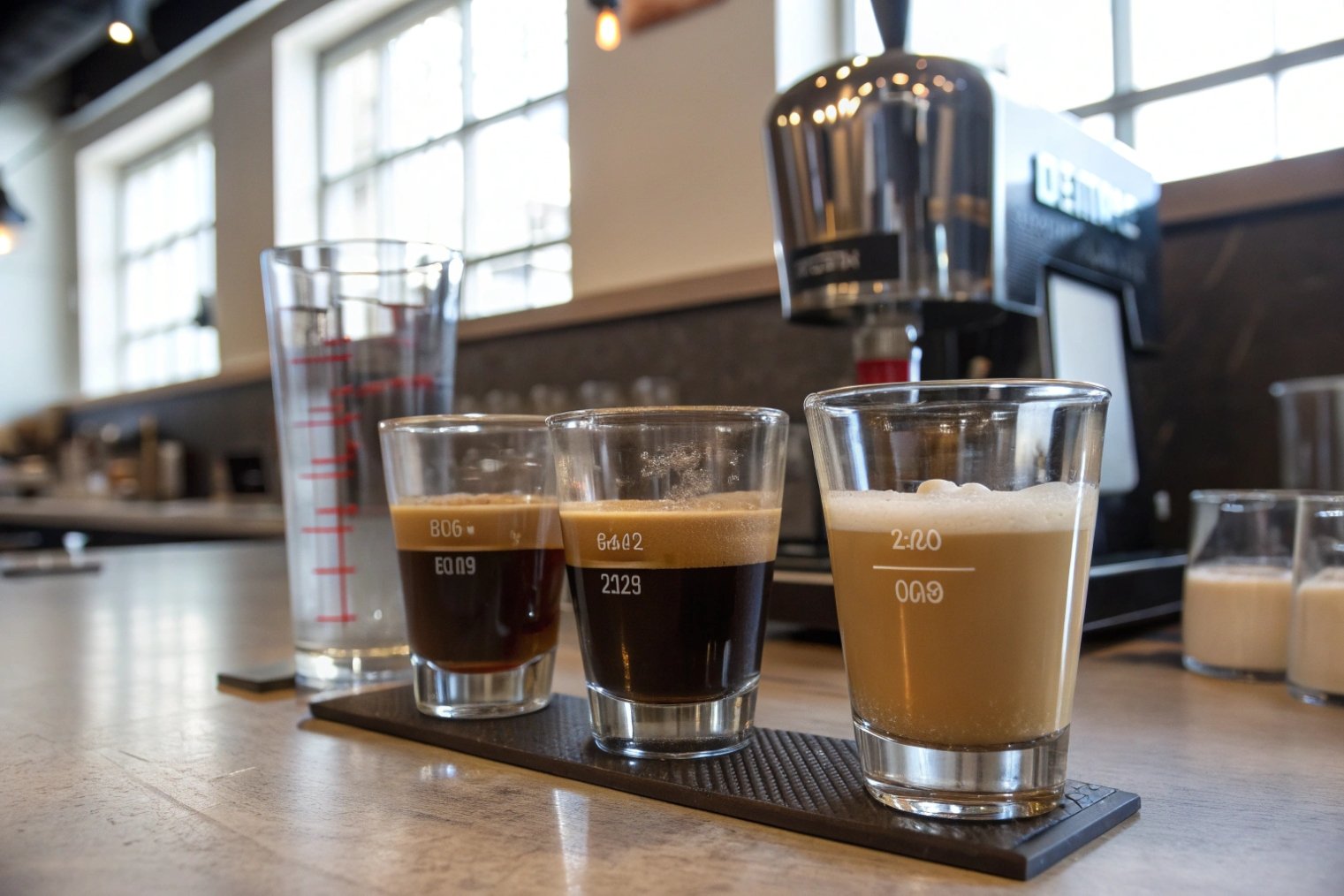
Coffee and espresso
For espresso, I like 60–120 ml glasses. This size holds a shot or a double, plus a bit of headroom. Thicker bases help retain heat, and a slightly narrower top prevents rapid cooling. Single-wall or double-wall both work; double-wall adds comfort if you hold the glass by the body, not by a handle.
For standard coffee or Americano, 240–300 ml is a comfortable range. It leaves room for milk and avoids the “bucket of coffee” look. A slightly weighted base and a medium rim feel right in the hand.
For lattes and larger milk drinks, 300–400 ml gives enough space for milk foam and latte art. A tall, straight glass shows layers; a double-wall version keeps things warm while staying cool outside.
Tea
For hot tea in glass, I like 200–350 ml. This is big enough for a relaxed cup but small enough that tea does not stew for too long. Clear glass lets you judge strength by color.
For iced tea, 350–500 ml is better. You need room for ice and still want a satisfying tea volume. Here, a slightly wider opening makes adding ice and garnish simple.
Beer
Beer glass sizing depends on style, but a few ranges work well:
- Session beers and lagers: 300–400 ml glasses that can be refilled often and keep beer cold.
- Stronger beers or tasting flights: 200–300 ml to keep serving strength reasonable.
- Pints and bigger pours: 400–500+ ml, often with thicker walls and robust handles or stems.
Clear glass is almost always the right finish for beer. It shows color, clarity, and foam. For outdoor service in strong sun, some people prefer lightly tinted glass or rely on shade instead.
Cocktails and long drinks
For short cocktails (Old Fashioned, Negroni), 200–300 ml low glasses with a solid base handle large ice cubes and muddled ingredients well.
For long drinks (gin and tonic, spritz, highballs), 300–400 ml tall glasses—often a classic highball glass 7—leave room for ice, mixer, and garnish.
Finish matters here:
- Clear glass lets you show color, bubbles, and layers.
- Frosted or smoky glass can signal a more modern or moody style but hides clarity.
- Avoid metallic rims if you expect to use microwaves or dishwashers regularly.
A quick summary table:
| Drink type | Typical volume range | Shape and finish tips |
|---|---|---|
| Espresso | 60–120 ml | Thick base, narrower top, clear glass |
| Black coffee | 240–300 ml | Straight or slightly tapered, handle or DW |
| Latte / cappuccino | 300–400 ml | Tall, room for foam, handle or double-wall |
| Hot tea | 200–350 ml | Clear, narrower opening to keep heat |
| Iced tea / coffee | 350–500 ml | Wide mouth for ice, heavier base |
| Beer (everyday) | 300–400 ml | Clear, stable base, comfortable lip |
| Beer (pint / stein) | 400–500+ ml | Thick walls, strong handle or stem |
| Short cocktails | 200–300 ml (lowball) | Thick base, clear glass |
| Long drinks | 300–400 ml (highball) | Tall, straight, clear, ice-friendly opening |
For finishes, I keep it simple:
- Clear high-gloss for drinks where color and clarity are part of the experience.
- Frosted or matte for a softer look and better grip, especially on cold drinks with condensation.
- Tinted glass only when light protection or branding truly needs it; otherwise it can hide your drink’s best visual features.
Conclusion
The “best” glass for hot and cold drinks is not one magic design. It is the combination of material, wall structure, rim, and size that matches how you actually drink, how often you wash, and how long you like to sit with your cup or glass.
Footnotes
-
Learn why air insulates well, explaining the comfort advantage of double-wall glass. ↩ ↩
-
Understand why some glassware turns permanently cloudy after harsh dishwashing and hard water exposure. ↩ ↩
-
See how thermal expansion drives thermal-shock risk in hot-to-cold drinkware use. ↩ ↩
-
Compare real borosilicate property data to verify “low expansion” claims on premium drinkware. ↩ ↩
-
Learn how tempering boosts impact resistance and why it’s common in café and restaurant glassware. ↩ ↩
-
Reference a standardized glass shape used to evaluate aroma-focused design choices. ↩ ↩
-
Quick definition and proportions for the classic long-drink glass used for iced mixed drinks. ↩ ↩






