
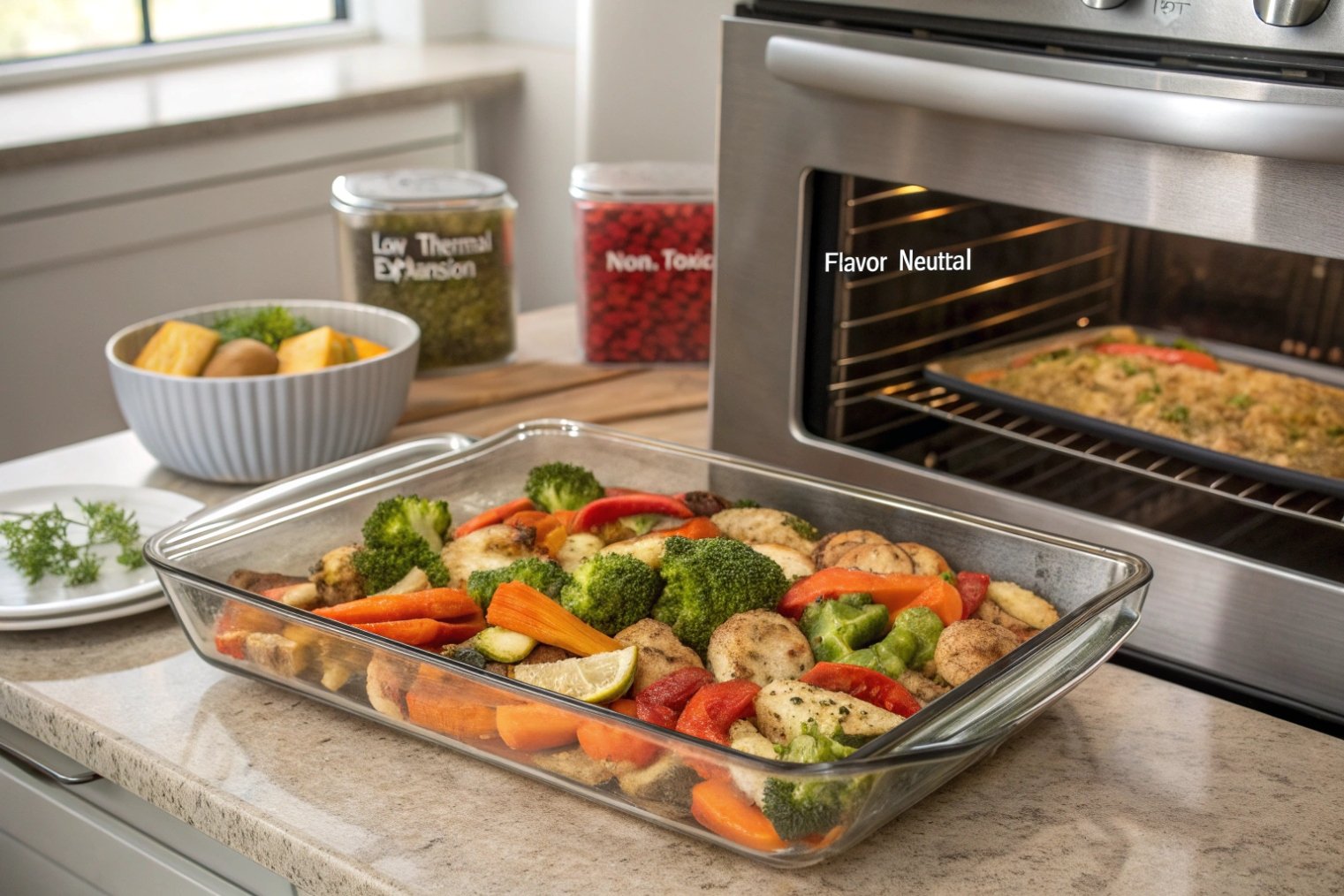
When people say “glass cookware”, they often mix everything together: cheap soda-lime, tempered ovenware, and true borosilicate. But they do not behave the same in a hot kitchen.
Non-toxic borosilicate cookware combines low thermal expansion, high chemical inertness, and a non-porous surface, so it resists thermal shock, does not leach, and keeps flavors pure better than ordinary glass options.
For me, the key question is not “Is glass safe?”, but “Which glass, under which heat, with which food?”. Once you break that down, the practical advantages of good borosilicate cookware become very clear.
Does low thermal expansion really make borosilicate safer against thermal shock?
Most dramatic “glass explosion” stories in kitchens come from thermal shock: a dish goes from cold to very hot, or from oven to a wet countertop, and suddenly there are shards everywhere.
Because borosilicate has a much lower thermal expansion than soda-lime glass, it builds less internal stress when temperatures change, so it is more tolerant of reasonable hot–cold jumps and less likely to crack from thermal shock.
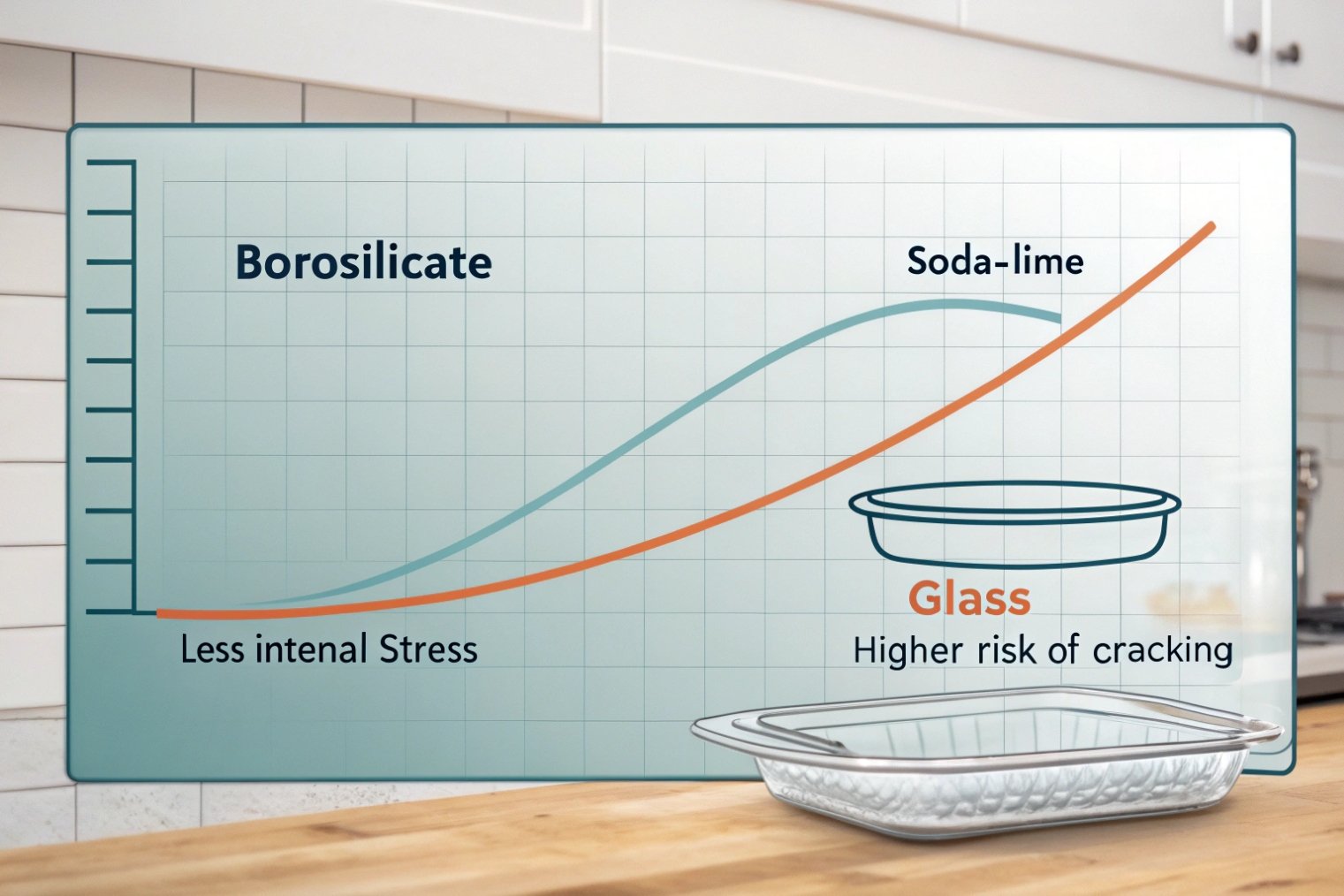
Inside any glass, heat makes the material expand. If one part heats faster than another, the hotter part tries to grow while the cooler part holds it back. This creates stress. When the stress passes a limit, the glass cracks. Soda-lime glass, which is used for most cheap plates and some glass bakeware, expands more for the same temperature rise. That means more stress and a smaller safety margin if you do sudden moves.
Borosilicate glass has a much lower thermal expansion coefficient 1. In simple terms, it changes size less when heated or cooled. So when you move a borosilicate baking dish from room temperature into a preheated oven, the internal stress grows more slowly and stays lower. That is why lab beakers, technical sight glasses, and many high-quality glass baking dishes choose this composition. If you want the “numbers view,” the Corning® Soda Borosilicate 7740 material properties 2 show what “low expansion” looks like on a datasheet.
Of course, even borosilicate is not magic. If you slam a frozen dish straight into a very hot oven, or put a red-hot pan under cold running water, any glass can fail. The advantage is that borosilicate gives you more buffer for normal “real life” moves: pouring hot liquid into a room-temperature dish, sliding a hot dish onto a dry wooden board, or reheating last night’s pasta bake in the same container. The mechanism is the same one explained in most thermal shock in glass 3 examples: fast temperature gradients create stress, and higher expansion makes it worse.
One more important point: not all branded “glass bakeware” is borosilicate. In some markets, many consumer dishes are tempered soda-lime instead. Tempering improves thermal shock compared to normal soda-lime, but it still does not match true borosilicate. So if thermal-shock safety is your main concern, it is worth checking what type of glass you are actually buying, not just the logo on the side.
How does chemical inertness prevent leaching and flavor transfer?
When you bake lasagna one day and lemon bars the next in the same pan, you do not want garlic ghosts in your dessert. You also do not want anything from the pan to migrate into your food.
Borosilicate glass is chemically inert and non-porous, so it does not leach BPA, PFAS, metals, or plasticizers, and it does not absorb oils, colors, or flavors, which keeps both taste and safety under control even with acidic or salty recipes.
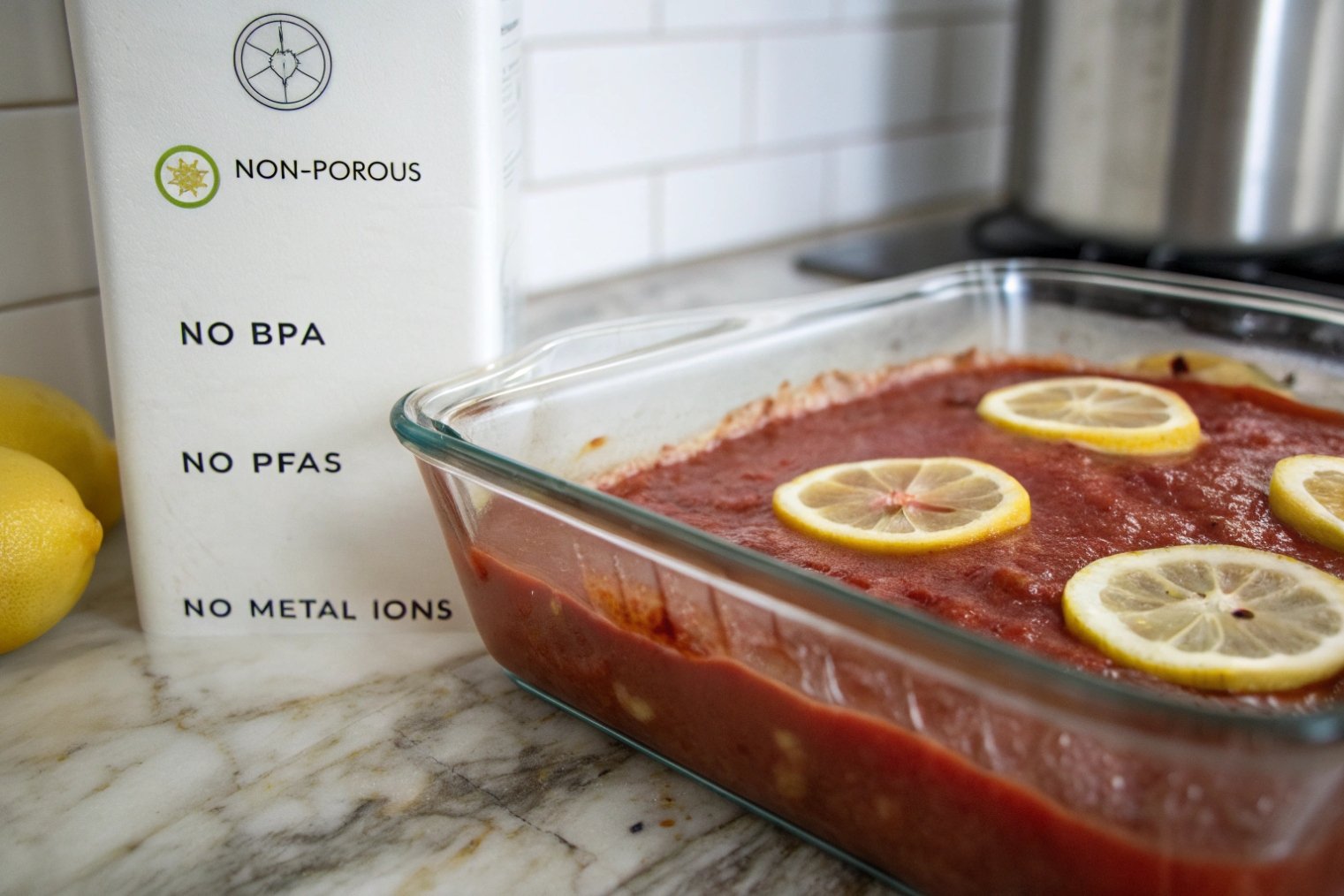
Unlike many metals and plastics, borosilicate glass does not react with normal kitchen acids, salts, or oils. Tomato sauce, lemon juice, vinegar, soy, and wine all meet the same smooth, inert surface. There are no coatings, no nonstick layers, and no hidden binders that can wear off over time. When you scrub the dish, you are cleaning bare glass, not stripping away a functional layer.
This matters for both safety and flavor. Safety-wise, there is no bisphenol A (BPA) use in food contact applications 4 question to manage, and no PFAS explained by the U.S. EPA 5 category of nonstick chemistry in the base material. More broadly, industry position statements often point to glass’s inertness in food contact—see FEVE’s note that glass and ceramics have been found to be the safest food contact materials 6. Flavor-wise, the non-porous surface does not hold onto strong smells. Turmeric, curry, garlic, fish, coffee, and caramel can all touch borosilicate glass without permanently staining or scenting it. A proper wash brings it back to neutral.
For long marinades or brines, chemical inertness is also a quiet benefit. Acidic or salty liquids can attack some metals over time. Enamel can chip. Plastic can hold smells. Borosilicate simply sits there and does its job. If you care about the clean taste of oils, ferments, or delicate desserts, this stability is a big reason to choose it.
Is borosilicate cookware really oven, microwave, dishwasher, and freezer safe?
Marketing often says “freezer to oven to table” like it is nothing. Real life is more nuanced. The glass may be able to handle it, but only inside the limits of common sense and the design of the specific piece.
Most borosilicate cookware is safe for home ovens, microwaves, dishwashers, and freezers when used as the maker recommends, but you still need to avoid extreme shocks and check whether a product is rated for stovetop or broiler use.
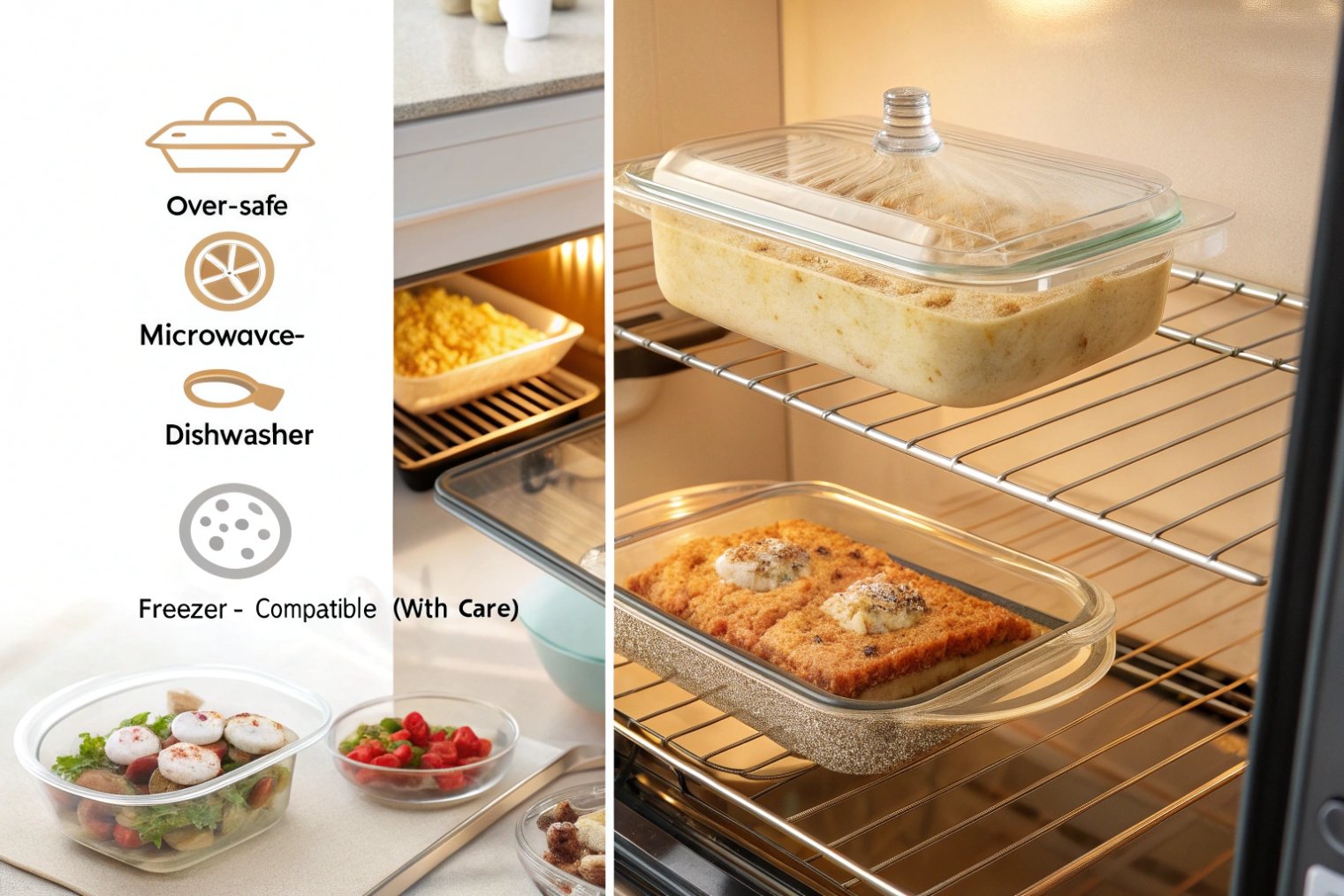
Borosilicate dishes handle typical oven temperatures very well. Home ovens usually operate between about 160–250 °C (320–480 °F). Borosilicate’s softening point is far above that range, so the glass does not start to sag under normal baking conditions. What matters more is how you heat and cool it. Preheating the oven with the empty dish inside is usually fine. Dropping a chilled dish straight into maximum heat is where problems can start, even for this material.
In microwaves, borosilicate behaves in a friendly way. The glass itself does not contain water or metal, so it does not interact strongly with the microwaves. It simply warms because the food inside transfers heat to it. As long as there are no metal rims or decorations, borosilicate dishes are good candidates for microwave reheating and cooking.
Dishwashers are also easy territory. The smooth, hard glass surface resists both the water jets and the detergents. It does not cloud the way some plastics do, and it does not pit the way soft metals can. Over time you may see minor water spots if the local water is hard, but those affect looks, not safety.
Freezers are slightly more delicate. The glass itself can tolerate low temperatures, but the risk is in expansion of the food inside and later thermal shock. If you freeze liquids in borosilicate, leave plenty of headspace and avoid putting a rock-hard frozen dish straight into a very hot oven. Going from freezer to a moderate oven is still safer with borosilicate than with soda-lime, but a small delay on the counter helps the glass and the food.
One last point: basic borosilicate ovenware is not automatically safe for direct stovetop burners or for induction cooktops. Some special “flameware” recipes exist, but unless the manufacturer clearly says so, treat your borosilicate as oven and microwave cookware, not as a pan for open flame or induction. For broilers and grills, many brands also set explicit limits. Reading those small notes once is cheaper than sweeping glass out of an oven later.
How does durability compare with tempered soda-lime glass?
Many people hear “borosilicate” and think it must be stronger in every way than other glass. In reality, its winning area is thermal shock and chemical stability. Impact and drop behavior are a bit more complex.
Borosilicate glass beats ordinary and tempered soda-lime glass in thermal shock and long-term clarity, but tempered soda-lime often survives direct impacts and drops better, so real durability depends on whether your main risk is heat or mechanical abuse.
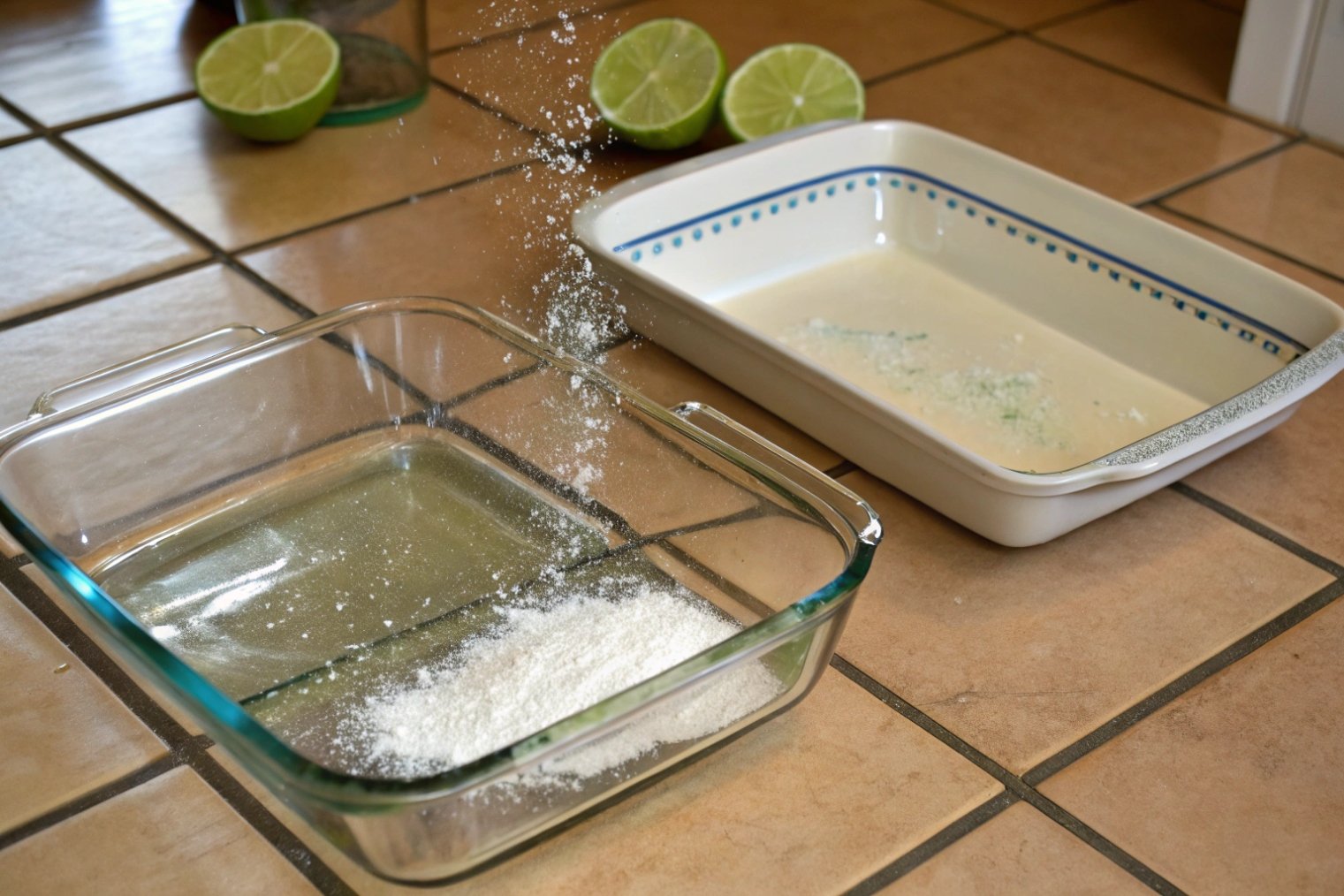
Mechanically, all common glasses are brittle. They do not bend much before they break. Tempering is a process that puts the outer layer of soda-lime glass into compression. This greatly improves its resistance to surface cracks and impacts. Many modern “glass baking dishes” in some markets are tempered soda-lime for this reason. They handle knocks in the sink and on countertops fairly well, and when they do fail they tend to shatter into many small cubes—this is the core behavior described in Britannica’s overview of toughened glass production by thermal process 7.
Borosilicate is usually not tempered in the same way. It already has good strength from its composition, but it does not get the same compressive skin that tempered soda-lime has. So if you drop a borosilicate dish and a tempered soda-lime dish from the same height onto a hard floor, the tempered one may survive more often.
However, take both dishes and put them through harsh heating and cooling cycles, and the advantage flips. Tempered soda-lime is better than plain soda-lime for thermal shock, but it still expands more than borosilicate. With enough hot–cold stress, it can crack or shatter where borosilicate stays intact. In lab and industrial settings, this difference is very clear. In home kitchens, it shows up in those stories where a dish suddenly fails when moved from oven to a cold surface.
Long-term durability is not only about breakage. It is also about how the surface ages. Borosilicate resists scratches and chemical attack from detergents very well. It tends to keep its gloss and clarity for many years. Tempered soda-lime can also last long, but it may show more surface wear and tiny scratches over heavy use, especially if washed with abrasive pads or exposed to very harsh detergents.
So if your kitchen is rough, with crowded sinks, frequent knocks, and many hands using the same dish, tempered soda-lime can be a good choice. If your main worry is hot soups, casseroles, and roast dishes going in and out of the oven day after day, borosilicate gives you a more stable and predictable behavior under thermal stress. In many homes, a mix of both types actually makes the most sense.
Conclusion
Non-toxic borosilicate cookware is strongest where heat, acidity, and flavor purity matter most, giving you clear, inert, and durable dishes that can bake, store, and reheat without drama.
Footnotes
-
Explains thermal expansion and how expansion coefficients quantify size change with temperature. ↩ ↩
-
Property sheet showing borosilicate 7740 expansion and viscosity points for real “low thermal expansion” context. ↩ ↩
-
Clear explanation of thermal shock stress in glass, including CTE comparisons for borosilicate vs soda-lime. ↩ ↩
-
FDA overview of BPA in food-contact materials, useful when comparing glass to plastic-lined or coated cookware. ↩ ↩
-
EPA primer on PFAS, helpful for understanding what glass avoids versus some nonstick coating chemistries. ↩ ↩
-
Industry position summarizing why glass is inert and non-toxic for food contact in normal use. ↩ ↩
-
Describes how toughened (tempered) glass is made and why it shatters differently than annealed glass. ↩ ↩






