
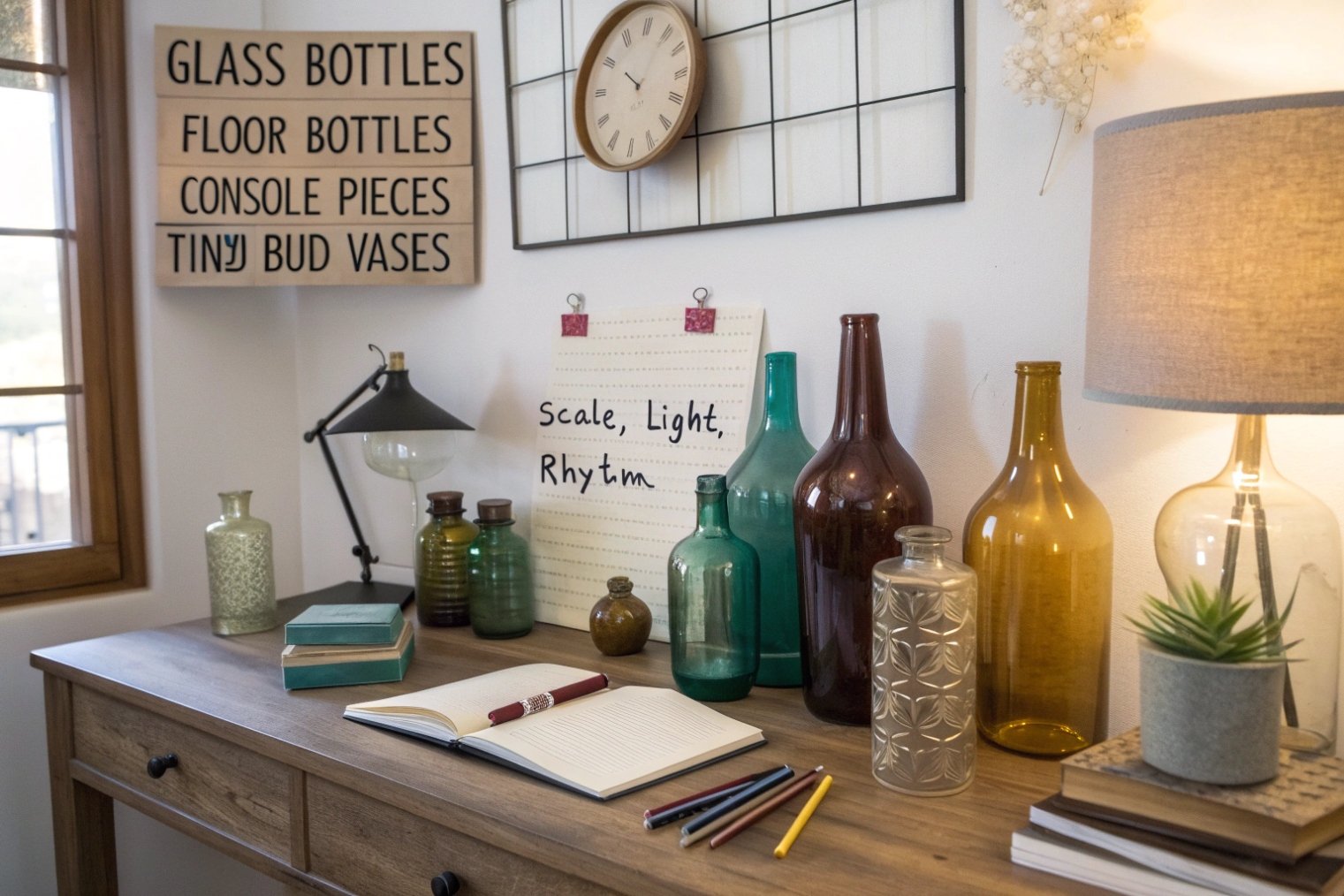
A glass bottle can be a cheap prop or a quiet hero in a room. The difference is not the price, it is the choices behind it.
You choose décor glass bottles by matching shape, color, finish, size, and opening to your interior style, then checking stability, cleaning, and function for diffusers, flowers, or simple display.
Once you look at décor bottles this way, they stop being random “nice pieces”. They become tools. Each one brings scale, light, and rhythm to a corner or a shelf.
Which bottle shapes, finishes, and colors fit different interior styles?
Most people start with “pretty” bottles and hope they will fit the room. It works sometimes, but the result is often noisy and random.
Start from the interior style, then choose bottle scale, silhouette, finish, and color so they support the furniture and architecture instead of fighting them.
Match scale to the room?
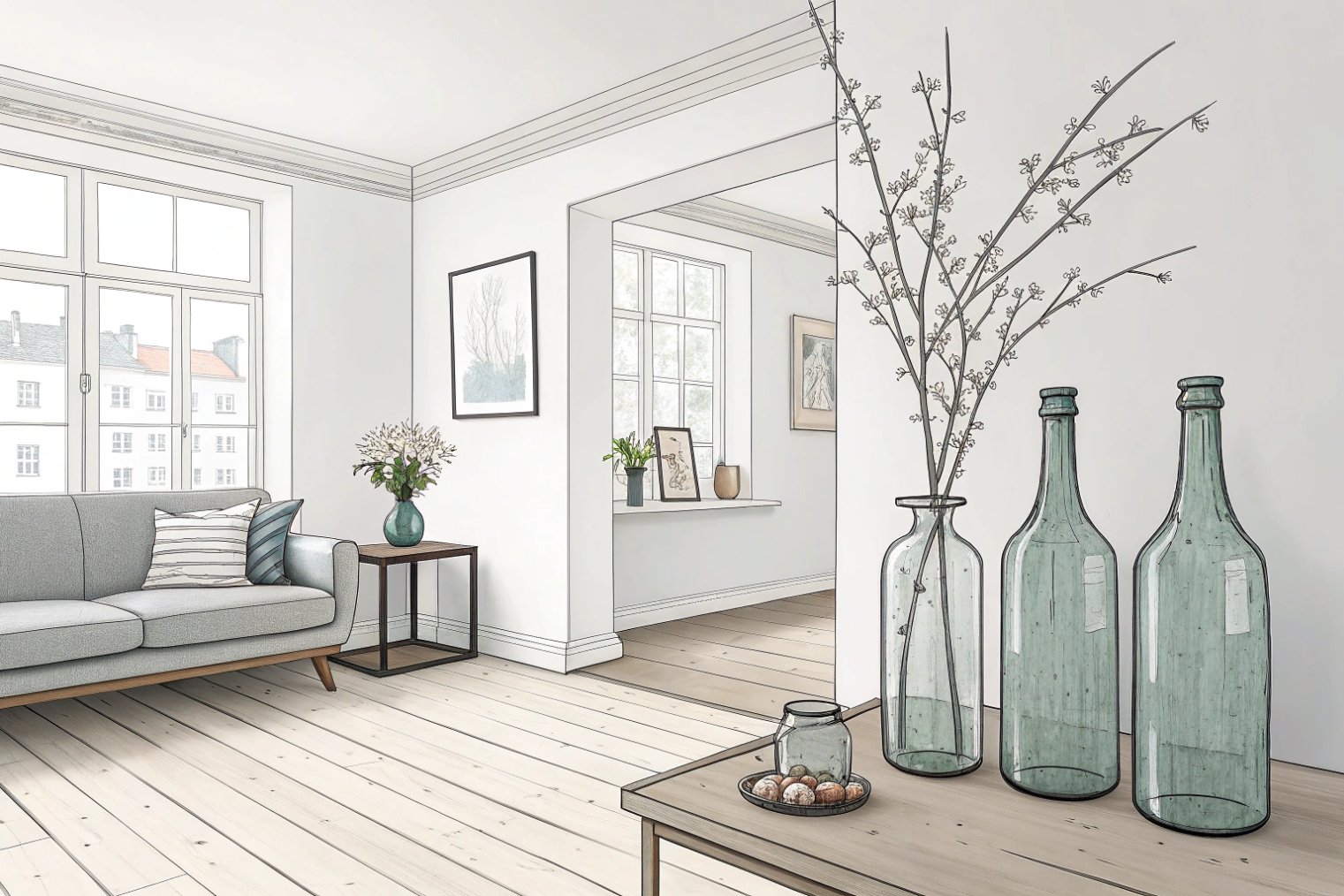
First, think about size against the space, not in isolation. Tall, oversize bottles make sense on the floor or in a big corner. Medium bottles sit well on consoles, mantels, and sideboards. Small bud-vase bottles belong on desks, bedside tables, and narrow shelves.
As a simple guide:
| Placement | Bottle height and feel |
|---|---|
| Floor / empty corner | Tall, 40–80 cm, heavy base, simple shape |
| Console / mantel | Medium, 20–40 cm, grouped in 2–3 heights |
| Shelf / nightstand | Small bud vases, 10–25 cm, light and delicate |
If you add stems, try to keep the total arrangement about 1.5–2× the bottle height—a common florist proportion is that flowers should be one and a half to two times the height of their vase 1. That ratio usually looks balanced.
Color and transparency for mood?
Color decides mood very quickly.
- Clear flint glass feels light and minimal. It suits Scandinavian interior design 2, Japanese, and modern interiors.
- Amber and olive green add warmth and a slightly vintage or rustic tone.
- Cobalt, smoky grey, and dark green add contrast and drama, good for industrial or contemporary spaces.
- Opal or milky glass reads soft and calm, great for bathrooms and bedrooms.
Mixing different levels of transparency works very well. One clear bottle, one tinted, one opaque, all in related tones, creates depth without chaos. In bright windows, clear or cut glass will catch light. Near strong sun, darker glass can even help reduce fading of dried flowers or dyed reeds.
Shapes that signal style?
Shape anchors the style even before color.
- Tall cylinders and clean rectangles feel modern and minimal.
- Apothecary jars, medicine-style bottles, and demijohns give a vintage or apothecary mood.
- Square or squat bottles with strong shoulders lean industrial.
- Fluted, ribbed, pinched, or obviously handblown forms feel artisanal and boho.
Here is a quick map:
| Interior style | Bottle shape and finish ideas |
|---|---|
| Minimal / Nordic | Simple cylinders, soft shoulders, clear or smoke, gloss |
| Industrial / loft | Square or stout forms, thick glass, amber or dark green |
| Boho / eclectic | Mixed handblown shapes, fluted surfaces, clear + colored mix |
| Rustic / farmhouse | Apothecary jars, demijohns, slightly imperfect surfaces |
| Classic / elegant | Long necks, gentle curves, clear or soft tinted, high gloss |
Finishes also matter. High-gloss catches reflections and makes a room feel sharper. Matte or frosted glass looks softer and hides water lines. Textured glass adds grip and visual interest, and it is more forgiving of fingerprints.
If sustainability is important, choosing flint/amber/green in “standard” families also helps recycling systems—FEVE notes that colored glass bottles can be recycled in a closed loop 3.
Handmade pieces always tempt people. The question is not only “Do they look nicer?” but “Where do they really add value compared to a good machine-made bottle?”.
Handmade bottles bring unique shape and character with small variations and thicker glass, while machine-made bottles offer perfect repetition, lower cost, and tighter neck tolerances for diffusers and closures.
What do you really get with handmade glass?
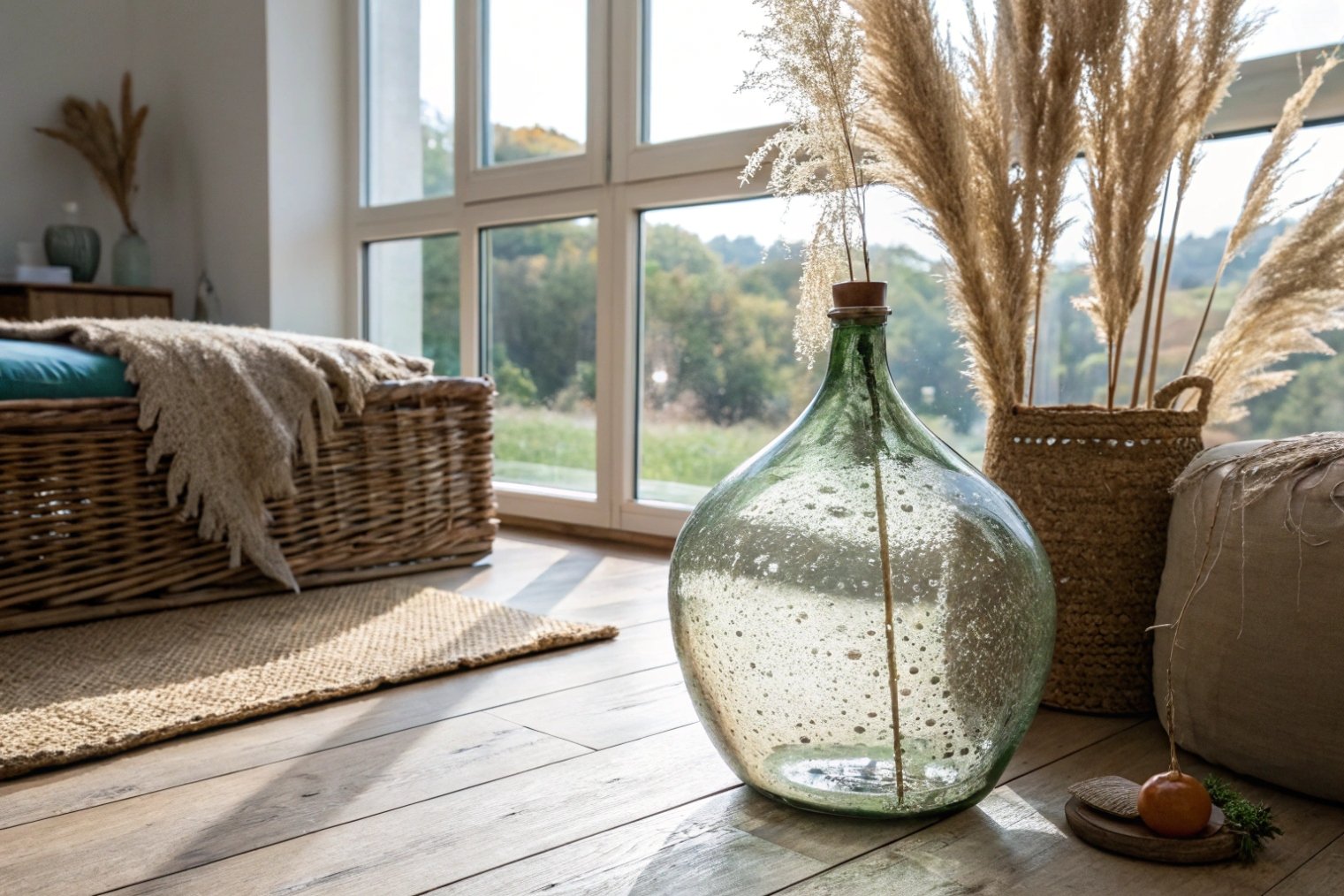
Handmade or mouth-blown bottles often have tiny bubbles, slight waves in the glass, and small changes from piece to piece. In décor, these “imperfections” become charm. They catch light in a softer way and fit well in relaxed, boho, rustic, or artisanal spaces.
They also tend to have thicker walls and heavier bases. That gives a nice weight in the hand and decent stability on the floor or a low table. As pure décor objects, they age well because they never look too perfect or “mass-produced”.
But there are trade-offs:
- Neck openings vary slightly, so stoppers, corks, and diffuser collars may not fit as precisely.
- Sets of three may not be exactly the same height. For some styles that is nice; for strict modern layouts it can look messy.
- Price per piece is much higher, especially for large volumes.
Machine-made bottles have their own strengths:
- Very consistent neck finishes, so corks, screw caps, and diffuser closures seat properly.
- Tight control of volume and height, which helps when you create symmetrical groupings.
- Much lower price, so you can buy several sizes and colors to test in your space.
If you plan a diffuser product or small décor line to sell, machine-made bottles usually make more sense for production. If you want one special floor bottle or a hero piece on a console at home, a handmade bottle can justify the premium.
A simple rule that works well: choose handmade for the big “statement” bottles, and machine-made for smaller support bottles, diffusers, and repeated elements. If you want to understand why handmade pieces vary, the glassblowing technique of forming an object by inflating molten glass 4 explains the core mechanics.
How do you balance aesthetics with durability and cleaning?
Décor bottles only look good if they survive daily life and stay clean. A stunning but fragile, impossible-to-clean bottle becomes clutter very fast.
Choose thicker glass, stable bases, and manageable openings first, then pick finishes and textures that hide water lines and fingerprints while still matching your style.
Stability and safety come first?
Look at the base and footprint before you fall in love with a shape.
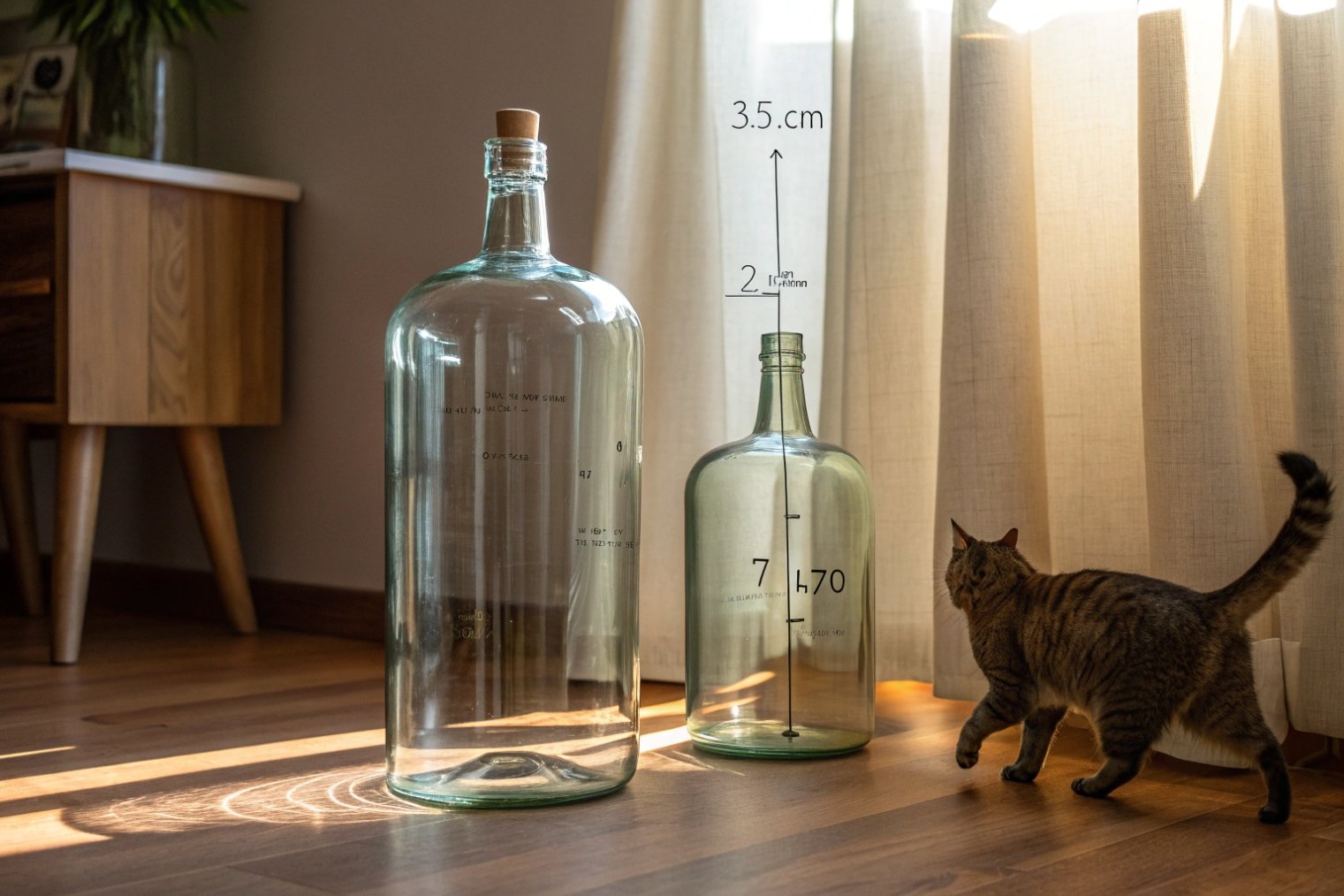
- For floor bottles, choose wide bases and decent weight. A tall, very slim base tips easily, especially with pampas grass acting like a sail.
- For shelves and consoles, avoid very tall, narrow bottles close to edges. Medium height with a low center of gravity is safer.
- In homes with kids or pets, keep heavy glass off high shelves and use lighter bottles or plastic up high.
Weight is not only about feeling “premium”. It is about safety. A heavy bottle has more inertia and is less likely to move when someone brushes past the table.
Cleaning and maintenance?
Openings decide how hard cleaning will be.
- Wide mouths are easy to clean with normal brushes or even by hand. These are best if you plan to change water often or run them in the dishwasher.
- Very narrow necks look elegant, but they trap limescale, algae, and dust. You will need special brushes or cleaning beads.
Finishes also change cleaning behavior:
| Finish type | Look and feel | Cleaning and maintenance |
|---|---|---|
| High-gloss | Bright, reflective, sharper look | Shows fingerprints and water lines more clearly |
| Frosted / matte | Soft, diffused light, calm appearance | Hides water marks, can hold oils more |
| Textured | Adds pattern and grip | Hides smudges, but dust collects in grooves |
If you’re choosing matte for “forgiveness,” it helps to know what it is: an etched-glass surface made by acid or similar processes 5 tends to scatter light and hide streaks.
For stubborn haze in vases and carafes, mild acids are often enough—many care guides recommend citric acid or vinegar for limescale deposits 6 followed by a thorough rinse.
Durability in daily use?
Most décor bottles are soda-lime glass, which is strong enough for normal home use. To improve durability:
- Avoid strong thermal shocks (boiling water directly into a cold bottle).
- Use felt pads or coasters under very heavy bottles on delicate surfaces.
- Choose simpler, smoother silhouettes if you know you will move them often; fewer sharp shoulders mean fewer weak spots.
So the balance is simple: if you hate cleaning, buy wide-neck, frosted, or textured bottles. If you love crystal clarity and bright reflections, accept a bit more maintenance and choose high-gloss flint glass.
What sizes and closures work best for diffusers and dried flowers?
The same bottle can be a diffuser, a small vase, or a dust trap. The difference is neck size, volume, and closure.
For diffusers, choose stable, mid-volume bottles with controlled neck openings and compatible plugs or collars; for dried flowers, choose taller, lighter bottles with necks matched to stem thickness and no complex closures.
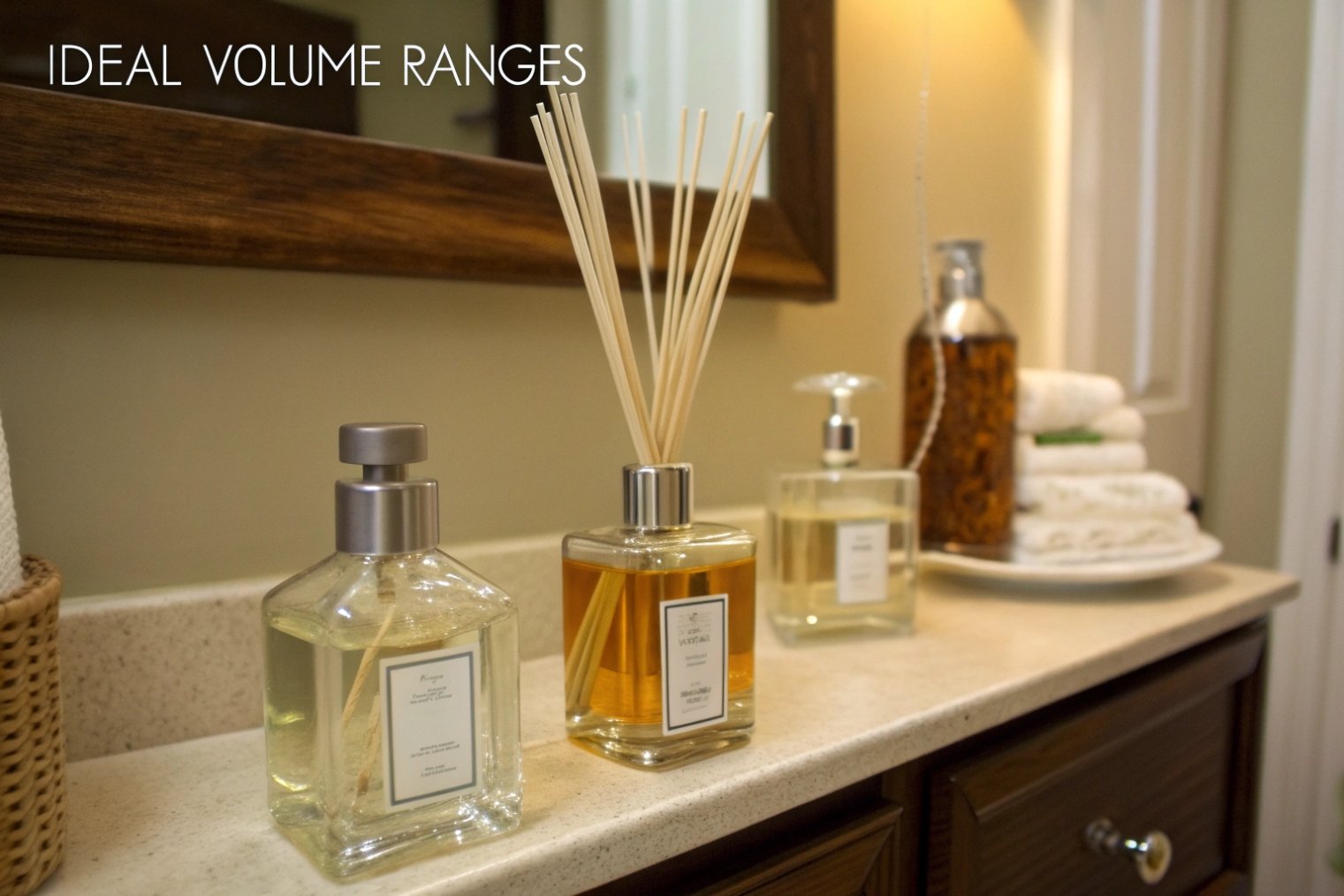
Reed diffusers: control is everything?
For reed diffusers, the bottle is not just décor. It is part of the fluid system.
Key points:
- Volume: 100–500 ml works best for home. Smaller bottles dry out fast; very large ones are heavy and harder to place.
- Neck opening: it should be tight enough to hold reeds upright and slow evaporation, but not so tight that reeds bunch together. Many diffuser bottles use special grommets or collars.
- Stability: a wide base is important, because reed bundles shift the center of gravity upward.
Closures matter too:
- Use stopper caps or plugs that can seal the bottle when not in use or during transport.
- For daily use, many people remove the cap and keep only the decorative collar and reeds, so the bottle itself must look good without a cap.
If you’re designing around performance (not just looks), it helps to understand how reed diffusers work 7. Here, machine-made bottles shine: their necks are consistent, and standard diffuser accessories fit well. Handmade bottles are more risky unless you treat each one as a unique piece.
Dried flowers and grasses: think proportion?
For dried flowers and pampas grass, you worry less about evaporation and more about silhouette.
Simple rules:
- For long pampas or branches, use tall bottles on the floor with heavier bases. The total height of bottle plus stems should feel around 1.5–2× the bottle height for balance.
- For small dried bouquets or single stems, bud vases of 10–20 cm on tables and shelves are enough.
- Narrow necks help hold a small bundle together. Wide mouths make arrangements look loose unless you use many stems.
Closures are mostly decorative here:
- Natural corks and wooden stoppers suit rustic styles.
- Ground-glass stoppers or metal caps fit more modern or industrial looks.
- Often, the best choice is no closure at all, just a clean neck.
If you plan to swap between fresh and dried flowers, pick bottles that can handle water without staining inside. Frosted or matte finishes hide water lines if you forget to clean immediately.
Finally, think about reuse. Bottles in the 500–2000 ml range are easy to repurpose later as kitchen storage, bigger vases, or even DIY lamps. That makes them a smarter long-term buy than very odd sizes.
Conclusion
Good décor bottles are not random; they are quiet tools. When shape, color, finish, and function match your space, the whole room feels more intentional.
Footnotes
-
Proportion rule for arranging flowers: stems about 1.5–2× vase height for balanced décor. ↩ ↩
-
Quick explainer of Scandinavian design traits (clean lines, neutral palette) to match bottle style. ↩ ↩
-
Industry view on why flint, amber, and green bottles are recycled separately and can be recycled repeatedly. ↩ ↩
-
Defines glassblowing and why mouth-blown pieces vary in shape and thickness. ↩ ↩
-
Explains etched glass and how acid creates frosted, translucent surfaces. ↩ ↩
-
Practical tips for removing limescale and cloudiness from glass using mild household acids. ↩ ↩
-
Simple explanation of how reed diffusers wick oil through reeds and release fragrance by evaporation. ↩ ↩






