
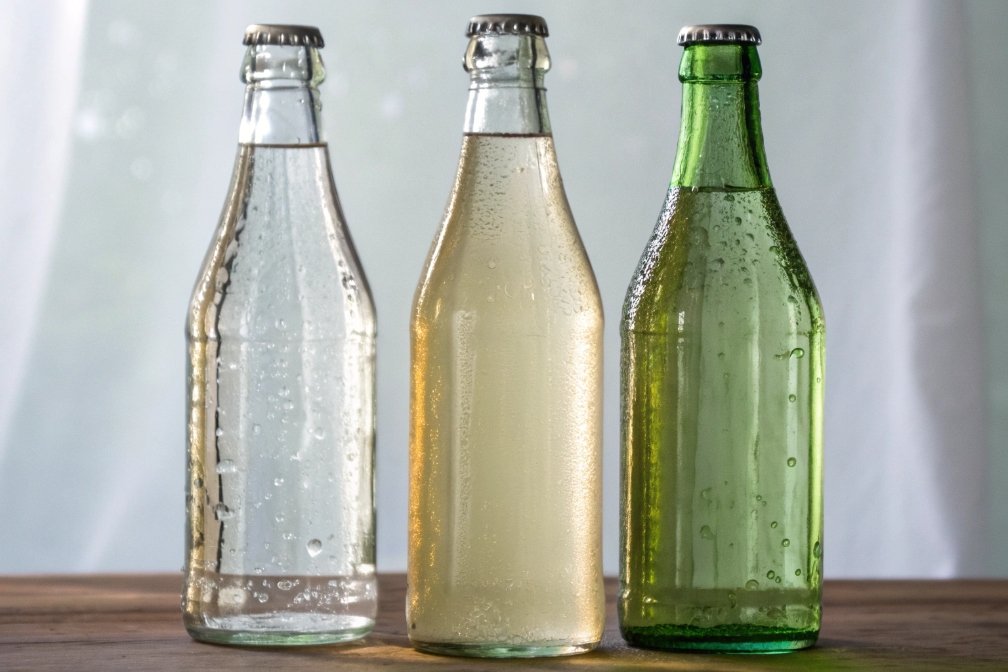
When a buyer sends a drawing, the first question after “Can you make this?” is almost always “How much will it cost per bottle?”
Material and specification choices can move glass bottle prices a lot: soda-lime is the baseline, high-flint and colors add a moderate premium, while borosilicate and heavy premium designs sit in a much higher price tier.
For most projects, price is not decided only by “size in ml”. It also depends on glass formulation, color, weight, recycled content, and the level of control needed on optical clarity. If we understand how each lever works, we can design a bottle that matches both the brand and the budget.
What is the price difference between soda-lime, high-flint (extra-white), and borosilicate glass?
A 500 ml bottle can cost very different amounts depending on what it is made from, even if it looks similar at first glance.
Standard soda-lime bottles usually sit at the lowest price level, high-flint (extra-white) adds a clear premium for purity and brilliance, and borosilicate is typically the most expensive due to its composition and forming process.
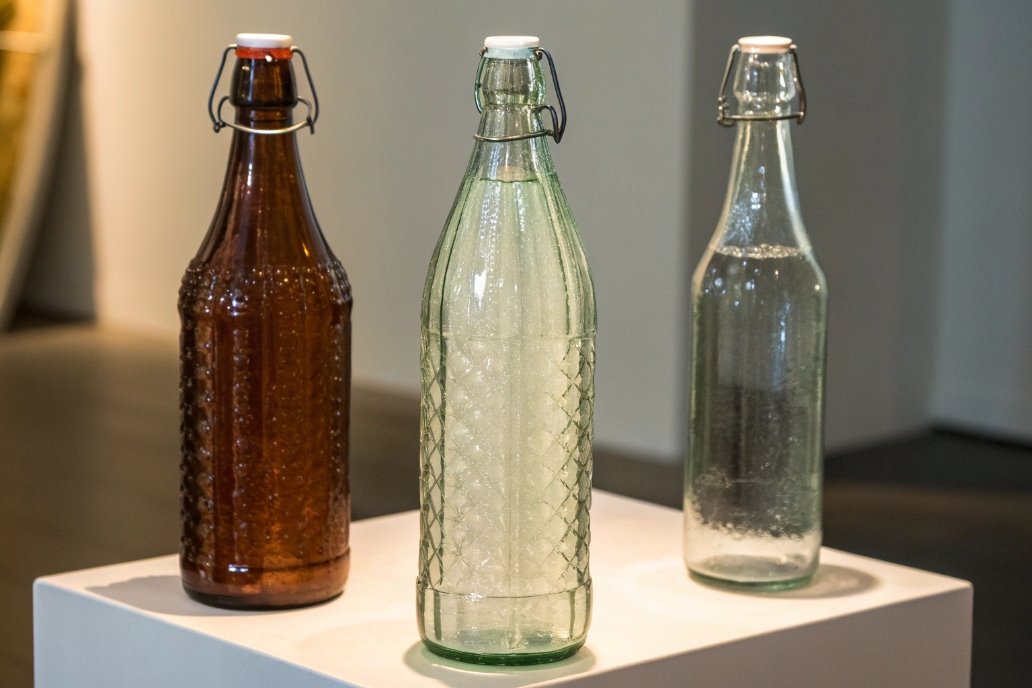
How the material drives cost tiers
In normal packaging work, I think about three broad families:
-
Standard soda-lime glass
This is the “workhorse” for food, beverage, cosmetic, and many pharma bottles. Raw materials (quartz sand, soda ash, limestone, etc.) are widely available, melting temperatures are lower than special glasses, and forming equipment is very mature and efficient. For most volume projects, standard soda-lime glass 1{#fnref1} is the lowest-cost baseline. -
High-flint / extra-flint (extra-white)
These are still soda-lime glasses, but they use low-iron sand and tighter quality control to achieve very high clarity and brightness. They also may run with lower levels of recycled cullet to avoid color contamination. This means:- Higher raw-material cost.
- Stricter control on batch and furnace.
- More inspection for cosmetic defects.
So high-flint / extra-flint (extra-white) 2{#fnref2} bottles are usually noticeably more expensive than standard flint at the same weight and volume.
-
Borosilicate glass
Borosilicate glass 3{#fnref3} uses more silica and boron oxide and melts at higher temperature. Furnaces often run hotter, forming speeds can be lower, and volumes are smaller. Many operations are less automated or run on equipment designed for labware and specialty containers. All this pushes cost up. As a rough rule, borosilicate bottles are often in a different price bracket from soda-lime, especially at smaller order volumes.
A simple way to visualize it (for similar bottle size, undecorated, same order size):
| Material type | Relative price vs standard soda-lime (qualitative) |
|---|---|
| Standard soda-lime flint | Baseline (lowest) |
| High-flint / extra-flint | Higher (premium clarity surcharge) |
| Borosilicate | Significantly higher (special glass) |
Of course, final unit price also depends on many other things: order quantity, mold cost amortization, decoration steps, inspection level, and logistics. But if two drawings are identical and only the glass family changes, the ladder above is usually what buyers feel in the quote.
Does using amber or green colorants raise or lower costs compared with flint?
Many brands switch to amber or green for light protection and “natural” image, then worry that color might explode the budget.
Standard amber and green bottles are usually close to, or only slightly above, clear soda-lime in cost; for some lines they can even be competitive or cheaper when they use high shares of colored cullet, while special colors like cobalt blue cost more.
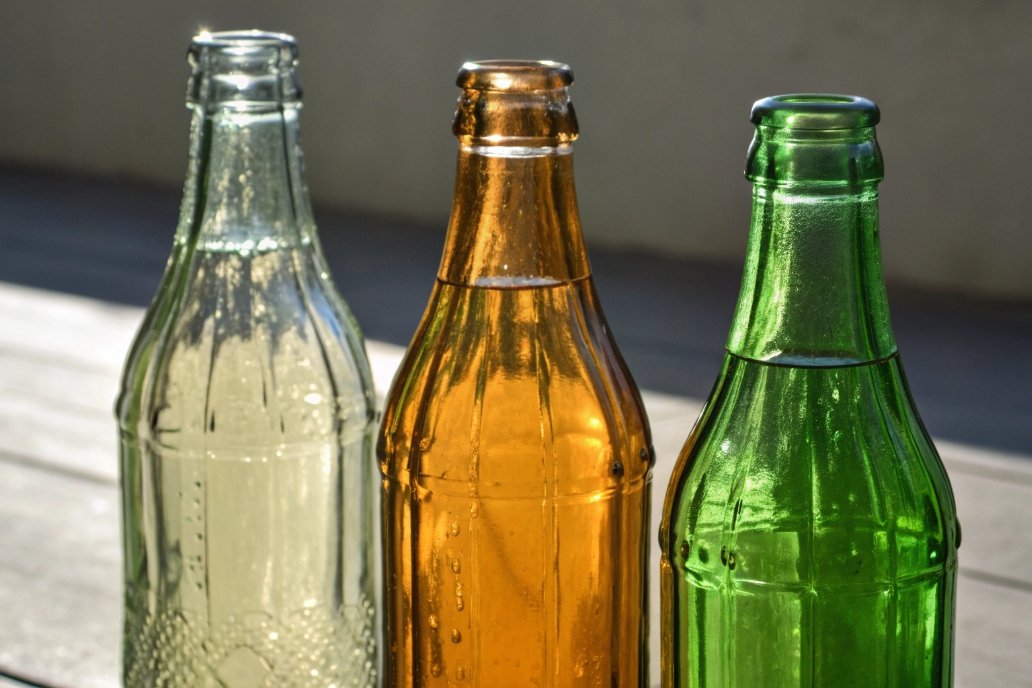
What really changes when we add color
For normal packaging colors, cost changes come from three sides:
-
Colorants
To make amber, green, or other tones, we add metal-oxide colorants (for example iron, chromium, cobalt, selenium, etc.). These are more expensive than basic sand and soda ash. So purely from a raw-material view, colors tend to have slight extra cost. -
Cullet strategy
Colored glasses, especially amber and some greens, can tolerate more mixed-color recycled cullet without visible defects. This often allows:- Higher cullet percentages.
- Use of lower-cost mixed cullet streams.
These savings can offset the colorant cost, especially in markets with strong amber and green glass bottle recycling 4{#fnref4}.
-
Market positioning
Amber is a standard for beer and many pharma bottles, so it is produced at very large scale. Price is not only about material; it is also about how many factories can run that color efficiently.
In practice, for normal soda-lime packaging, the cost relationship often looks like this (same design, same weight, same order volume):
| Color / type | Typical relative cost vs standard flint |
|---|---|
| Standard flint (clear) | Baseline |
| Amber (standard beer / pharma) | Very similar, sometimes slightly higher or similar |
| Standard green | Similar or slightly higher |
| Special colors (cobalt blue, etc.) | Higher (expensive colorants, lower volume) |
So if a customer asks, “Will switching from flint to amber for extra UV protection double my bottle cost?” the realistic answer is usually no. The cost move is modest, and sometimes almost neutral compared with all other factors in the project.
How does PCR/recycled cullet content affect material cost and availability?
Brands want higher recycled content for sustainability goals, and plants want cullet for energy savings. But cullet is not “free glass”; it is a traded raw material with its own price and limits.
Higher post-consumer cullet content can reduce melting energy and virgin raw costs, but price and availability depend on color, purity, and local recycling systems—high-quality flint cullet can even carry a premium in some markets.
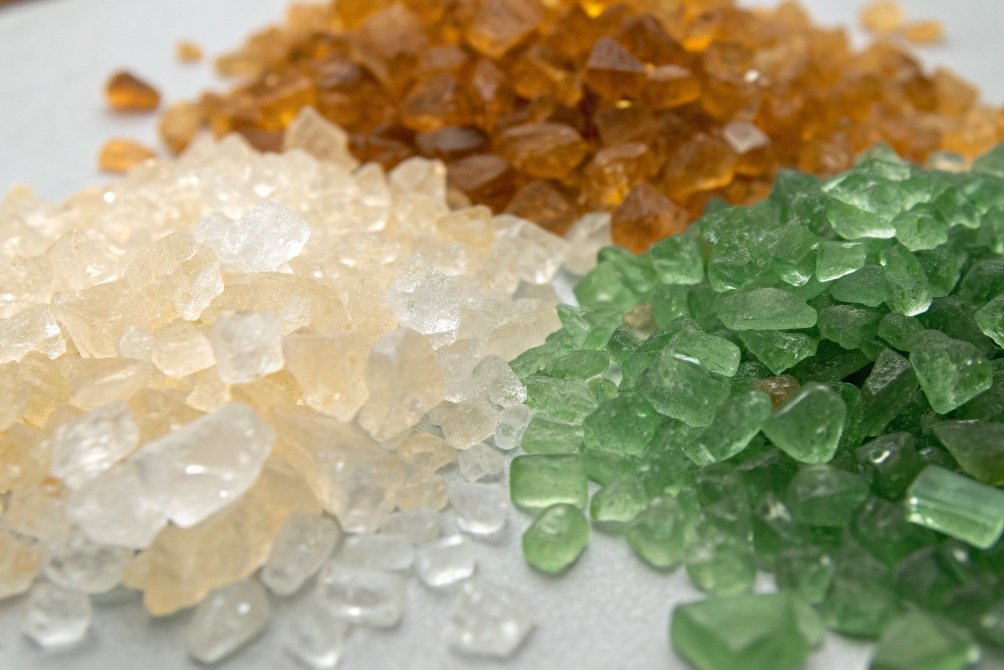
Why recycled content is not a simple “cheap = recycled” story
When we add more cullet to the batch, the furnace usually needs less fuel and less virgin carbonate. This pushes production cost down. However, several points matter:
- Cullet must be sorted, washed, and cleaned.
- Color matters.
- Regional recycling rate matters.
So cost impact depends on what project we are talking about:
-
Standard amber or green soda-lime bottles
These lines often reach high cullet percentages with relative ease. There is more freedom to use mixed cullet and still hit color specs. Here, higher post-consumer cullet content 5{#fnref5} can help keep costs competitive, especially on energy. -
High-flint / extra-white bottles
These need clean, low-iron cullet. The cullet stream must be almost pure flint, with very limited amber or green pieces. This cullet can be more expensive than “average” cullet. The plant still saves energy, but raw cullet itself may carry a premium. -
Borosilicate or special glasses
These flows are smaller and cannot accept standard soda-lime cullet. Recycled content is harder to use, so cost benefits are limited, and supply is more sensitive to small changes.
Availability trade-offs for high PCR targets
When a brand asks for “70% recycled content” on a flint or extra-flint bottle, there are some practical questions:
- Is there enough high-grade cullet in that color in the region?
- Will this cullet level affect optical quality or color stability?
- Does the plant need to buy cullet from far away (extra transport cost)?
If cullet supply is strong and local, high PCR targets help both climate and cost. If supply is tight, we may reach a point where pushing higher PCR increases the cullet purchase price or pushes the project to a different color (for example, using amber or green to absorb more mixed cullet).
In short, recycled cullet usually helps on cost at the furnace. But the total project cost also depends on cullet market price and the technical limits of the glass color and grade.
Premium spirits, cosmetics, and skincare often want deep punts, thick walls, and a very solid “hand feel.” It is good for brand image, but it is never neutral on cost.
Yes. Heavy-weight, thick-wall designs increase glass usage per unit, can run at lower forming speeds, and often need tighter cosmetic control, which together create a clear price premium compared with lightweight bottles.
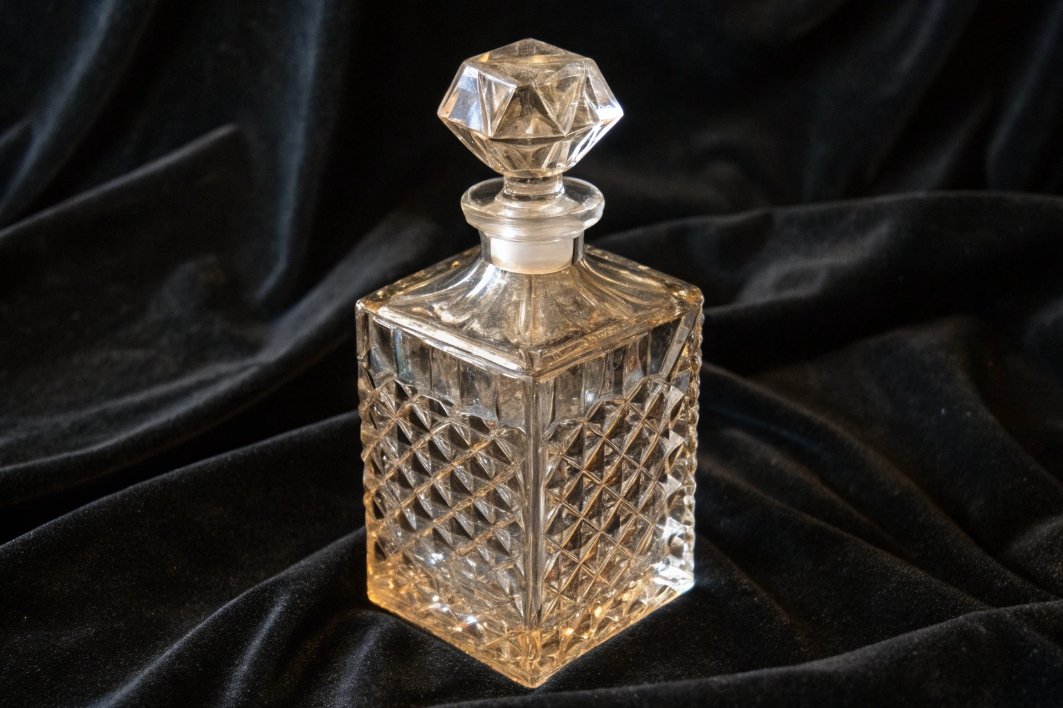
Where the extra money goes in a heavy bottle
When we move from a standard design to a “luxury” spec, several cost drivers rise at the same time:
-
More glass per bottle
The most direct change is simple: a heavier bottle contains more glass.- More raw material.
- More energy to melt and form.
- Higher weight for transport (freight cost per filled unit goes up as well).
-
Forming and cycle time
Thick-wall bottles take longer to form and cool. This can:- Reduce mold cavity output per hour.
- Require more advanced forming controls and cooling.
- Lower the number of sellable bottles per machine per day compared with a light design.
-
Quality and cosmetics
Premium bottles usually demand:- Stricter control on bubbles, cords, and stones.
- Cleaner seams, sharper edges, and well-defined embossing.
- Careful polishing or extra surface treatments.
More inspection and higher reject rates naturally push unit cost up.
-
Mold and tooling complexity
Deep punts, heavy push-ups, and special shoulders need more complex and often higher-cost molds. The amortized mold cost per bottle depends on order life and volumes, but for limited runs it is not small.
A simple comparison for a similar volume bottle (for example, 700 ml spirit):
| Design type | Typical empty weight | Relative price vs standard |
|---|---|---|
| Lightweight standard bottle | Lower | Baseline |
| Medium-weight premium | Medium | Higher |
| Heavy-weight “luxury” bottle | High | Significantly higher |
When heavy glass makes sense, and when it does not
From a technical view, heavy glass is not “better” than light glass if both meet strength and sealing requirements. The extra weight does not always add real functional value. But for certain categories, brand owners choose it on purpose:
- To communicate luxury and quality through hand feel and shelf presence.
- To differentiate from competitors in a crowded category.
- To improve stability on the bar or shelf for tall, narrow shapes.
For applications where shipping cost and sustainability targets are more important than “weight in hand,” lightweight bottle designs 6{#fnref6} are more efficient. A smart specification phase compares:
- Material and forming cost.
- Transport and pallet efficiency.
- Brand and marketing goals.
Once heavy-weight, thick-wall designs 7{#fnref7} are confirmed, everyone should understand that cost per bottle will sit in a higher tier than a simple lightweight bottle made from the same material and color.
Conclusion
Glass bottle prices shift with every choice—material, color, cullet content, and weight—so the best strategy is to decide which “premium” features really support the brand and then build the spec around a realistic cost and supply picture.
Footnotes
-
Overview of standard soda-lime bottle glass and its typical packaging applications. ↩ ↩
-
Explains the definition and visual properties of flint and extra-flint glass grades. ↩ ↩
-
Technical summary of borosilicate glass composition and key performance characteristics. ↩ ↩
-
Industry facts on amber/green glass recycling and the role of color-sorted cullet. ↩ ↩
-
Report on recycled-content targets, cullet quality, and CO₂ savings in container glass. ↩ ↩
-
Discussion of lightweight bottle engineering and its impact on cost and sustainability. ↩ ↩
-
Examples and principles of premium glass packaging design for high-end brands. ↩ ↩






