
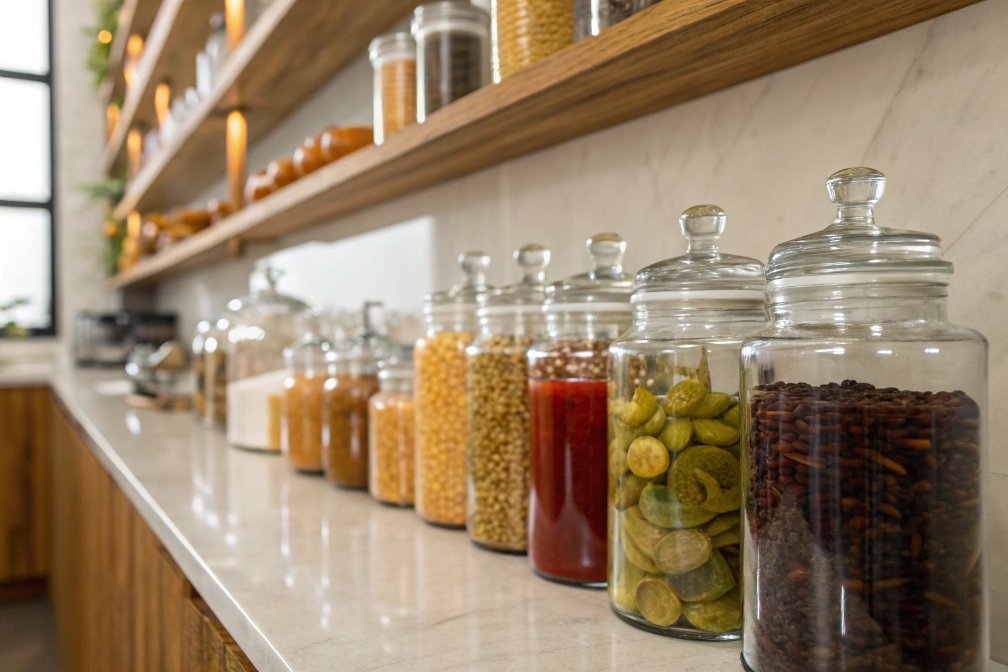
Many home-kitchen and professional food-brand operators face storage issues: leaks, tainted flavour, plastic odors, or containers that fail under heat or vacuum. Glass jars solve many of these pain points.
Glass jars outperform plastics in food storage because they are non‐reactive and non-leaching, handle hot-fill, vacuum and retort processes well, support truly airtight lids, offer transparency/odor-neutrality, and are easy to sanitise and reuse.
Let’s explore each of these key advantages in turn: how well glass handles hot-fill, vacuum and retort; what lids and liners to use for long-term airtightness; how transparency plus odor neutrality help quality control; and the ease of sanitisation and reuse at home.
Do jars handle hot-fill, vacuum, and retort better than plastic?
When you fill or seal foods under heat or vacuum, the container sees real stress. Many plastics warp or leach; glass stands up far better.
Glass jars are well suited for hot-fill, vacuum sealing and even retort (sterilisation under pressure) processes—because glass tolerates temperature and pressure changes and is inert—whereas most plastics have serious limitations.
Let’s break this down with three common processes: hot-fill, vacuum sealing, and retort. Then compare how glass jars perform versus typical plastic jars.
Hot-fill
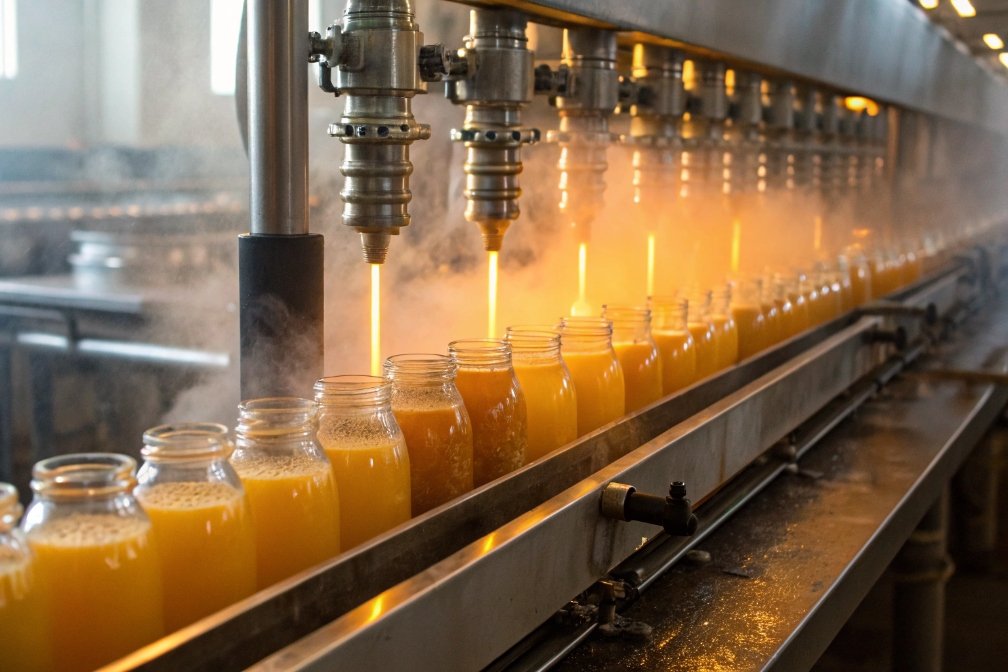
- Hot-fill (typically 85–95 °C) 1 is when a product (juice, sauce, condiment) is filled while hot and then sealed.
- The container must maintain integrity under that temperature and cooling. Glass jars do this because they handle high temperatures without warping, deformation or leaching.
- Many plastics may soften, distort, or become more migration-prone under those conditions, which can compromise shape, seal integrity, and flavour quality.
- Because glass doesn’t react with the fill, glass jars preserve both safe food and flavour when hot-filled.
Vacuum sealing
- Vacuum sealing involves removing air after filling and then sealing. This reduces oxidation and spoilage. Glass jars with tight metal or gasketed lids excel here.
- As food cools, a vacuum seal is formed that prevents any new bacteria from getting in 2. Glass’s rigid rim and body help that seal stay stable over time.
- Plastic jars often have higher permeation (air, moisture) and a less rigid structure, so seals can be more sensitive to creep, distortion, or lid fit issues.
Retort processing
- Retort processing 3 is high-temperature, high-pressure sterilisation used to achieve commercial sterility (especially for low-acid foods).
- Glass jars are widely used in canning because they tolerate the temperature cycles and provide a reliable sealing surface with appropriate closures.
- Many plastics are not rated for full retort conditions (risk of deformation, delamination, or permeability limits), so glass is often the more robust option for long-shelf-life foods.
Comparative table
| Feature | Glass jars | Typical plastic jars |
|---|---|---|
| High temperature tolerance | Excellent (no warping, no leaching) | Variable; many plastics soften or distort |
| Pressure / vacuum sealing | Rigid structure maintains seal | Flexible; higher risk of seal loss/creep |
| Retort compatibility | Proven in home & industrial canning | Often not rated or weaker for retort |
| Chemical inertness | Highly inert (no reaction with contents) | More interaction risk, especially when hot |
| Shelf-life / stability | Very good under heat/vacuum/sterilisation | Lower performance under same conditions |
In summary: yes, glass jars handle hot‐fill, vacuum sealing and retort much better than most plastic jars. Especially for higher-risk foods (low acid, high temp, long shelf) glass offers a superior container.
Which lids and liners ensure long-term airtightness?
A jar is only as good as its closure system. Even glass jars fail if the lid or liner is weak. Choosing the right lid + liner is critical.
For long-term airtightness in glass jars you should use metal or rigid lids with rubber or plastisol liners, vacuum indicating seals or gasket systems, and screw threads or clamp systems designed for reuse and longevity.
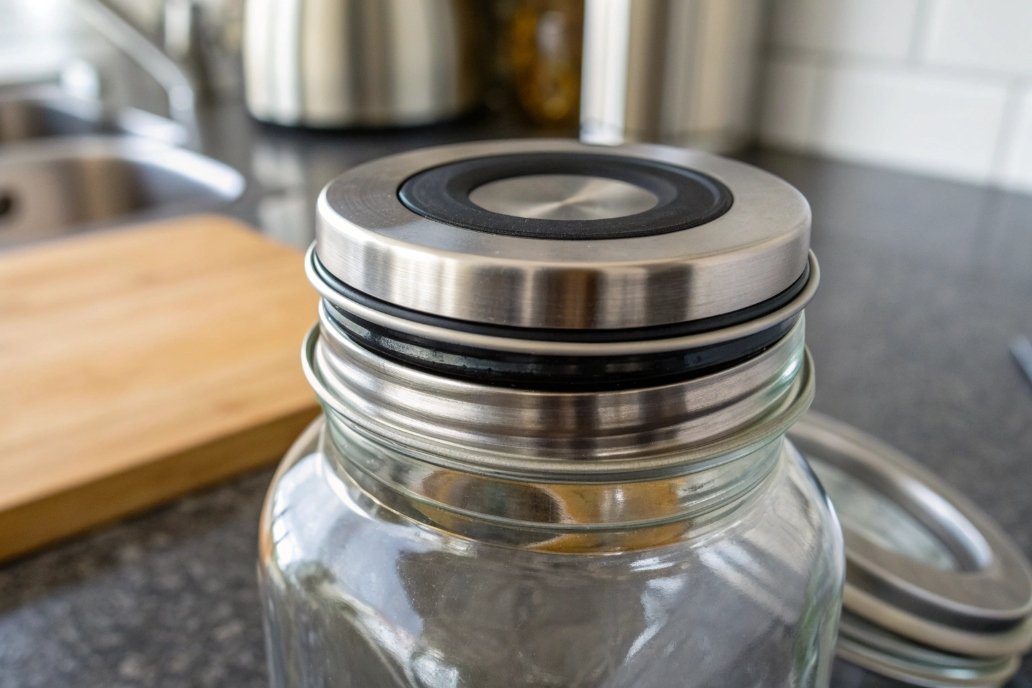
Let’s explore the key elements of lids and liners, what to look for, and why they matter.
Key elements of a good airtight lid system
-
Rigid construction & strong thread or clamp
- The lid must compress the seal evenly and hold vacuum without creep or loosening.
- For canning, the classic reference design is two-piece canning lids 4 that clamp down evenly on a consistent glass rim.
-
Seal liner or gasket
- Many lids use plastisol liners 5 (or rubber/silicone gaskets) to form a hermetic seal against the jar’s sealing surface.
- For hot-fill/retort use, the liner must tolerate heat and pressure without deforming or losing elasticity.
-
Vacuum/pressure retention capability
- After filling (especially hot fill or sterilisation), the internal vacuum protects against spoilage. The closure must maintain that vacuum without allowing air ingress.
-
Compatibility with repeated open/close or reuse
- If the jar is intended for reuse (e.g., home storage), the lid needs to maintain performance after multiple cycles: repeated compression, cleaning, heating/sterilisation.
-
Materials resistant to corrosion / degradation
- Metal lids must resist corrosion from acidic foods. Liners must resist deformation from heat or contact with oils/spices.
Practical recommendations
- Use a two-piece metal lid system for shelf-stable, vacuum-sealed foods: jar + metal band + flat lid with a suitable liner.
- For pantry or daily storage, choose jars with screw-top lids with silicone/rubber gaskets, or clamp-top lids with resilient seals.
- Ensure the liner material is rated for the temperatures you’ll use (hot-fill, dishwasher, boiling-water canning, etc.).
- After sealing, test vacuum: if the lid flexes, pops, or moves, the seal may be compromised. For reuse, inspect rim and liner surface for nicks, residues, or warping.
- Avoid mismatched lids or damaged liners—these are common weak points.
- Clean rims thoroughly before sealing: any debris or product residue prevents tight sealing.
- Label jars with fill date; check for bulging lids, off-smells, or leaks.
By selecting the correct lid + liner system and maintaining it, you ensure long-term airtightness, minimise oxidation/spoilage, and make reuse reliable.
How do transparency and odor-neutrality help quality control?
Storage containers must protect food but also enable easy monitoring. Transparent, odor-neutral glass jars give key advantages here.
Glass jars let you visually inspect contents (colour, clarity, sediment, separation) and avoid odor carry-over or flavour contamination—this improves quality control and consumer confidence.
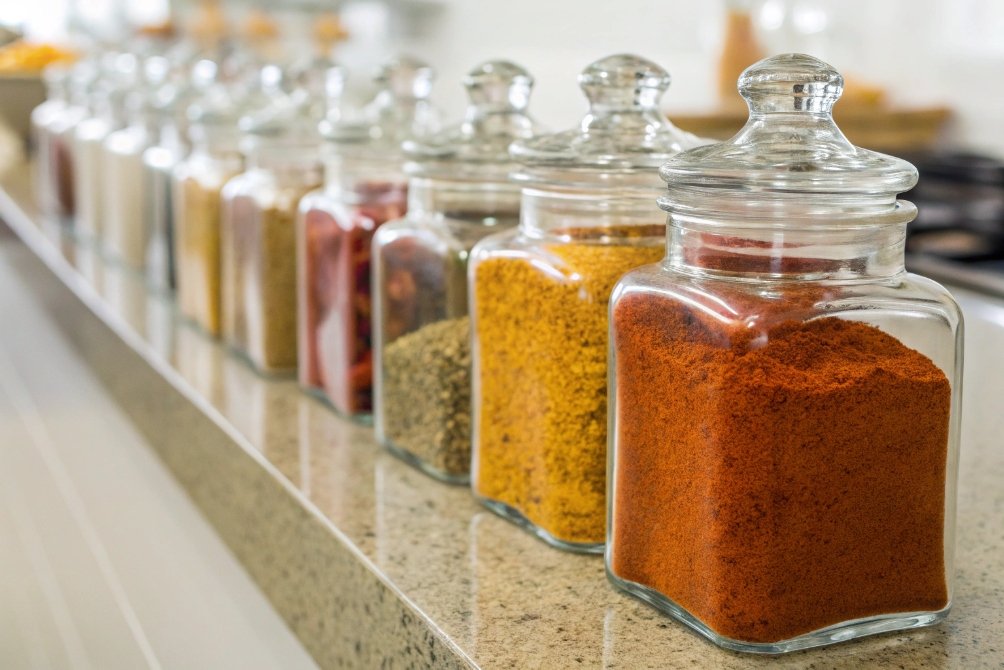
Let’s analyse how transparency and odor neutrality make a difference—especially in home storage, artisan food production, or small-batch packaging.
Transparency
- With glass you can immediately see the contents: colour, texture, clarity, and early signs of spoilage (gas bubbles, separation, mould).
- Transparent jars also help with portion control and inventory management: you know when it’s time to restock and how much remains.
- From a brand perspective, transparency communicates honesty and product quality: customers can see exactly what they get, which builds trust.
Odor- and flavour-neutrality
- Glass is nonporous and impermeable 6, so it does not absorb or retain odours or flavours after proper cleaning.
- In contrast, many plastic containers can retain strong smells (e.g., garlic, curry, tomato) and sometimes pass that “ghost” aroma into the next food stored.
- Neutrality also helps with reuse: you can store different foods in the same jar after washing without worrying about cross-odour contamination.
Combined impact on quality control
When you combine transparency with odor-neutrality, you get a container that supports:
- Quick visual inspection of product condition.
- Less hidden contamination risk from residual odours or flavour transfer.
- Better consumer confidence (they can see the product; no plastic smell cues).
- Easier multi-purpose reuse without compromising taste.
Are glass jars easier to sanitise and reuse at home?
If you’re storing food at home or offering a product for reuse, container durability, clean-ability and repeat usability matter. Glass jars perform strongly in these areas.
Glass jars are easy to sanitise (dishwasher, boiling, steam), resist stains and odors, and support reuse far better than most plastics—making them ideal for home storage, repurposing and zero-waste efforts.
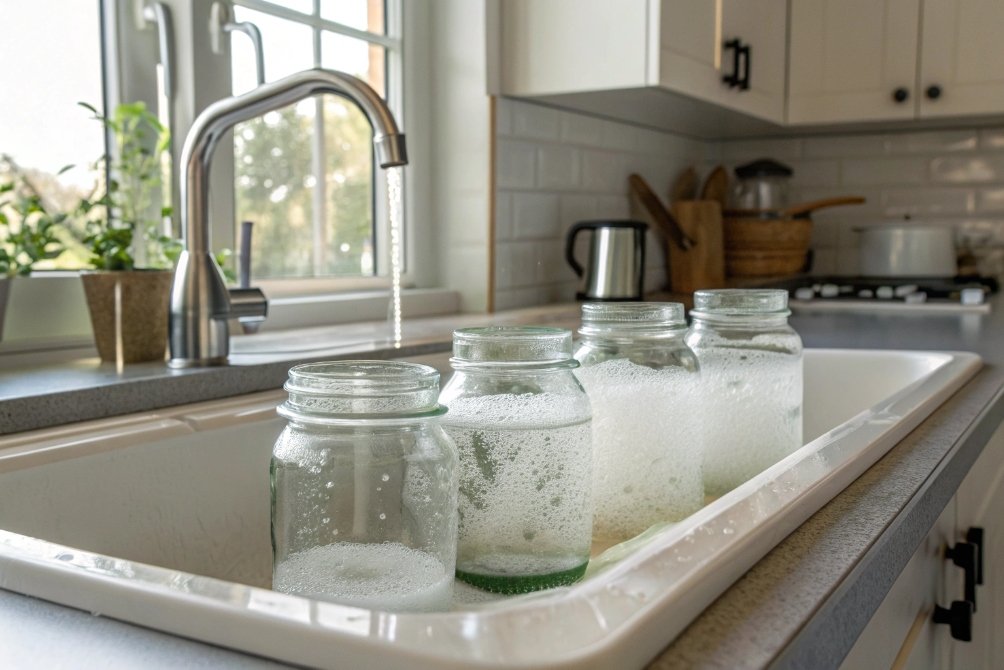
Let’s consider the practical aspects of sanitisation and reuse: what makes glass jars easier, what the limitations are, and how to make the most of them.
Ease of sanitisation
- Glass can handle dishwashing, boiling, and hot-water/steam approaches without warping.
- For home preservation workflows, trusted canning guidance such as the NCHFP’s Sterilization of empty jars 7 shows how glass jars can be heat-sanitised effectively when needed.
- The smooth, non-porous surface of glass is also less prone to holding stains and odours than many plastics that accumulate micro-scratches over time.
Reuse benefits
- With normal care, glass jars can be reused for years: dry goods, spices, leftovers, fermentation, pantry display, and small-batch product packaging.
- Reuse is especially practical when you maintain the closure system: keep rims chip-free, replace worn gaskets/liners, and avoid damaged lids.
Things to watch
- Inspect for chips, cracks, or damaged rims—these compromise safety, sealing, and reuse potential.
- Lids/liners are often the limiting factor for reuse. If sealing performance drops, replace the closure rather than forcing it.
- Freezing liquids in glass jars: leave head-space and avoid rapid temperature shocks to reduce break risk.
- Glass is heavier and can break if dropped—handle with care and store with weight in mind.
Summary of reuse advantage
Using glass jars means you gain: easy cleaning and sanitising, long-term reuse with minimal degradation, flexible storage uses, improved food safety readiness, and reduced container turnover.
Conclusion
Glass jars deliver superior performance for hot-fill/retort/vacuum conditions, ensure reliable airtight sealing with the right lids/liners, support visual and sensory quality-control via transparency and odor-neutrality, and offer strong sanitisation and reuse benefits. In short: for food-safe, long-term storage and reuse, glass jars are the smart choice.
Footnotes
-
Hot-fill temperature basics and typical ranges—useful for matching jar material to process heat. ↩ ↩
-
Explains how cooling creates a protective vacuum seal that helps keep new bacteria out. ↩ ↩
-
Clear technical overview of retort processing and why it’s used for commercially sterile shelf-stable foods. ↩ ↩
-
Practical guidance on recommended jars and lids for safe, reliable canning seals. ↩ ↩
-
Quick explanation of plastisol liners and how they create airtight seals in metal closures. ↩ ↩
-
Summarises glass’s nonporous, impermeable properties that protect taste and prevent odor carry-over. ↩ ↩
-
Step-by-step jar sterilisation guidance for home canning workflows when pre-sterilising is required. ↩ ↩






