
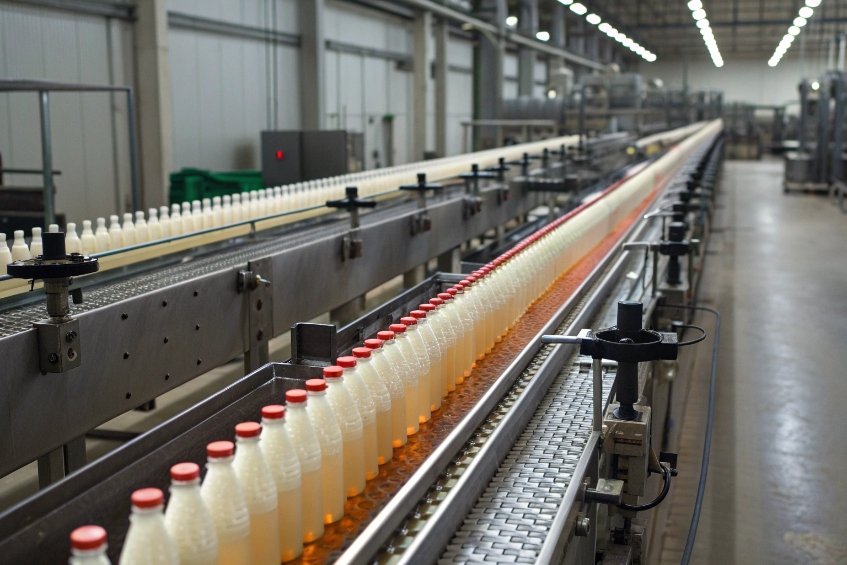
Glass bottles can all look similar at first sight. Real quality sits in small numbers, hidden stresses, and the way each bottle behaves on the filling line.
To tell quality apart, focus on dimensions at the finish and base, annealing stress, coatings, and AQL rules. These points decide line speed, breakage rate, and brand image, more than color or weight alone.
When these factors line up, bottles feed smoothly, close well, and survive long supply chains. When they slip, you see chipped finishes, leaks, scuffed glass, and sudden line stops. Let us walk through each factor in a simple, practical way.
Which dimensional tolerances matter most on filling lines?
Many buyers look at height and weight first. Filling lines care more about the neck finish, mouth plane, body diameter, and base stability.
The most important tolerances are finish dimensions, mouth planarity, body and neck diameters, and base run-out, because they control sealing, handling, and conveyor stability.

The finish: where sealing success starts
On any closure system, the finish is the most sensitive area. For corks, caps, pumps, or droppers, the closure must match this small geometry.
Key finish factors:
- Mouth plane: The top surface must be flat within tight limits. A tilted land gives uneven cork compression or liner contact.
- Bore diameter and roundness: This controls cork diameter choice and compression. Too small causes cork damage. Too large gives low holding force and leakage risk.
- Thread or bead dimensions: For screw finishes, the finish dimensions (T, E, and H) 1 and thread profile drive cap torque and sealing.
Good suppliers check these with go/no-go gauges and record data mold by mold. Tight finish control is one of the clearest signals of higher-grade production.
Body and neck: how the bottle travels
The body and neck shape affect how bottles move through depalletizing, rinsing, filling, and labeling.
Important points:
- Overall height: Must stay in tolerance to match filler heads, corkers, cappers, and capsules.
- Body diameter and ovality: Too much ovality causes problems at labelers, case packers, and carton dividers.
- Neck straightness: A crooked neck puts the closure off-axis and creates uneven label and capsule lines.
Uniform dimensions reduce micro-collisions on conveyors. This lowers scuffing and impact breaks.
Base and punt: small details, big effect
The base must sit flat. The push-up or punt must be centered.
Look for:
- Base tilt (run-out): If the base is not parallel to the mouth, the bottle rocks. On a fast line, rockers tip, jam guides, or strike each other. A quick runout measurement overview 2 helps align how teams define and check this.
- Punt centering and depth: A centered punt improves stability and gives room for closure caps in stacked cases.
Dimensional consistency here is part of the quality story. It supports the visual cues buyers see: stable stance, straight labels, and good shelf presence.
How does annealing quality reduce stress and breakage?
Two bottles can have the same shape and weight. One will survive transport, the other will shatter from a light knock. The difference often sits in annealing.
Good annealing removes internal stress from forming. It gives glass better impact strength, thermal shock resistance, and lower random breakage on the line and in the field.
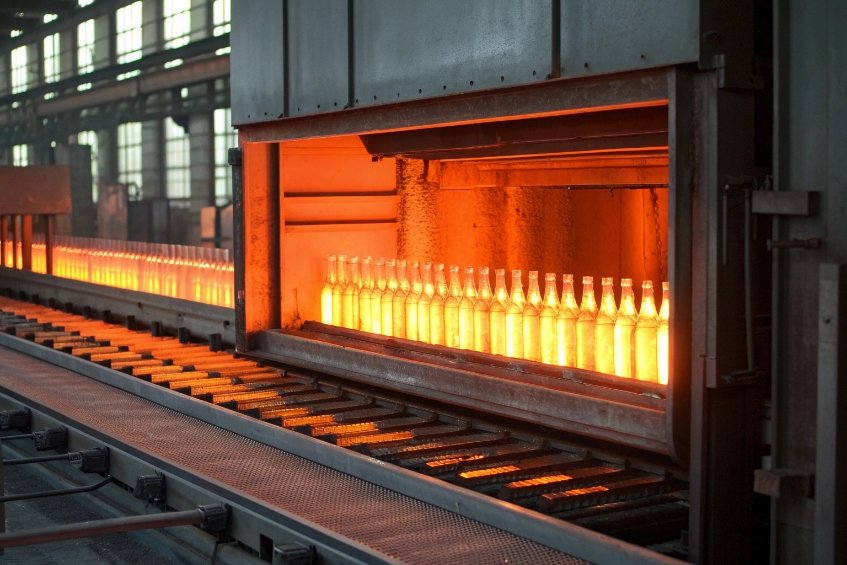
What annealing does inside the glass
During forming, the surface cools faster than the inside. This creates internal tensile and compressive stresses. If the bottle goes straight to packing, these stresses stay frozen in the glass. Later, a small impact or temperature shift can release the stress and cause sudden breakage.
The annealing lehr 3 heats bottles back up to a controlled range, then cools them down slowly. This relaxes the stresses to a safe level.
Proper annealing:
- Reduces residual stress to a stable, low level
- Balances stress patterns around the finish, shoulder, and heel
- Improves thermal shock performance
This is why good producers treat the lehr as a critical process, not a simple tunnel.
How to read annealing quality
You cannot see stress with the naked eye. You can see its effects. High-quality plants use a polariscope stress inspection 4 to check stress patterns as part of routine quality control.
With a polariscope:
- Uniform, regular fringe patterns mean well-annealed glass.
- Dense, irregular fringes near the finish, shoulder, or heel mean high stress.
From a buyer side, you may not own a polariscope. Still, you can watch field behavior:
- Many unexplained breaks in full pallets
- Breaks at normal warehouse temperatures
- Sudden shattering when a bottle touches another
These signals often point to poor annealing, not just “thin glass.”
Premium bottles often use heavier glass and refined shapes. They face more decoration steps, like hot foil or screen printing, and longer shelf life. Poor annealing will show faster in these products.
When a supplier controls annealing well, you get:
- Lower scrap and downtime on your line
- Fewer complaints from distributors and retailers
- Stable performance when you add hot or cold processes
So annealing quality is a “hidden” premium feature, even though end customers never see it.
Do scuff-resistance coatings indicate higher durability?
Most modern bottles carry invisible coatings. These coatings reduce friction and scuffing. They support line speed and keep the glass looking fresh.
Hot-end and cold-end coatings improve scuff resistance and durability. They are strong signs of a mature process, but they do not replace good glass design and annealing.
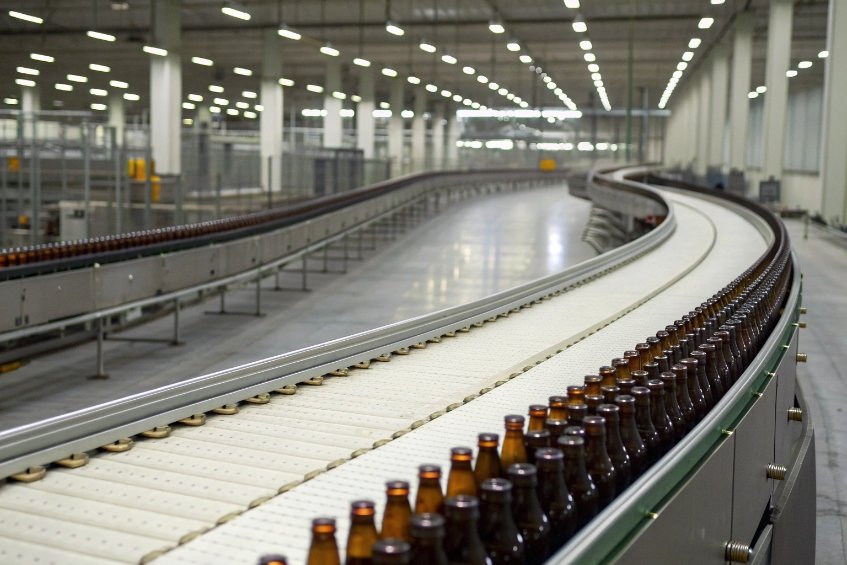
What the coatings do
Two main coating steps appear on many bottles:
- Hot-end coating: often a thin hot-end tin oxide coating 5 applied right after forming. This helps future cold-end coatings bond and protects the surface.
- Cold-end coating: usually a cold-end polyethylene wax coating 6, applied before bottles enter packaging. This coating lowers friction and improves scratch and scuff resistance.
Together, they create a “sacrificial skin” on the glass. Bottles slide better on conveyors and in crates. They suffer less visible wear, even when they contact each other many times.
How coatings show up in real use
You see the effect of coatings in:
- Lower scuff marks on the shoulder and body after filling and transport
- Less “orange peel” appearance from surface wear
- Fewer label adhesion problems caused by surface scratches
Coated bottles usually run faster and cleaner on high-speed lines. This is a strong plus for large scale bottlers.
Coatings as a quality signal, not a full guarantee
Good coatings show that the supplier invests in both hot-end and cold-end control. But coatings cannot solve every weakness.
Limits to remember:
- Coatings cannot fix thin walls or poor weight distribution.
- Coatings cannot remove high residual stress from bad annealing.
- Coatings wear away over time in reuse or harsh handling.
So when you see good scuff resistance, you should still check the basics: dimensional control, defect level, annealing quality, mechanical tests.
The real premium bottle is a package: strong design, safe annealing, correct composition, plus efficient coatings. Coatings are one important part of that package.
Which AQL levels and sampling plans should buyers set?
Visual and dimensional checks help, but they need structure. This is where AQL and sampling plans come in. Without clear limits, “good enough” means something different to every person.
Set strict AQL levels for critical and major defects, use standard sampling plans, and link them to clear defect lists. This makes quality measurable and enforceable.
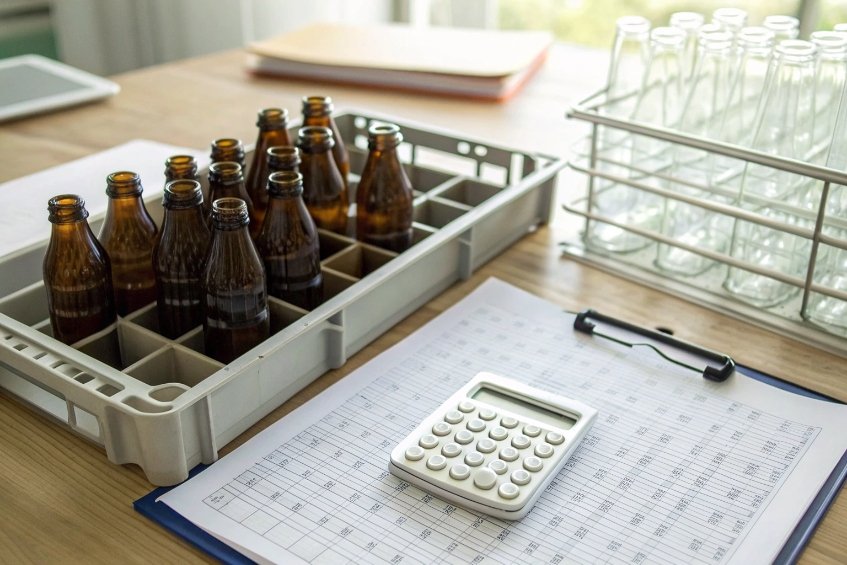
How to think about defect classes
Not all defects are equal. Some cause safety issues. Some only affect appearance.
A simple way to group them:
- Critical defects: risk to safety or product integrity. Examples: stones, cracks, bird swing, sharp edges on finish, heavy checks.
- Major defects: affect function or brand image. Examples: bad base stability, strong seams, large bubbles, heavy scuffs, poor finish dimensions.
- Minor defects: small cosmetic issues that most consumers will not notice. Examples: tiny seeds, light scuffing, small variations in embossing.
You need a written catalogue with photos. This avoids long arguments later.
Example AQL levels for glass bottles
Exact numbers depend on your product, market, and risk appetite. Many buyers follow a pattern like this for incoming inspection:
- Critical defects: AQL 0 (no critical defects accepted in the sample)
- Major defects: AQL around 0.4–1.0, depending on brand level and volume
- Minor defects: AQL around 1.5–4.0, looser for mass-market items
You then pick a sampling plan, often based on a standard like ISO 2859-1 sampling procedures 7 or ANSI/ASQ Z1.4. You choose the inspection level (often General II) and lot size. The table gives sample size and accept/reject numbers for each AQL.
This may sound formal, but it turns “I feel quality is bad” into “This lot failed the agreed plan.” That is much easier to manage.
Using AQL with process capability
AQL inspection is not the only tool. It is a safety net. High-level suppliers also run SPC on key dimensions and weight.
You can ask for:
- Control charts of finish dimensions and weight
- Mold-to-mold variation reports
- Defect rate trends for each defect category
When AQL and SPC move in the same direction, you know the process is stable. When they disagree, you can investigate together.
For long-term partnerships, the goal is simple: fewer surprises. Clear AQL levels and sampling plans are one of the fastest ways to get there.
Conclusion
Glass bottle quality is not one single feature. It is the way dimensions, annealing, coatings, and AQL rules work together so each bottle runs cleanly, seals tightly, and protects your product from the factory to the table.
Footnotes
-
Learn common bottle finish dimensions (T/E/H) to match closures and avoid torque/seal issues. ↩︎ ↩
-
Understand runout and why small tilt causes wobble, jams, and inconsistent handling on high-speed lines. ↩︎ ↩
-
Overview of annealing lehrs and temperature control to reduce residual stress in formed glass containers. ↩︎ ↩
-
Practical guide to using a polariscope to visualize residual stress patterns in glass containers. ↩︎ ↩
-
Explains hot-end tin oxide coatings and how they protect surfaces and improve bonding for later coatings. ↩︎ ↩
-
Research summary on polyethylene wax cold-end coatings used to lower friction and scuffing on glass containers. ↩︎ ↩
-
Official ISO page for attribute sampling plans, helping buyers set defensible AQL sampling and accept/reject criteria. ↩︎ ↩






