
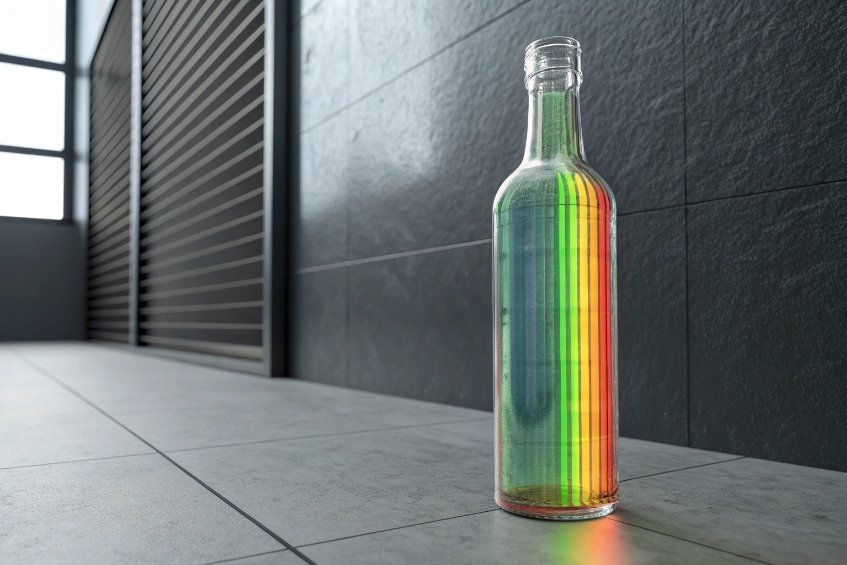
Uneven pressure inside a glass bottle feels like it should be “one number” (bar/psi). In reality, uniform internal pressure turns into a very non-uniform stress map because geometry, thickness, stress history, temperature, and closures are never perfectly uniform.
Uneven pressure distribution (really: uneven stress under pressure) comes from geometry and thickness variation, residual stress, surface flaws, temperature gradients, closure loading/liner fit, and the way the contents generate or change pressure over time.
The real idea: pressure is uniform, stress is not
Internal pressure applies everywhere, but glass fails where local tensile stress at a flaw becomes highest.
Common “stress hot spots” on bottles:
- Heel / base edge (contact + high local stress)
- Shoulder transition (bending + geometry change)
- Finish / neck (torque + sealing loads + ovality)
A simple cause map:
| Driver | What it changes | Typical failure origin |
|---|---|---|
| Thin wall band / ovality | Higher local hoop stress | Sidewall / shoulder / heel |
| Tensile residual stress | Less margin before cracking | Lane-specific origin clusters |
| Scratches / checks | Stress concentration at flaw tip | Where scuff bands exist |
| Temperature gradients | Thermal stress adds to pressure stress | Panel or ring crack zones |
| Closure torque / liner mismatch | Extra hoop + bending at finish | Finish / upper neck splits |
| Carbonation + headspace + warming | Higher and changing internal pressure | Any weak point (often heel/shoulder) |
Do thin walls or residual stress create local weak points under load?
Yes—thin walls amplify hoop stress, and tensile residual stress consumes the safety margin. When they overlap in the same zone, the bottle becomes “locally weak” even if average thickness looks fine.
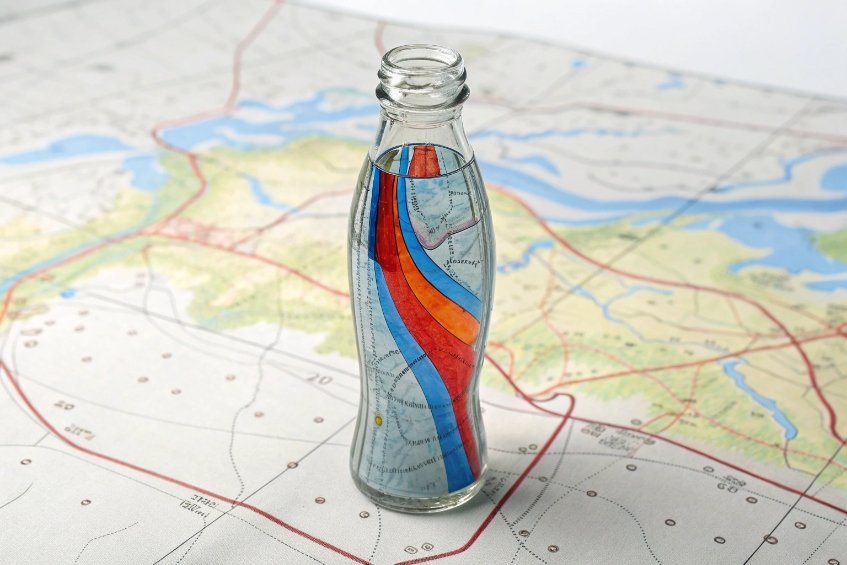
Why thickness variation is so dangerous
- A thin band (circumferential or lane-specific) raises local stress under the same internal pressure (see the math behind thin-walled pressure vessel hoop stress 1).
- Ovality / out-of-round bodies load unevenly by quadrant, so one side “sees” higher stress.
- Geometry transitions (label panel edges, shoulder radii, heel radii) add bending and stress concentration.
Why residual stress changes everything
Residual stress is “pre-loaded” stress frozen in by forming and annealing.
- Tensile residual stress near the surface is the worst case.
- Add internal pressure on top → the combined stress reaches crack-growth conditions earlier.
- This is why some bottles pass quick tests but show delayed failures later.
For process context, it helps to review how industrial annealing and tempering 2 drives residual-stress outcomes.
How do carbonation, headspace, and temperature swings shift internal pressure?
Carbonation and temperature don’t just change average pressure—they change how pressure evolves, and they add thermal stress that shifts the peak-risk zone around the bottle.
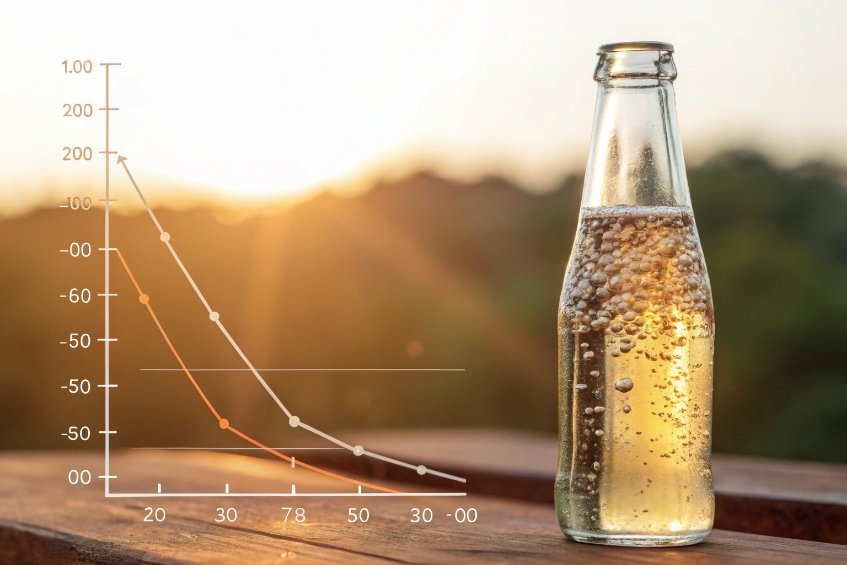
What moves pressure upward
- Higher CO₂ volumes → higher equilibrium pressure
- Smaller headspace → bigger pressure change per unit gas release
- Temperature rise after filling → pressure increases and CO₂ comes out of solution
A practical reference for process teams is a CO₂ pressure–temperature relationships (volumes) 3 chart.
What creates uneven stress (even with “normal” pressure)
- If the bottle wall sees inside hot / outside cold (or uneven cooling around the circumference),
thermal gradients add tensile stress in specific zones. - Thermal + pressure stress overlap often explains panel-specific cracking or ring-like failures.
Practical red flags:
- Cold drafts on one side after hot-fill
- Uneven cooling nozzles
- Warm warehouse storage after cold distribution (pressure creep)
Can closure torque or liner mismatch cause local stress spikes?
Yes—closures add their own loads, especially at the finish and upper neck. Over-torque, tilt, and stiff/mismatched liners can concentrate stress and shift failures toward the finish.
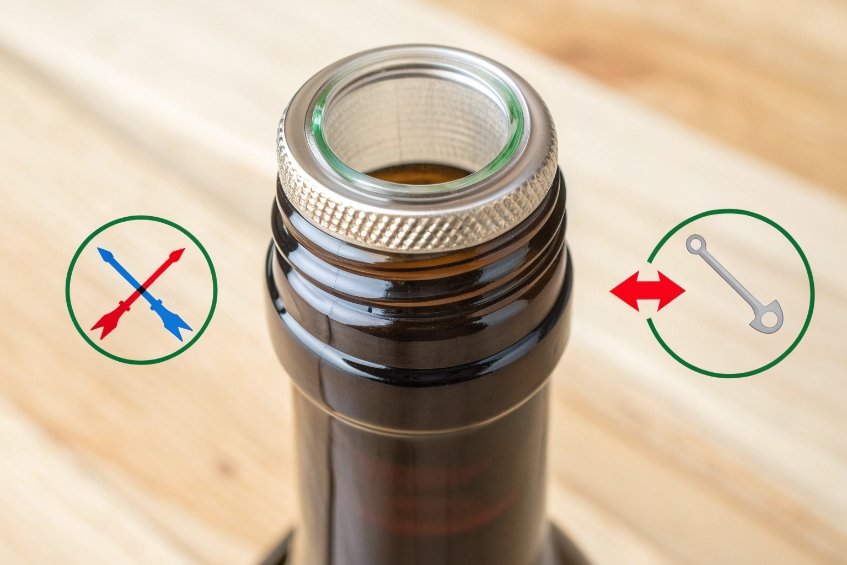
How closures distort the stress picture
- Over-torque: adds hoop tension in the finish before pressure even acts.
- Tilted caps / poor concentricity: one side carries more load → asymmetric stress.
- Hard liners or narrow sealing bands: concentrate load into a smaller ring.
- High-speed capping impacts: short transient loads (“hammering”) that can start micro-checks.
To align teams on targets and verification, use a shared reference for closure application and removal torque guidance 4.
Typical symptoms:
- Neck/finish cracks at consistent clock positions
- Failures clustered after capper adjustments or chuck wear
- Higher breakage on one closure lot / liner change
You need tests that show both maximum strength and time-dependent crack growth under realistic service conditions.
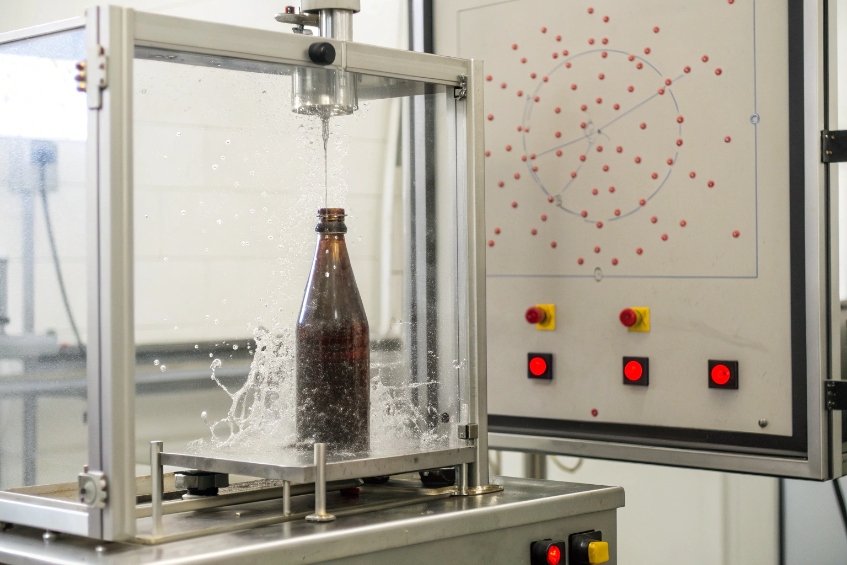
Core test set (practical and revealing)
- Hydrostatic burst (controlled ramp rate)
- Record burst value + fracture origin location
- Method guidance is commonly aligned to ISO 7458 internal pressure resistance test methods 5
- Constant-pressure hold (creep)
- Finds bottles that pass burst but fail over time due to residual stress + flaws
- This connects directly to slow crack growth (static fatigue) in glass 6
- Pressure + temperature cycling
- Mimics distribution/storage swings; exposes headspace and closure interactions
- Thermal shock (with/without moderate internal pressure)
- Identifies thermal-gradient sensitivity and annealing weakness
- Combined top-load + internal pressure (when relevant)
- Reveals stacking/handling interaction that moves failure origins
The most useful “diagnostic output” is not only pass/fail—it’s the fracture-origin map (heel vs shoulder vs finish) correlated with thickness maps and polariscopic stress checks (often referenced against ASTM C148 polariscopic examination 7).
Conclusion
Uneven “pressure behavior” in glass bottles is usually uneven stress under pressure, driven by:
- thickness and geometry variation,
- residual stress from annealing history,
- surface flaws from friction and handling,
- thermal gradients during processing and distribution,
- closure torque/liner fit and capping dynamics,
- and product pressure behavior (carbonation + headspace + temperature).
Control those as a system—and pressure-related cracks and burst failures drop fast.
Footnotes
-
Derivation of hoop/axial stress to show why thin bands create high local stress. ↩ ↩
-
Explains how annealing schedules set residual stress and why drift can cause delayed pressure failures. ↩ ↩
-
Practical CO₂ pressure/temperature chart used to estimate pressure changes with carbonation and warming. ↩ ↩
-
Quick torque targets and application/removal relationships that help prevent finish stress spikes. ↩ ↩
-
Standardized internal-pressure test methods (constant pressure or ramp) for glass container resistance. ↩ ↩
-
Explains time-dependent crack growth in glass under subcritical stress (key for creep/hold failures). ↩ ↩
-
Defines polariscopic methods used to verify container anneal quality and residual stress levels. ↩ ↩






