
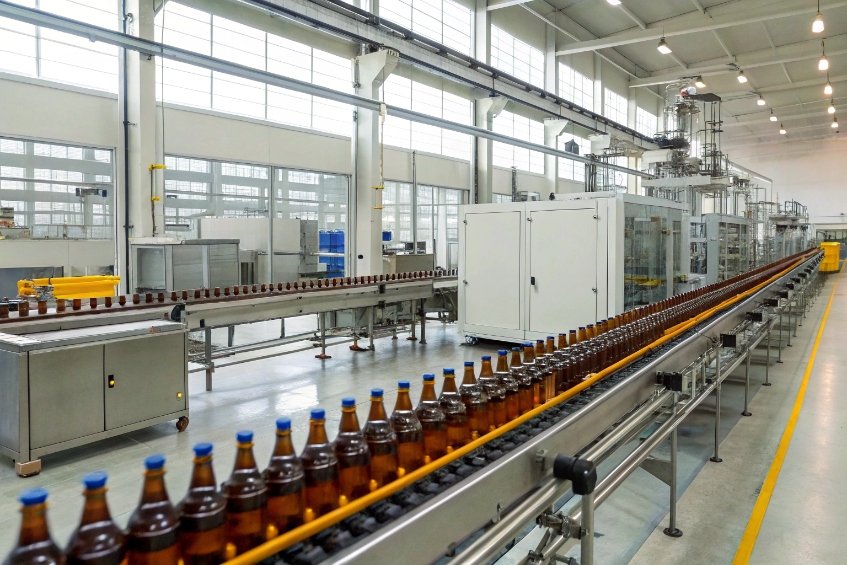
Quality for glass bottles is never only about “no cracks”. It covers safety, dimensions, strength, color, coatings, and even how pallets survive the trip.
Acceptance standards for glass bottles combine AQL-based sampling, clear defect classes, dimensional and capacity tolerances, mechanical strength and thermal-shock tests, closure functionality, and regulatory certifications such as FDA, REACH, and ISO.
When these pieces stay separate, problems slip through. When we link visual inspection, mechanical tests, dimensions, and compliance into one spec, both the glass plant and the brand team can talk in the same language.
Which AQL levels apply to bubbles, cords, and cosmetic defects?
Endless arguments start from simple things: one seed, one scuff, one cord. Is it OK or not? Without clear AQL levels, every defect becomes a debate.
For glass bottles, we usually classify defects into Critical, Major, and Minor, then apply AQL plans (ANSI/ASQ Z1.4 or ISO 2859-1 sampling schemes 1) so bubbles, cords, scuffs, and other cosmetic issues have clear, numeric acceptance limits.
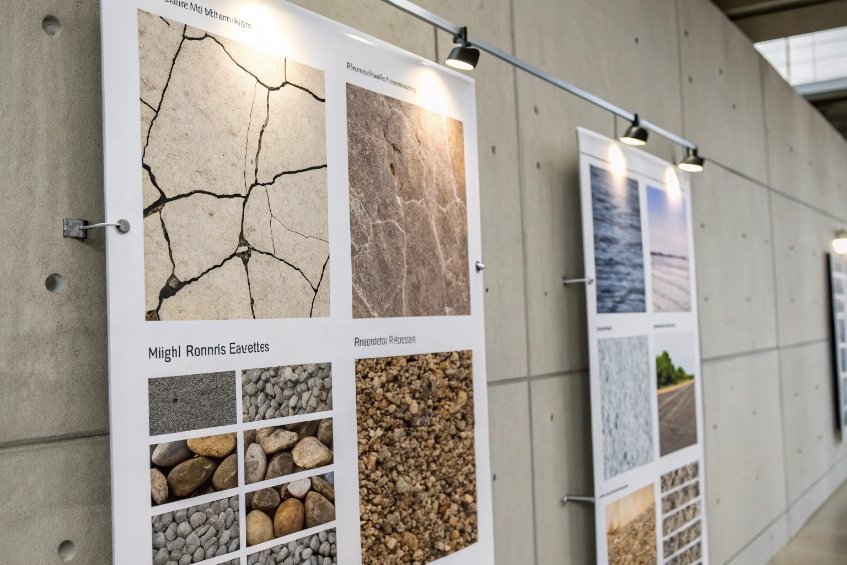
Defect classification: Critical, Major, Minor
The first step is not the AQL number. It is the risk level.
A simple and practical split:
| Class | Typical defects | Acceptance idea |
|---|---|---|
| Critical | Cracks, open blisters, sharp edges, stones breaking surface, finish chips, heavy checks in pressure zones | 0% accepted, 0 tolerance |
| Major | Heavy scuffs, large seeds, stones not breaking surface, strong cords, mold mismatch visible at arm’s length | Low AQL, tight control |
| Minor | Light scuffs, small seeds, light cords, slight color shift, small mold parting lines | Higher AQL, cosmetic only |
Criticals relate to safety and function. They can cut users, leak, or break under normal loads. So the rule is simple: no critical defects in the accepted lot.
Majors hurt brand image or can sometimes lower strength. Examples: heavy scuff bands in the sidewall, large seeds near the heel, strong cords in the body. These get strict AQL levels. Many plants use something like AQL 0.4–1.0 for Majors, but the exact number must match product risk and customer agreement.
Minors are mostly appearance issues that do not affect function. Light scuffs, tiny bubbles, or faint cords that are only visible under inspection light fall here. These see more relaxed AQL, for example 2.5 or higher, again based on the agreement.
AQL plans and sampling
Once the defect classes are defined, the sampling plan puts numbers on the table. Most glass plants use:
- ANSI/ASQ Z1.4 or ISO 2859 for lot-based incoming or final inspection
- A defined inspection level (often II for normal inspection)
- AQL values per defect class (Critical / Major / Minor)
For each lot size, the plan gives:
- Sample size (how many bottles to inspect)
- Acceptance number (how many defects still allow lot acceptance)
- Rejection number (how many defects force rejection or sorting)
A simple example idea for finished ware:
| Class | Example AQL value | Comment |
|---|---|---|
| Critical | 0 or 0.065 | Target is zero; plan often shows 0 |
| Major | 0.4–1.0 | Tight for strength and appearance |
| Minor | 2.5–4.0 | Balanced for natural glass variation |
The exact values will differ per customer, product, and market. The key point is that bubbles, cords, and cosmetic defects are not judged by mood. They follow a written standard with defect pictures, size ranges, and AQL levels. That is what keeps bottle acceptance predictable.
What pressure, drop, and thermal-shock tests must bottles pass?
A bottle can look perfect and still fail on the filling line or in a hot sink. Visual inspection is not enough. Strength tests show if the design and process can survive real life.
Most acceptance standards include internal pressure tests, impact or drop tests, and thermal-shock tests, plus sometimes vertical load and annealing checks, to prove bottles can handle filling, transport, and consumer use.
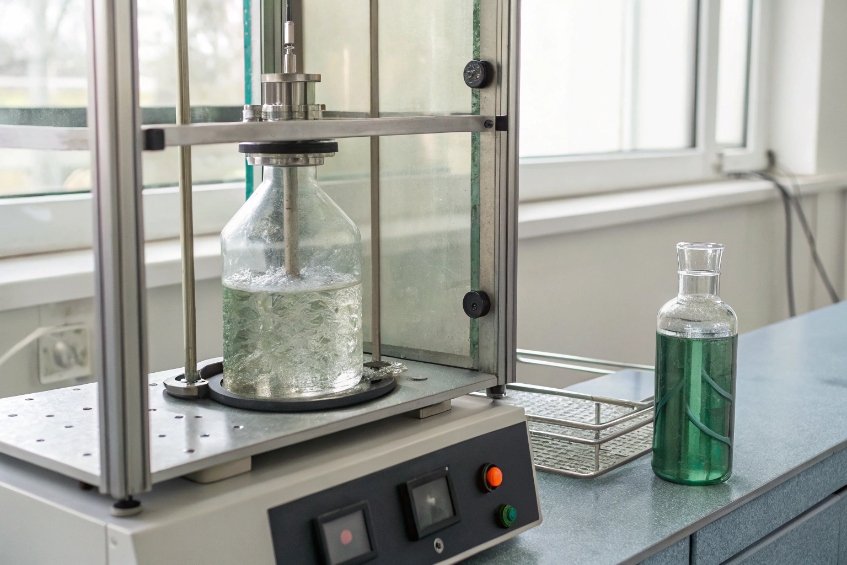
Internal pressure and vertical load
Internal pressure tests check if the bottle survives its product and some extra margin. Typical setups:
- Hydrostatic or pneumatic burst tests
- Controlled pressure ramp, not shock loading
- Defined minimum burst pressure based on product type (often aligned with ISO 7458 internal pressure resistance 2)
For carbonated drinks, the minimum burst is usually several times the maximum service pressure. For still products, pressure tests still make sense because of line surges or hot-fill expansion.
Vertical load (top-load) tests measure how much axial force the bottle can take before buckling or collapsing. This reflects:
- Pallet stacking in warehouses
- Top pressure from capping heads
- Handling in high-speed lines
Acceptance specs set minimum vertical load values by container size and application.
Drop, impact, and thermal shock
Drop or impact tests simulate the hits bottles see on the line and in the field.
Common methods:
- Pendulum impact on body or heel
- Controlled drop from defined height onto steel or another standard surface
- Specific orientations: base-first, sidewall, corner
Thermal-shock tests check resistance to temperature changes (often aligned with ISO 7459 thermal shock resistance 3):
- Hot-to-cold, for example from hot wash or pasteurization to cooler water
- Cold-to-hot, for example bottles from cold storage filled with warm product
- Defined delta-T (temperature difference) and number of cycles
Typical acceptance rules define:
- Minimum impact energy or drop height with no breakage over a sample
- Maximum allowed break rate under a given thermal-shock cycle
Residual stress and annealing quality
Residual stress makes all these tests more or less severe. So many standards also require:
- Polariscopic or strain-gauge checks
- Limits on fringe order or stress value at finish, sidewall, and base
If stress is too high, bottles that pass on day one may still fail later. By combining stress checks with pressure, impact, and thermal shock tests, acceptance moves from “looks fine” to “works under real conditions”.
What finish and neck dimensional tolerances are required for closures?
Most complaints in the market are not about seeds or cords. They are about leaks, hard opening, or damaged closures. Almost all of that points back to finish and neck dimensions.
Finish and neck tolerances must match closure standards such as GPI or ISO. In beverage projects, many teams also reference ISBT Threadspecs® finish guidelines 4. Critical dimensions like thread profile, sealing surface, bore, diameter, height, ovality, and verticality must stay within a tight window so closures seal and apply correctly.
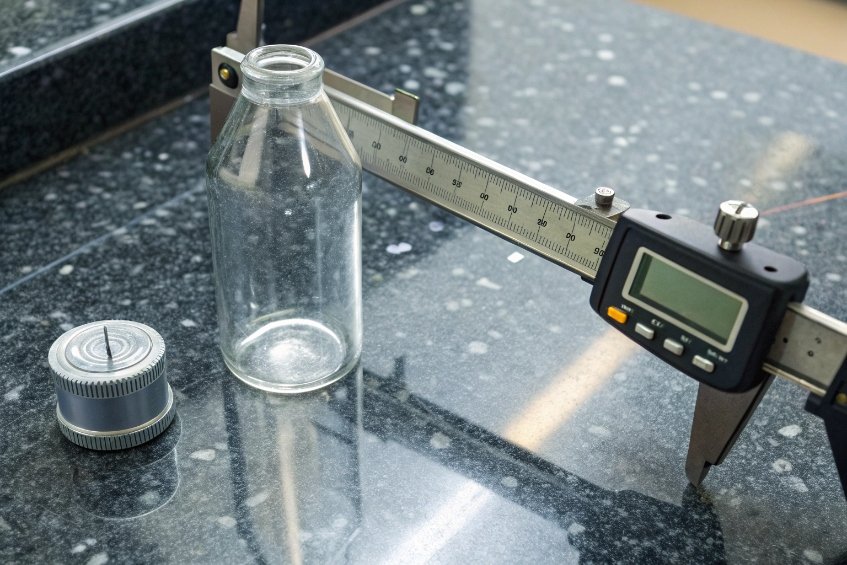
Key finish dimensions that control sealing
The finish is where glass and closure meet. A few key dimensions matter more than the rest:
- Thread profile and pitch
- Thread height and outer diameter
- T-seal or land height and flatness
- Bore diameter and concentricity
- Support ring dimensions
A simple way to group finish checks:
| Area | Dimension type | Why it matters |
|---|---|---|
| Sealing face | Land width, flatness, angle | Primary seal for caps and pumps |
| Threads | Pitch, height, major diameter | Engagement and removal torque |
| Bore | Inner diameter, roundness | Fit for droppers, fitments, corks |
| Neck / ring | Diameter, height, undercut | Handling, capper handling, stability |
Tolerances come from the finish standard. For example, a 28 mm GPI or an ISO R thread will define nominal dimensions and plus/minus ranges. These ranges are usually in tenths of a millimeter for critical sealing dimensions.
Neck geometry, verticality, and closure performance
Even when finish dimensions are correct, bottles can still leak or break closures if:
- Neck is not vertical (lean)
- Finish is not concentric with body
- Ovality is too high
- Push-up or base is unstable so the bottle rocks under the capper
So dimensional acceptance standards also include:
- Total height and tolerance
- Body diameter and ovality
- Verticality (lean) within a small angle or offset
- Base stability and rocker limits
Functional closure tests add another layer:
- Application torque and removal torque checks
- Seal integrity tests (pressure, vacuum, or leak tests)
- Liner or cork compression within recommended range
The goal is simple: closures should apply smoothly, seal consistently, and open with predictable torque. Finish and neck tolerances are the base for that. They must sit in the same spec set as visual and mechanical tests, not in a separate world.
What certifications should glass bottle suppliers provide?
Even if bottles look good and pass tests, buyers still need proof that materials, processes, and systems meet legal and industry requirements.
Suppliers should support acceptance with food-contact and chemical safety (such as FDA Packaging & Food Contact Substances 5 and REACH requirements under ECHA 6), quality and environmental management (like ISO 9001:2015 7), and, when needed, sector standards like pharma packaging guidelines.

Food, cosmetic, and pharma compliance
For any product that touches food, drink, cosmetics, or drugs, glass must meet local and international rules. Typical requirements:
- FDA or equivalent food-contact compliance for the US market
- EU food-contact and heavy metal limits for Europe
- Specific rules for cosmetics packaging in target regions
- For pharma: compliance with pharmacopeia and packaging standards
Suppliers often back this with:
- Migration test reports
- Heavy metal content and leach data
- Declarations of conformity for specified uses
Quality, environment, and safety systems
System certifications show how the plant runs, not just what one batch tested.
Common ones:
- ISO 9001 for quality management
- ISO 14001 for environmental management
- ISO 45001 (or similar) for health and safety
- For food-contact lines, sometimes ISO 22000 or similar food safety systems
These do not replace product tests. They support them by showing there is a stable process behind each shipment.
What customers should ask for in acceptance
To link certifications to acceptance standards, buyers usually ask for:
- Certificates (copies of valid ISO, FDA-related documents, etc.)
- Lot-based Certificates of Analysis (CoA) with key test results
- Clear traceability: batch, date, furnace, and line data
When this documentation is part of the acceptance package, it is easier to solve any issue. Everyone can see which tests were done, which standards apply, and which lot went where. That is the final piece that turns “delivered bottles” into “approved packaging”.
Conclusion
Glass bottle acceptance is not just a visual check. It is a full system: AQL for defects, strong mechanical tests, tight finish dimensions for closures, and solid certifications behind every lot.
Footnotes
-
Official ISO AQL sampling standard for lot-by-lot inspection by attributes. ↩ ↩
-
Defines recognized test methods for glass container internal pressure resistance. ↩ ↩
-
Explains standard test methods for thermal shock resistance and endurance of glass containers. ↩ ↩
-
Practical beverage-finish guidance to align thread/finish dimensions with closure performance. ↩ ↩
-
FDA hub for regulatory information on food-contact packaging materials and substances. ↩ ↩
-
Official overview of REACH obligations for chemical registration and restrictions in the EU. ↩ ↩
-
ISO standard page for ISO 9001 requirements and scope for quality management systems. ↩ ↩






