
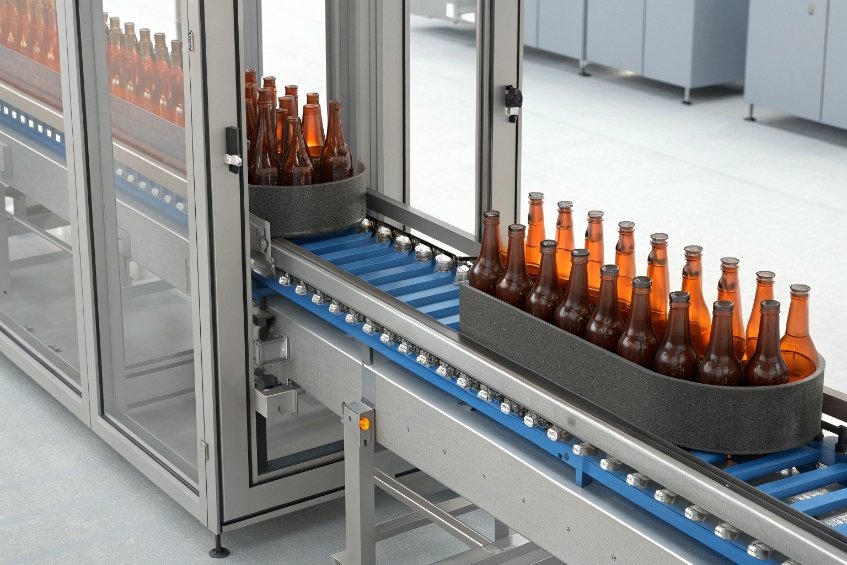
Scratches and burst fractures do not happen by luck. They almost always come from a chain of small problems that start on the hot end and follow the bottle to the pallet.
Scratches usually start with high friction, poor coatings, and abrasive contact on molds and conveyors, while burst fractures come when thin walls, checks, inclusions, residual stress, and pressure overload meet those surface flaws.
In practice, most “mystery breaks” are not mysterious. The damage starts as a light scuff or tiny check that seems harmless at first glance. Later, pressure, impact, or thermal shock finds that weak point and the bottle fails. When we map each damage pattern back to a specific part of the line, we can fix causes instead of chasing symptoms—often with fracture diagnosis of glass containers 1 instead of guesswork.
Are conveyor friction and poor lubrication the main scratch sources?
High friction and hard contact turn a smooth glass surface into a scratched one very fast. Once those scratches appear, bottle strength drops, even if the damage looks cosmetic.
Yes. Poor or degraded hot-end and cold-end coatings, dry conveyors, and abrasive contact at guides, starwheels, and deadplates are the main sources of scratches that reduce bottle strength and lead to later breakage.
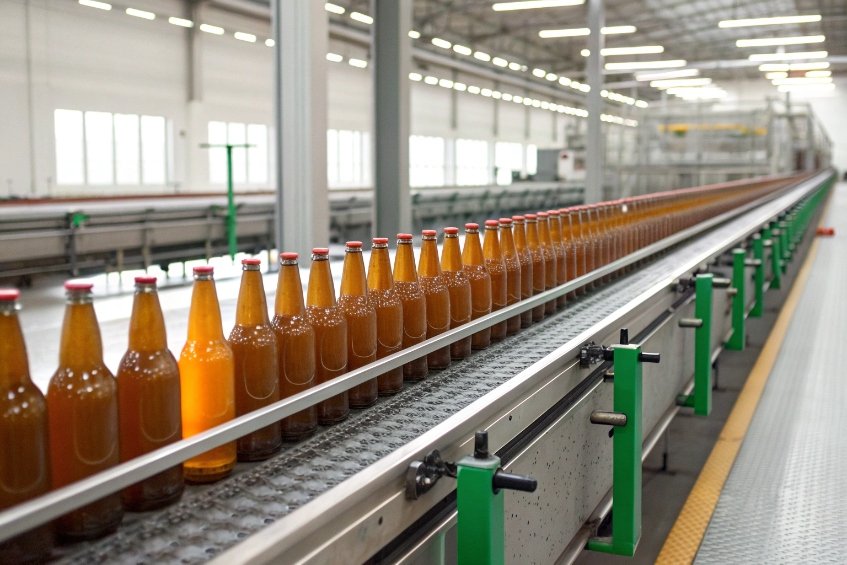
How coatings and friction control surface damage
The first defense against scratches is a good coating system. A hot-end tin oxide (SnO₂) coating 2 builds a thin, tough layer on the surface. Cold-end polymer or wax adds a low-friction film on top.
When either layer is missing or weak, glass-on-glass friction jumps. Bottles drag and grab on deadplates, guides, and each other. Scuff bands appear around the shoulder and heel. These bands are not just cosmetic. Each scuff contains many micro-cracks. These small flaws cut the burst strength of the bottle, sometimes by half.
In real production, the drift often starts when hot-end and cold-end coating levels 3 quietly slide out of their stable window (pump drift, nozzle clogging, water ratio drift, or uneven coverage).
A simple way to think about it:
| Condition | Friction level | Typical result |
|---|---|---|
| Strong SnO₂ + good cold-end coat | Low | Light cosmetic rubs, higher strength |
| Weak coat or gaps | Medium | Visible scuffs and light scratch tracks |
| No effective coating | High | Deep scratches, frequent line breakage |
Line teams sometimes see more breakage after a coating pump failure or nozzle blockage. That is not a coincidence. Without a stable coating, every contact point becomes a scratch source.
Where abrasion really comes from on the line
Friction alone does damage, but abrasion makes it worse. Several hot spots usually show up in audits:
- Worn or dirty mold surfaces that drag on the parison
- Rough deadplates with stuck cullet or baked coating
- Metal rails or guides that sit too close or misaligned
- Starwheels that pinch or force rotation under pressure
- Conveyors with dust, cullet, or labels building a “sandpaper” layer
Line speed mismatches also matter. If one conveyor runs faster than the next, bottles spin or lean. Back-pressure rises. Bottles twist against guides and against each other. This creates spiral or vertical scratch tracks that wrap around the body. Those tracks are classic triggers for pressure failures later in the supply chain.
One story stands out. A client had deep spiral scratches only on one production day. The root cause was a single jammed side guide that had been pushed in after a size change. Bottles were forced to rotate under high pressure for several hours. Once the guide was reset and the coating checked, the scratches almost disappeared.
Do thin walls, checks, or inclusions trigger pressure/burst failures?
Scratches alone do not always cause bursts. Bottles usually fail when thin sections, thermal checks, or internal defects focus stress at those flaws, and then pressure or impact finishes the job.
Yes. Thin walls, local checks, and inclusions act as stress concentrators. When internal pressure or impact loads reach these weak areas, small flaws grow into fast-running cracks, which cause burst fractures.
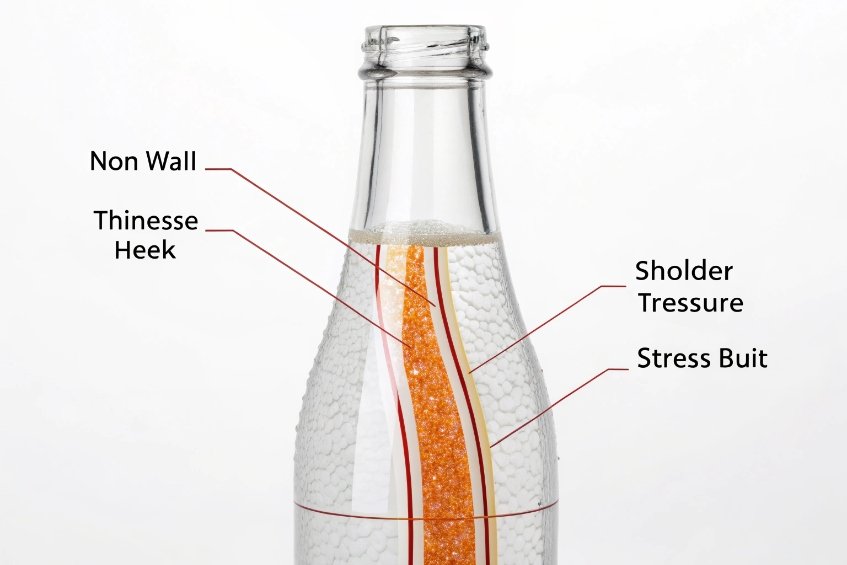
Wall thickness and local stress
Glass is strong in theory, but its real strength depends on the deepest flaw in the most stressed region. Thin sections raise stress at those flaws.
Typical risk areas:
| Location | Risk factor | Effect |
|---|---|---|
| Heel | Thin “knife” heel, hard contact zone | Radial heel cracks, base bursts |
| Shoulder | High bending stress, scuff band area | Crescent cracks, body-to-shoulder |
| Neck / finish | Closure torque and impact loads | Vertical splits, ring bursts |
Non-uniform wall thickness makes this worse. A thin band at the heel over a scratched zone is much more likely to burst during pressure testing or in the field. Good forming control and regular section checks are just as important as good chemistry.
Checks, inclusions, and internal defects
Checks are small cracks that form before the bottle leaves the plant. Thermal checks come from cold air, cold ware, or uneven cooling. Impact checks come from hard hits on guides or transfer points. They can be shallow and hard to see, but they sit ready to grow.
Internal defects add another layer:
- Stones and unmelted batch pieces
- Heavy cords with different thermal expansion
- Large bubbles near the surface
Each of these behaves like a built-in flaw. When a scratch or check crosses over a stone or large bubble, the local stress intensifies. Failures at these points often look “explosive” because the crack runs very fast once it starts.
Pressure and chemical weakening
Even a perfect bottle will burst if internal pressure is high enough. But scratched or checked bottles fail much earlier.
Common pressure sources:
- Carbonation in beer, soft drinks, and sparkling products
- Fermentation in products that keep “working” after filling
- Hydraulic overpressure from high-speed fillers or testers
- Mis-calibrated burst-test machines (typically aligned to ISO 7458 internal pressure resistance test methods 4)
On top of this, slow crack growth accelerates when flaw tips see moisture or alkaline chemistry—classic stress corrosion (slow crack growth) in soda-lime glass 5. This is critical for returnable bottles. The bottles may pass filling and storage, then break later during handling or by the consumer. These are the classic “delayed bursts” that are so hard to track without proper fracture analysis.
How do handling, pallet rub, and case packing contribute to damage?
Even if the container leaves the cold end in perfect shape, bad handling and packaging can undo the work. Pallet rub and poor case design add a new layer of scratches and impacts.
Handling, pallet movement, and tight or abrasive packaging cause extra surface damage. Bottles rub against each other or against carton walls, which adds new scratches and checks that later trigger field breakage.
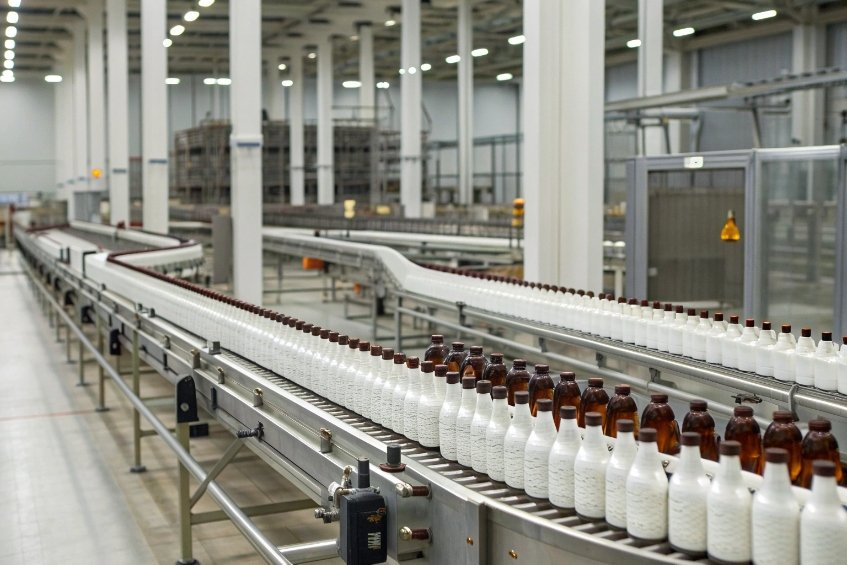
Damage between cold end and warehouse
The path from lehr to finished goods is short, but it is full of risk points:
- Accumulation tables where bottles back up and bump each other
- Transfer points where bottles tip, lean, or fall
- Infeed to palletizers and case packers with high pressure or misaligned guides
If hot-end and cold-end coatings are weak, bottles at these points pick up heavy scuff bands and random scratches. Many of these defects sit at the heel and shoulder, which are already high-stress zones under pressure. That is why small changes in line layout or speed can create a big change in breakage rate.
Pallet rub and transport movement
Once bottles are on pallets, motion does not stop. Trucks vibrate and pallets flex. Bottles slide and rub inside cartons or between layers.
Key factors:
| Factor | Effect on bottles |
|---|---|
| Loose pallet wrap | More bottle movement and glass rubbing |
| No layer pads | Direct contact between layers |
| Rough or wet cartons | Abrasive carton walls, softened fibers |
| Long transport routes | Cumulative vibration and micro-impacts |
Pallet rub often leaves a wide, dull scuff band around the bottle, usually at the contact height with carton or divider edges. In carbonated products, this band later becomes the site of many pressure failures. When customers report “ring breaks”, the root cause often sits in pallet design and wrap tension, not in the furnace.
Case design, dividers, and closures
Case packing choices can help or harm.
Some risks:
- No dividers or too-low dividers so bottles knock together
- Hard or sharp plastic trays that cut into bottles under load
- Over-packed cases that create constant side pressure
Closures also matter. Over-torqued metal caps put high hoop stress in the finish and upper neck. If that zone already has scuffs or small checks from handling, the cap load can drive a vertical split or a full ring burst. A small torque adjustment and better neck protection often reduce these failures more than changing glass weight.
Which annealing or tempering issues leave residual stress?
Residual stress is the silent part of many failures. It is invisible in normal light, but it decides how far a scratch or check can grow before the bottle breaks.
Poor annealing or tempering creates high residual tensile stress in the glass. This stress combines with scratches, checks, and pressure loads, so even small flaws can cause fast crack growth and sudden bursts.
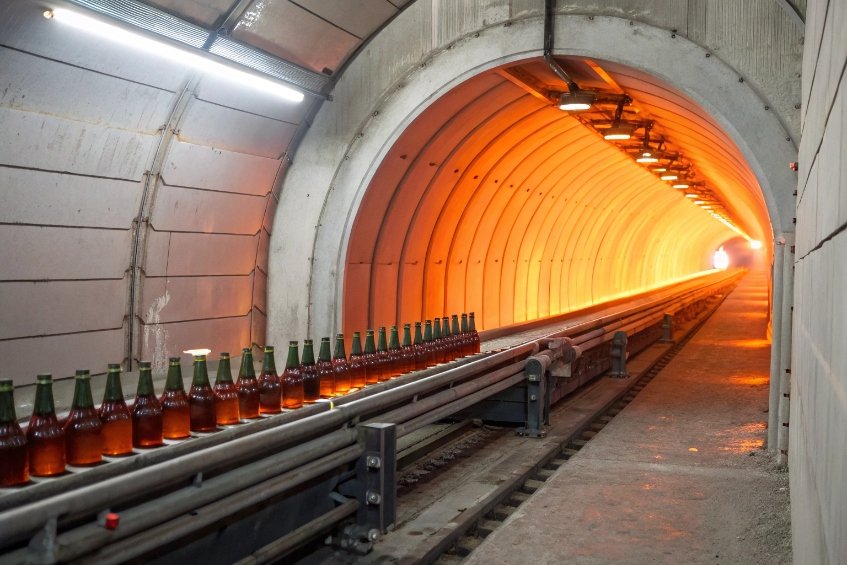
What happens when annealing is not correct
Annealing in the lehr lets internal stresses relax as the bottle cools through the strain range. When this step is rushed or uneven, stress “freezes” inside the glass—exactly the failure mode explained in annealing and tempering fundamentals 6.
Typical problems:
| Issue | Resulting stress pattern |
|---|---|
| Cooling too fast overall | High general residual stress |
| Uneven cross-lehr cooling | One side in tension, one in compression |
| Cold drafts at lehr entrance | Local surface tensile stress, checks |
| Over-crowded lehr loading | Uneven temperature bottle-to-bottle |
High tensile stress near the surface is dangerous. Scratches and checks grow much easier in tension. So a bottle with poor annealing may look fine and even pass visual checks, but it fails at much lower pressure than a well-annealed one.
Tempering and surface stress balance
Some specialty bottles use a form of surface strengthening. The idea is to put the surface into compression and the interior into tension. This helps resist impact and some scratching, but only if the process is controlled.
If the tempering is uneven, stress balance can flip in some zones. You may get pockets of surface tension at the heel or finish. These zones behave like hidden cracks. When a scratch or impact hits that area, failure is violent and fast.
Residual stress plus service conditions
Residual stress does not act alone. It adds to all other stresses the bottle sees:
- Internal pressure from product or testing
- Closure torque and cap application impact
- Thermal stress from hot fills or cold storage
- Bending and compression during transport
One good tool here is routine polariscope evaluation of residual stress 7. When stress patterns are checked at set intervals, it is easier to see slow drift in lehr settings or burner balance before the market sees more breakage.
In the end, scratches and burst fractures are rarely one single problem. Residual stress from poor annealing or tempering often turns minor field damage into serious failures. When the stress profile is right, bottles can survive real-life handling with much less trouble.
Conclusion
Scratches start with friction and contact, but bursts happen when that damage meets thin walls, defects, residual stress, and pressure. Control each link in this chain, and breakage drops sharply.
Footnotes
-
Explains how fracture patterns reveal when/where/why a container broke, enabling targeted fixes. ↩ ↩
-
Shows how tin-oxide hot-end coatings improve wear resistance and support later lubricants. ↩ ↩
-
Explains how hot-end/cold-end coating levels influence handling performance and label behavior. ↩ ↩
-
Defines standardized internal pressure resistance testing methods used to evaluate burst performance. ↩ ↩
-
Summarizes moisture/chemical-driven slow crack growth mechanisms that reduce glass strength over time. ↩ ↩
-
Explains how cooling profiles create residual stress and why annealing windows matter. ↩ ↩
-
Describes using a polariscope to detect residual stress and verify annealing quality in containers. ↩ ↩






