
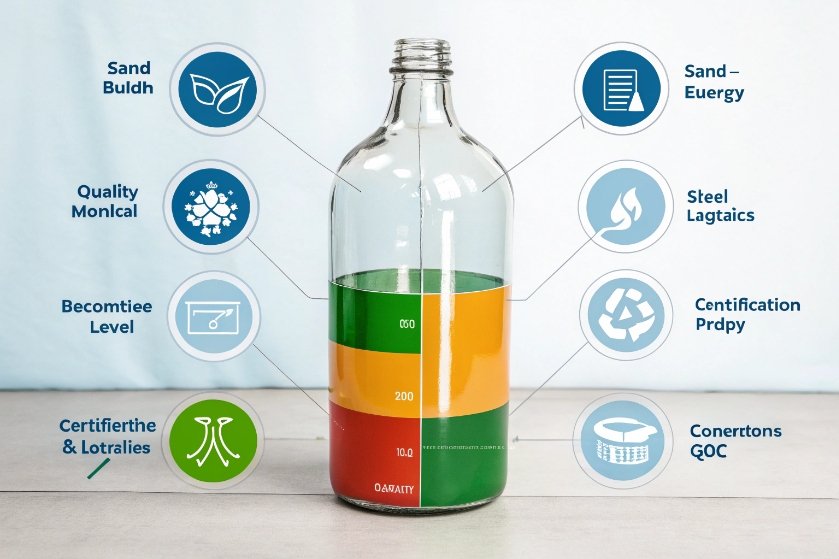
Many buyers think a glass bottle has a simple price. In fact, every small detail in shape, color, and logistics hides a cost that adds up fast.
Glass bottle pricing comes from four main blocks: materials and energy, design and molds, decoration and quality level, plus logistics, duties, and certifications on top of everything.
From the manufacturing side, price is a story of trade-offs. Lighter bottles save glass but need tight process control. Extra clear glass looks premium but needs cleaner raw materials. Small orders keep risk low for the buyer but push unit cost higher. When both sides understand these levers, it becomes much easier to build a price that feels fair and stable.
How do mold fees, MOQ, and custom shapes impact unit cost?
Many customers love the idea of a unique bottle shape. The surprise comes when they see the mold fee and the MOQ that the factory needs to offer a reasonable unit price.
Mold fees, MOQs, and custom shapes change unit cost by adding fixed tool costs, more setup time, and lower line speed, so small runs always look more expensive per bottle.
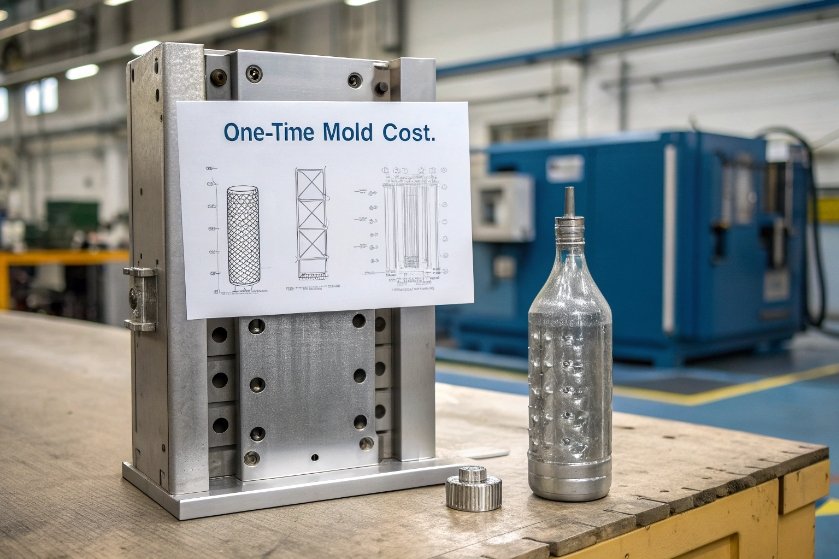
Why custom shapes are never “just a small change”
In practice, even a small change in the bottle outline or embossing triggers real cost on the factory floor. Each new design needs new steel, new set-up, and some risk.
Mold cost and how it spreads
A mold set for a new glass bottle is a one-time, fixed cost. It includes design, steel, machining, and test runs. Heavy embossing or complex shapes need more precise machining. That raises the mold price. If a buyer orders only 5,000–10,000 units, this fixed cost sits on very few bottles, so the unit cost jumps.
When the order volume is 100,000 or 500,000 units or more, this same mold cost spreads across a much larger base. The mold fee stays the same, but the cost that each bottle “carries” drops to a very small number. This is why long-term projects with repeated orders always get better economics.
MOQ and line efficiency
Factories set MOQs for a simple reason. Every change on the line consumes time and energy. The team must warm up the mold, tune the gob weight, adjust air pressure, check thickness, and inspect shape. During this phase, scrap is high and saleable output is low.
An MOQ makes sure the factory produces enough saleable bottles after setup to cover this lost time. If the buyer insists on a smaller run, the factory must recover setup cost within fewer units. So the price per piece goes up. Sometimes factories also charge a “small batch surcharge” instead of raising the base unit price.
Custom shapes and line speed
Custom shapes with sharp corners, heavy shoulders, or deep curves often run slower. The glass must form correctly in the mold. Cooling and take-out need more care. This lowers the number of bottles per hour.
Standard, proven shapes run at high speed with low scrap. Custom shapes reduce that. The lost speed and higher reject rate show up directly in the unit price.
If you want a deeper technical view of why tooling and setup matter so much, this overview of glass container mould design in forming operations 1 explains the role of molds in efficiency and cost.
Summary of commercial impact
| Factor | What it does in the factory | Effect on your unit cost |
|---|---|---|
| New mold | One-time tool and test cost | Cost spreads over order volume |
| Low MOQ | Same setup time, fewer saleable bottles | Higher cost per bottle |
| Complex shape | Slower speed, more rejects | Higher cost per bottle |
| Repeat orders | Tool cost already paid, settings already known | More stable and lower unit price |
For serious projects, it helps when the buyer sees mold cost and MOQ not as a “fee” but as an investment that pays back as the brand grows.
Do cullet content, glass color, and weight drive material costs?
When buyers ask “can you make it cheaper?” the first levers on the factory side are glass recipe, bottle weight, and sometimes color.
Cullet mix, glass color, and bottle weight drive material costs because they change how much fresh raw material, energy, and quality control the furnace needs for each ton of glass.
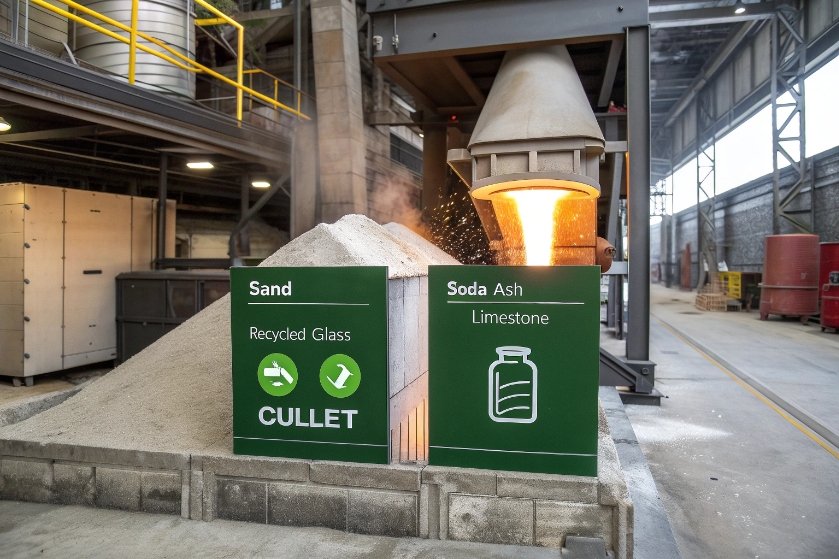
How the glass batch and design affect your price
The glass “batch” is a mix of sand, soda ash, limestone, and cullet (recycled glass) 2. Each part has a cost and a supply story behind it.
Cullet content and raw material mix
Cullet melts at a lower temperature than pure raw materials. A higher cullet ratio can lower energy use and cut CO₂ emissions. In some regions, high-quality cullet is easy to get. In others, it is limited and more expensive.
Amber and green colors usually accept higher cullet content without visible defects. Premium extra-flint (very clear) glass needs cleaner raw materials and cleaner cullet. That often means higher cost per ton. So while “recycled” sounds cheaper, high-quality recycled glass is not always the lowest price choice.
Color and clarity
Color ties directly to both brand image and cost. Basic flint, amber, and green use mature recipes and stable supply chains. Special colors like opal white, solid black, or custom tints (blue, purple, smoky shades) use extra colorants and stricter control. These runs are often shorter and less frequent, which again increases cost.
Extra clear “high flint” for cosmetics, spirits, or perfume needs low-iron sand and more process control. This step alone can create a clear price gap versus normal flint glass bottles.
Weight and geometry
Bottle weight has a simple link to cost: more grams of glass mean more material per unit. Heavier bottles often feel premium and are needed for some products (for example, thick base for spirits or wine). But they also raise freight and handling costs.
Lightweight designs use less glass but need a more stable process and stricter quality checks, especially on impact resistance and pressure performance. So extreme lightweight can save material while adding some cost in control and scrap. The best point is often a balanced design, not the lightest one.
Material and design cost overview
| Element | Typical choices | Cost impact |
|---|---|---|
| Cullet ratio | Low, medium, high | Changes energy use and raw material |
| Glass color | Flint / amber / green / special | Specialty and extra clear cost more |
| Clarity level | Standard or high flint | Higher clarity, higher cost |
| Weight | Lightweight, standard, heavy | More grams = more cost per bottle |
| Shape | Simple, standard mold | Costs less than complex geometry |
When buyer and factory talk clearly about color, clarity, and weight from the start, it becomes easier to reach a price that supports the brand story without hidden surprises.
How do decoration methods—spray, frosting, hot stamping—change pricing?
Many brands say, “We want the bottle to stand out on the shelf.” This always leads to a talk about decoration: spray, frosting, screen print, hot foil, labels, and more.
Each decoration method adds its own process step, material, rejection risk, and handling cost, so complex multi-layer decoration can cost more than the bare bottle itself.
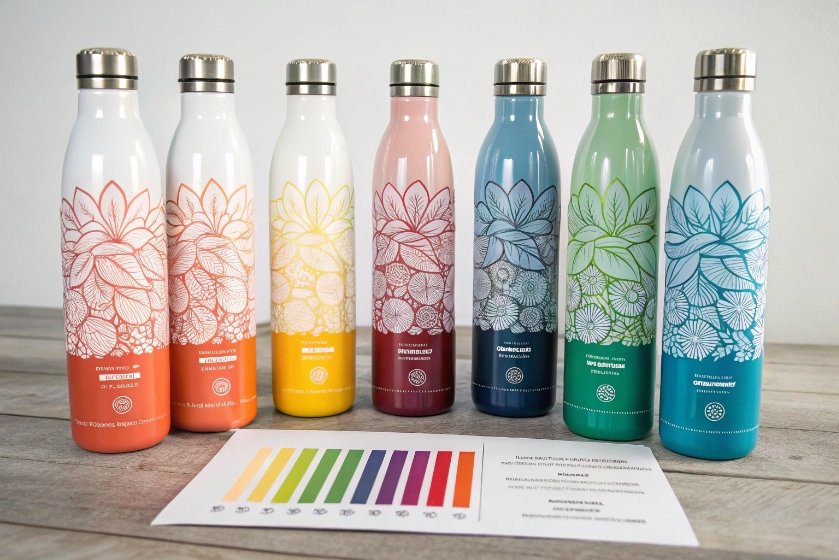
Why decoration can double the value of the bottle
Decoration is where the bottle becomes “your” bottle. It is also where costs can rise very fast without careful planning.
Main decoration methods and cost drivers
-
Spray coating / painting
A spray line applies a colored or clear coating on the bottle surface. Single-color spray with a simple finish is the base level. Gradient, metallic, or soft-touch coatings need extra passes or special paint. Each pass means more time, more material, and higher scrap if the finish is not even. -
Frosting (acid or sand-blast effect)
Frosting gives a matte, “frozen” look. Chemical frosting needs acid treatment, washing, and waste handling. Sand-blast style frosting needs blasting equipment and is often slower. Both methods add process cost and require careful control to avoid weakening the glass surface. -
Screen printing / applied ceramic label (ACL)
Screen printing uses inks to print logos and text directly on glass. Simple one-color art on one side is cheap and fast. Multi-color jobs with tight registration (colors lining up perfectly) slow the line and raise reject rate. -
Hot stamping / hot foil
Hot stamping adds shiny gold, silver, or other foil. It needs a separate machine, special foil, and tooling. Fine lines and small text need better control and often more rejects. The result looks premium, but the per-unit cost is much higher than a simple print. If you need a process-level overview, hot foil stamping in packaging 3 shows what equipment and steps are typically involved. -
Decals and transfers
For complex art or small runs, water-slide or heat transfer decals can be used. These are often slower and more manual. Labor cost per bottle is higher, so this is rarely the cheapest option.
Setup, MOQ, and scrap in decoration
Just like molding, each decoration method has setup work: mixing paint, heating ovens, making screens, mounting plates. Decoration workshops often set MOQs for each design. Short runs have higher cost per unit.
Every added step is also one more chance to lose good bottles. A bottle can be perfect from the hot end but lost later due to a paint defect or misaligned print. These losses must be covered in the decoration price.
Decoration cost structure
| Method | Setup cost | Speed | Scrap risk | Typical price impact |
|---|---|---|---|---|
| Simple spray | Low–medium | High | Medium | Low–medium |
| Gradient spray | Medium | Medium | Medium | Medium |
| Chemical frost | Medium | Medium | Medium | Medium |
| Sand-blast frost | High | Low | Low–medium | Medium–high |
| 1-color screen | Low | High | Low | Low |
| Multi-color ACL | Medium | Medium | Medium | Medium–high |
| Hot stamping | Medium | Medium | Medium | High per printed area |
| Decals | High labor | Low | Medium | High, best for very small runs |
The smart way to control cost is to focus on one or two strong decoration elements, rather than many small tricks at once.
What logistics, duties, and certifications should buyers budget for?
Many buyers only look at the “EXW bottle price” from the factory. The real cost to deliver a safe, compliant bottle to the filling line is higher.
On top of unit price, buyers must budget for export packing, inland and ocean freight, duties and taxes, warehouse costs, plus any required certifications, tests, and audits.
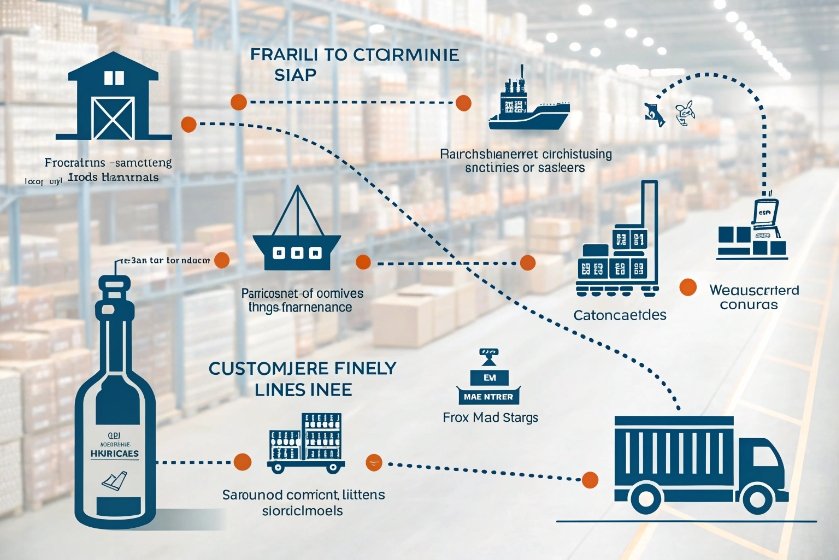
From the furnace to your warehouse, the bottle travels through many hands. Each stage can add cost and risk.
Logistics and packing
Glass is heavy and fragile. Export-grade packing needs strong cartons, dividers, corner guards, stretch film, and often fumigated pallets. This packaging costs more than simple domestic packing, but it protects against breakage and claim costs.
Freight cost depends on distance, fuel price, container type, and market conditions. Heavy glass loads may reach weight limits before they fill the whole container space. This changes the cost per bottle. Accessorial fees (like lift gate, port congestion, or storage) can appear if planning is not careful.
If you’re quoting and comparing offers, make sure everyone is aligned on EXW (Ex Works) Incoterms® responsibilities 4, because who pays which leg can change “real price” a lot.
Duties, taxes, and import rules
Every country has its own HS code rate for glass bottles. Some products enjoy lower duties if they are for food or pharma. Others face higher rates. Trade rules can change. Buyers must check if anti-dumping duties or special tariffs apply to glass from a given country.
A practical starting point for classification is HS code heading 7010 for glass packing containers 5.
On top of import duty, there may be VAT or sales tax, customs clearance fees, and local handling. All of these must be counted into the “landed cost” per bottle.
Certifications and quality assurance
Different end uses need different levels of proof:
- Food-contact bottles may need migration tests and certification aligned with EU food contact materials legislation 6.
- Pharma bottles may require stricter dimensional and thermal shock tests.
- Some markets need FDA-style or EU compliance documents.
- Buyers may ask for factory audits, CSR checks, and ISO 9001 quality management standard 7.
These tests and audits cost time and money. Some are one-time and spread over many orders. Others are per-batch. For tight tolerance projects, the factory may also do more in-line checks. That improves quality but raises cost.
Putting it all in one picture
| Cost layer | Examples | Who usually pays |
|---|---|---|
| Factory price | Bottle, mold cost, basic QC | Included in unit price |
| Packing | Export cartons, dividers, pallets | Often built into unit price |
| Inland freight | Factory to port | Buyer or seller (by terms) |
| Ocean/air freight | Container, fuel surcharge | Buyer or seller |
| Duties and taxes | Import duty, VAT, clearance fees | Buyer |
| Certifications & tests | Food, pharma, performance tests, audits | Often shared or buyer-paid |
When both sides build a clear cost sheet from furnace to filling line, it becomes easier to compare offers and avoid surprises after the first shipment.
Conclusion
Glass bottle price is not just about the piece of glass. It is the sum of design choices, decoration, quality demands, and the long road from furnace to your filling line.
Footnotes
-
Explains how mould design influences forming efficiency and cost. ↩ ↩
-
Shows how cullet lowers furnace energy and affects manufacturing economics. ↩ ↩
-
Clarifies what hot foil stamping adds in equipment steps and production handling. ↩ ↩
-
Details EXW responsibilities so buyers model freight and risk correctly. ↩ ↩
-
Reference for HS 7010 scope when classifying glass bottles and jars. ↩ ↩
-
Official EU overview of migration testing and rules for food contact materials. ↩ ↩
-
Official ISO page explaining ISO 9001 requirements often requested in supplier audits. ↩ ↩






