
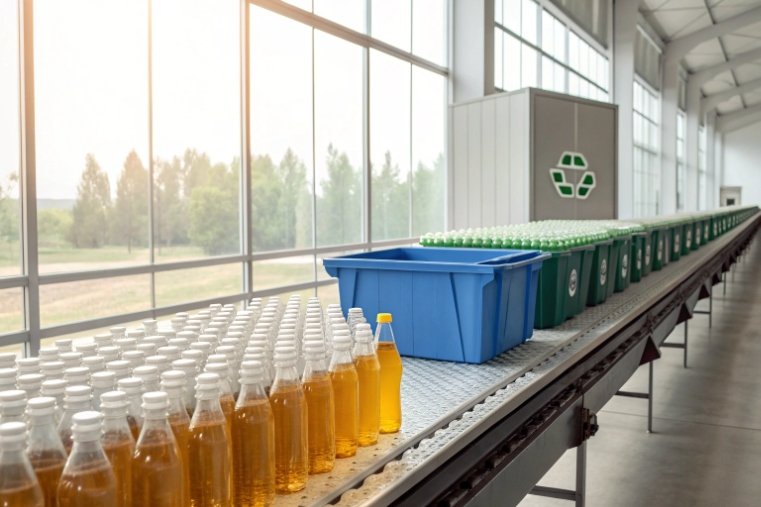
Many brands want to look greener fast and see biodegradable plastic packaging 1 as an easy swap for glass. Then they hit questions about shelf life, certifications, and real end-of-life behavior.
Biodegradable and compostable plastics can work for short-life, low-risk products in controlled waste systems, but glass is still the safer, more universal option for liquids that need long shelf life, heat resistance, and flavor stability.
To decide clearly, it helps to split emotions from facts. That means asking how these materials really behave in compost, how they perform as barriers, what they cost at scale, and how we can verify the claims on the label.
Under what conditions do “biodegradable” and “compostable” plastics actually break down?
Sustainability marketing loves big words. Buyers often see “biodegradable,” “bio-based,” and “compostable” used almost as synonyms. This creates huge confusion in real projects.
Biodegradable and compostable plastics only break down as promised under specific conditions of temperature, moisture, oxygen, and microbes. Most “compostable” packaging needs industrial composting, not a garden pile or the ocean.
What the main terms really mean
Let’s simplify the vocabulary:
- Bio-based: Made partly or fully from renewable bio-based feedstock 2 (corn, sugarcane, etc.). This says nothing about whether it will biodegrade.
- Biodegradable: Can be broken down by microorganisms into CO₂, water, biomass, and sometimes methane. Time frame and conditions are usually not defined.
- Compostable: Biodegrades under defined composting conditions within a set time, leaving no toxic residue. This must link to a standard (like EN or ASTM) to mean anything.
A PLA or PBAT-based film can be both bio-based and compostable, but it might only compost in an industrial facility. In soil or seawater, it can behave more like regular plastic than people expect.
Industrial vs home composting
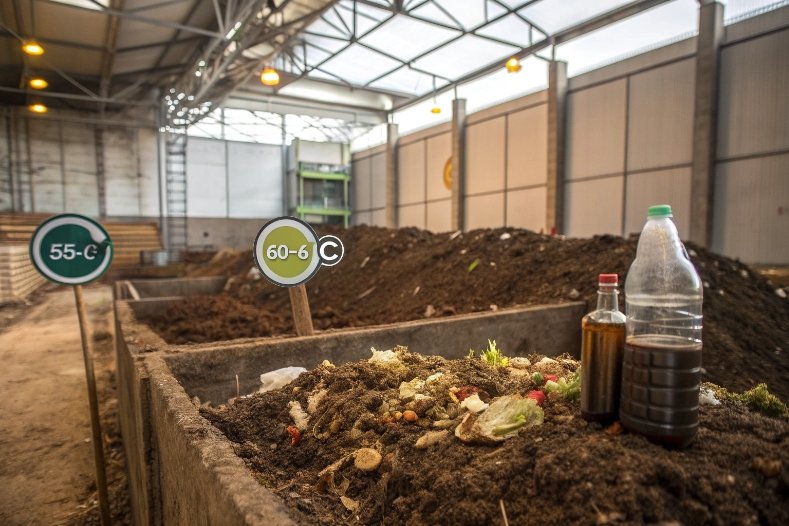
Most certified “compostable” plastics are tested in industrial composting facilities 3:
- Temperatures around 55–60 °C.
- Good oxygen levels and active turning.
- High microbial activity and controlled moisture.
- Time frames of weeks to a few months.
In this system, many PLA and PBAT blends can break down well enough to pass standards.
Home compost is very different:
- Lower and fluctuating temperatures.
- Less mixing and less oxygen.
- Variable moisture and microbe levels.
- Much longer and less predictable breakdown.
Only some products carry “home compostable” marks. Many “compostable” cups or films will stay in a home compost heap for years.
What happens in landfill, recycling bins, and the environment
Here is where expectations and reality clash:
- Landfill: Conditions are often dry and oxygen-poor. Many “biodegradable” plastics do not break down much. If they do, they can create methane without capture.
- Recycling streams: Compostable plastics can contaminate PET or PE recycling if they slip in. Sorting systems are not perfect.
- Open environment (street, river, sea): Breakdown is slow. Some products just fragment into smaller pieces, which still pollute.
| Label on Product | Likely Behavior in Real Life |
|---|---|
| “Biodegradable” only | Unclear. May persist or just fragment. |
| “Compostable” | Needs industrial compost to work as claimed. |
| “Home compostable” | Better chance in garden compost, still condition-based |
| No standard cited | Marketing claim, not a reliable technical statement |
So, biodegradable plastics can be helpful in closed systems with access to industrial composting. They are not a magic fix for litter or poor waste management.
Can bioplastics match glass for barrier performance and shelf life?
From a liquid-packaging point of view, the most serious question is not “Is it green?” but “Will it protect the product?” Here glass sets a very high bar.
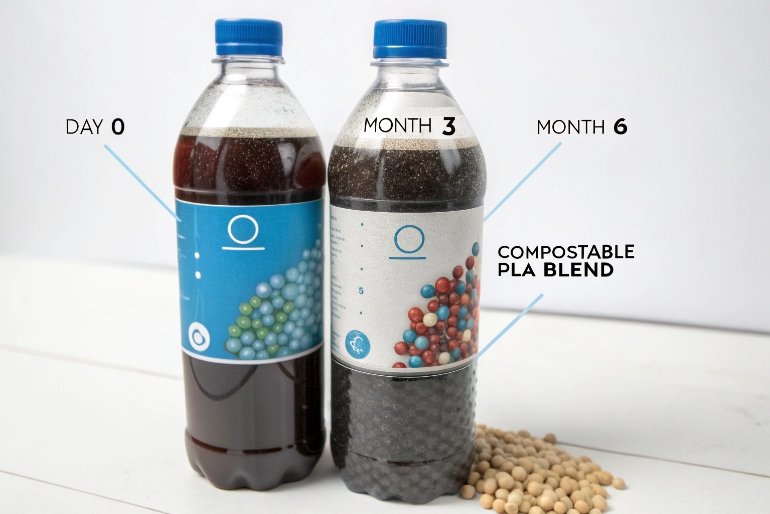
Bioplastics and compostable blends generally cannot match glass on gas and vapor barrier, heat resistance, or long-shelf-life performance, especially for carbonated or aroma-sensitive products.
Barrier performance: oxygen, CO₂, and water vapor
Glass is almost a perfect barrier:
- No meaningful oxygen ingress.
- No CO₂ loss through the wall.
- Very low water-vapor transmission.
- No flavor scalping and almost no aroma loss through the container itself.
Most biodegradable plastics are much more permeable:
- PLA: Modest oxygen barrier and water-vapor performance 4, relatively high water-vapor transmission. Not suitable for long shelf-life beverages.
- PLA/PBAT blends and other compostables: Often used for films, bags, and cups rather than long-life bottles.
- Bio-PET or bio-PE (bio-based but not compostable): Can behave like fossil PET or PE and offer decent performance, but these are not the “compostable” story most people imagine.
For carbonated drinks, beer, sparkling water, wine, or strong aroma products like essential oils or premium sauces, this weaker barrier is a serious issue. Shelf life shrinks. Taste shifts. Carbonation drops.
Heat, filling, and processing limits
Glass handles tough processes:
- Hot-fill juices and sauces.
- Pasteurization and retort.
- Steam and dry-heat sterilization (with the right glass type).
- Repeated washing for reuse.
Most compostable plastics soften and deform around 55–60 °C. Many cannot survive:
- Hot-fill at high temperatures.
- Long pasteurization cycles.
- Sterile or quasi-sterile handling with heat.
This limits their use mainly to cold-fill products, with short shelf life, and often only in local or controlled systems.
Chemical compatibility and product interaction
Glass is essentially inert with water, most acids, alcohols, and many oils. Compostable polymers are more sensitive:
- Acids, fats, and alcohols can change their structure.
- Some blends swell or weaken in contact with aggressive formulas.
- This can raise leak risk or change the appearance.
Often, you need extra layers, special coatings, or more complex closure and liner systems to protect both product and package. That adds cost and complexity.
Simple comparison
| Property | Glass | Typical Compostable Plastic (PLA/PBAT) |
|---|---|---|
| Oxygen barrier | Excellent | Moderate to weak |
| CO₂ barrier | Excellent | Generally poor |
| Water-vapor barrier | Excellent | Often weak |
| Heat resistance | High | Low to medium |
| Chemical inertness | Very high | Formulation-specific |
| Shelf life for liquids | Long, stable | Usually short to medium |
For core liquid categories like beer, wine, spirits, juices, functional drinks, or cosmetics with active ingredients, glass remains the stronger and more forgiving choice.
How do cost, MOQ, and supply stability compare in large-scale sourcing?
Even if a material works technically, it must fit real sourcing realities. Buyers need stable prices, reliable lead times, and enough capacity to support launches and promotions.
Biodegradable packaging solutions 5 are often more expensive per unit, come with higher MOQs, and rely on supply chains that are still maturing. Glass is heavier to ship but offers strong, stable capacity for large, repeat orders.
Material and processing cost
For many common items:
- Compostable resins (PLA, PBAT, blends) cost more per kilogram than standard PET or PE.
- You often need more material or thicker walls to hit basic strength. This pushes cost up again.
- Processing sometimes needs special tools, different temperature windows, and careful handling, which can lower line speed.
Glass has its own cost drivers:
- High energy for melting.
- Freight costs due to weight and volume.
But once a glass plant is running with efficient furnaces and multiple lines, the per-unit cost for mass-production bottles can be very competitive.
MOQ and customization
New, niche materials often bring stricter MOQ rules:
- Resin suppliers may sell only in large lots.
- Converters want full runs to make compostable lines pay off.
- Custom colors, blends, or shapes drive MOQs even higher.
Glass plants also have MOQs, especially for custom molds, but:
- Many standard bottle and jar shapes are available with relatively modest minimums.
- Tooling and mold costs can amortize over a long life and many orders.
- Large furnaces and multiple lines support high-volume, repeat supply.
Supply stability and risk
Biodegradable plastics depend on:
- Agricultural feedstocks like corn or sugarcane.
- Conversion plants that may focus on certain regions or segments.
- Regulations and subsidies that can change.
Any stress on crops, policy, or logistics can affect availability or price.
Glass relies on:
- Mineral raw materials (sand, soda ash, limestone).
- Long-lived furnaces with high capital investment.
- Established global trade in glass packaging.
This does not make glass immune to shocks, but it does mean the infrastructure is mature and widely distributed.
| Factor | Glass Packaging | Compostable Bioplastic Packaging |
|---|---|---|
| Unit cost (mass market) | Competitive, stable | Often higher than PET/HDPE |
| MOQ for customs | Medium–high, but many standards | Often high, especially for complex items |
| Capacity | Very high in many regions | Growing, uneven by region |
| Supply risk | Moderate, mature industry | Higher, linked to feedstock and niche tech |
For big, long-term beverage or cosmetic launches, this stability is often more important than small theoretical environmental gains.
What logos and certifications should buyers require to validate claims?
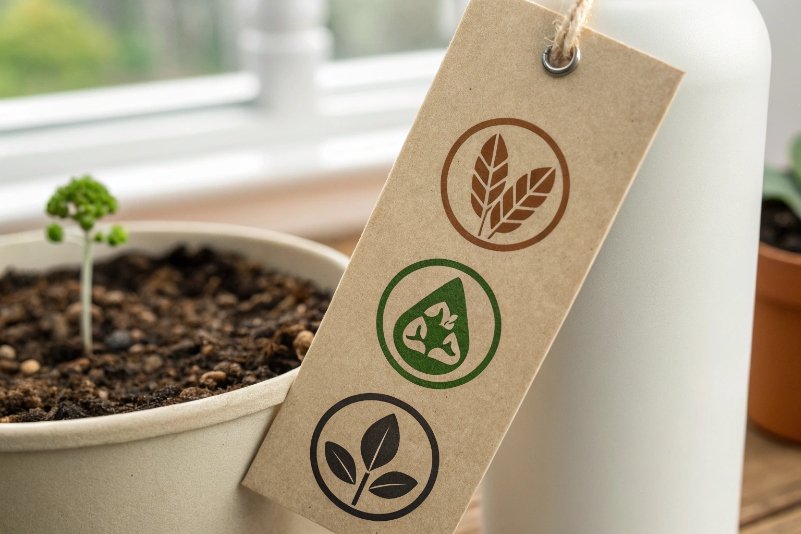
The market is full of green leaves and clever icons. Without standards, these can be meaningless. Buyers need real, test-based certifications, not just the word “eco” on a label.
Meaningful compostable and bio-based claims should link to standards like EN 13432 or ASTM D6400 and third-party marks such as OK compost, OK compost HOME, the Seedling logo, or BPI. Food-contact safety must still be proven separately.
Compostability standards
Two main families of standards define industrial compostability:
- EN 13432 (Europe): EU standard for compostable packaging 6 that covers packaging recoverable by composting and biodegradation. Sets criteria for:
- Biodegradation (conversion to CO₂).
- Disintegration during composting.
- No negative effect on compost quality.
- ASTM D6400 / D6868 (North America): Similar focus for compostable plastics and packaging 7 intended for composting.
For home compost, there are extra labels and test schemes that use cooler, less controlled compost conditions.
Logos and marks to look for
Common, trustworthy logos include:
- OK compost INDUSTRIAL and OK compost HOME
Show that the product meets defined compostability requirements in industrial or home conditions. - Seedling logo (often used in Europe)
Indicates conformity with EN 13432 under an approved certification body. - BPI (Biodegradable Products Institute)
Widely used in North America to certify products that meet ASTM industrial compostability standards.
For bio-based content (not automatically compostable), buyers may see:
- Bio-based content percentages.
- “OK biobased” marks or similar.
- USDA BioPreferred labels in some markets.
These say how much renewable content the material has. They do not say anything about compostability or environmental impact by themselves.
Food-contact and safety still matter
Even if a package is compostable, it still touches food or drink. So buyers should request:
- Declarations of compliance with FDA or EU food-contact rules.
- Migration and overall safety tests.
- Information on inks, adhesives, and closures, not just the main material.
It is important to think about the whole system:
- A compostable cup with a non-compostable lid and label is hard to handle at end-of-life.
- A glass bottle with a compostable label and adhesive can also reduce waste, even if the bottle itself goes into recycling or return.
| Claim Type | Useful Proof or Logo |
|---|---|
| Industrial compostable | EN 13432, ASTM D6400, OK compost, Seedling, BPI |
| Home compostable | OK compost HOME or similar home standard |
| Bio-based content | % bio-based, OK biobased, USDA BioPreferred |
| Food-contact safety | FDA / EU declarations, migration tests |
When buyers request these proofs up front, it becomes much easier to filter out pure marketing and focus on solutions that really work.
Conclusion
Biodegradable plastics can help in narrow, well-controlled use cases, but for long-shelf-life, heat-processed, or flavor-sensitive liquids, glass still gives the most reliable mix of safety, performance, and circularity.
Footnotes
-
Overview of biodegradable plastic packaging types, benefits, and limitations for sustainability claims. ↩︎ ↩
-
Introduction to bio-based plastics, feedstocks, and how they differ from fossil-based polymers. ↩︎ ↩
-
Explanation of industrial composting conditions and facility requirements for effective biodegradation. ↩︎ ↩
-
Study of PLA packaging oxygen and moisture-barrier performance compared with conventional plastics. ↩︎ ↩
-
Market analysis of sustainable and biodegradable packaging cost trends and adoption barriers. ↩︎ ↩
-
Overview of EN 13432 criteria for industrially compostable packaging and labelling. ↩︎ ↩
-
Description of ASTM compostability standards D6400 and D6868 used by North American certifiers. ↩︎ ↩






