
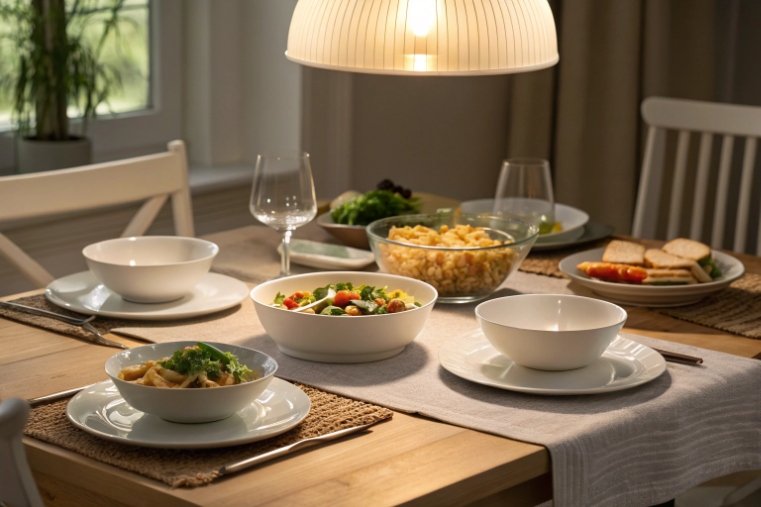
Choosing between porcelain and glass can feel simple at first, then confusing when you start thinking about heat, stains, and breakage at home.
Porcelain is usually better for heat and formal presentation, while tempered or opal glass wins on lightness, stackability, and casual durability. The best choice depends on how you cook, store, and serve food every day.
Once you match the material to your real habits, the decision becomes easier. Daily plates, weekend baking, kids at the table, and food photos all push in slightly different directions. Let’s break them down one by one.
Is glass or porcelain better for microwave/oven and heat retention?
Cold centers and cracked dishes are usually not about recipes. They are about how the plate or bowl handles heat.
For microwaves and ovens, porcelain usually handles heat and temperature swings better than standard glass, while tempered or borosilicate glass narrows the gap. Porcelain also tends to keep food warm slightly longer on the table.
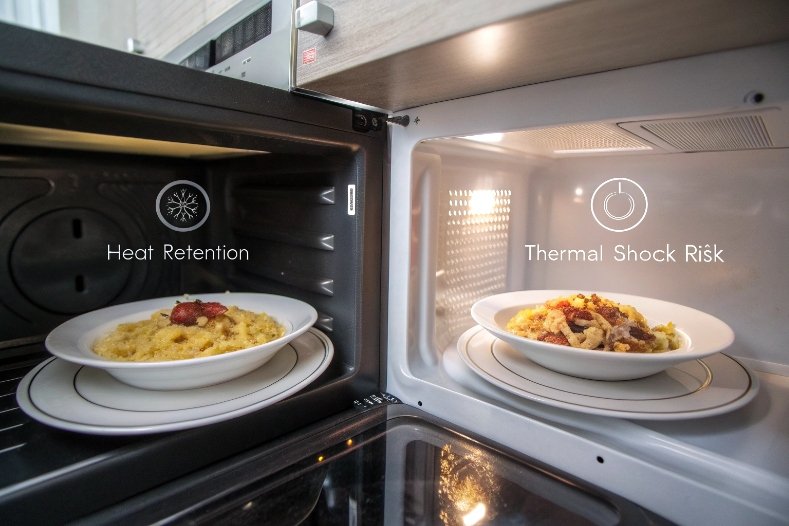
How each material behaves with heat
Porcelain is a ceramic fired at high temperature 1. It has a dense, vitrified body that deals well with gradual heating and cooling when labeled microwave and oven safe 2. Many porcelain plates and baking dishes tolerate normal home oven temperatures and repeated microwave cycles.
Glass is more complex because there are different types:
- Standard soda-lime glass plates and bowls often handle microwave use if labeled safe, but they dislike strong thermal shock.
- Tempered glass improves mechanical strength and impact resistance 3 and is common in everyday glass dinnerware and some ovenware.
- Borosilicate glass is built for thermal shock resistance 4 and works well in ovens and with boiling liquids.
A simple way to see the differences:
| Material type | Microwave use* | Oven use* | Heat retention at table |
|---|---|---|---|
| Porcelain (everyday) | Usually good | Often good when labeled | Good |
| Soda-lime glass | Often good when labeled | Limited, avoid strong shocks | Moderate |
| Tempered glass | Usually good | Selected items only | Moderate |
| Borosilicate glass | Very good | Very good when labeled | Slightly less massy |
*Always follow the specific product label.
Porcelain tends to hold heat a bit longer because of its body and mass. This is helpful if you pre-warm plates or serve dishes that cool fast. In daily life, that can mean your pasta or soup stays enjoyable for a few extra minutes.
Tempered glass and opal glass plates often feel lighter and thin, so they may lose heat a bit faster but reheat food very well in the microwave. Borosilicate shines when you go from fridge to oven or when you pour hot liquids, though it appears more often in bakeware and teapots than in flat dinner plates.
In my own routine, porcelain works best for oven-to-table lasagna or baked rice, while tempered glass or borosilicate works for casseroles and reheating leftovers. The key is to avoid sudden temperature jumps, no matter which material you choose.
Which offers better stain resistance and long-term clarity?
Daily sauces, curry, tomato, and coffee can make “white” dishes look tired. Some surfaces stain, some craze, and some stay clean for years.
Both porcelain glaze and glass are non-porous when well made, but porcelain glazes usually resist staining and utensil marks very well, while glass keeps its clarity but can show cloudiness or water spots over time if care is poor.
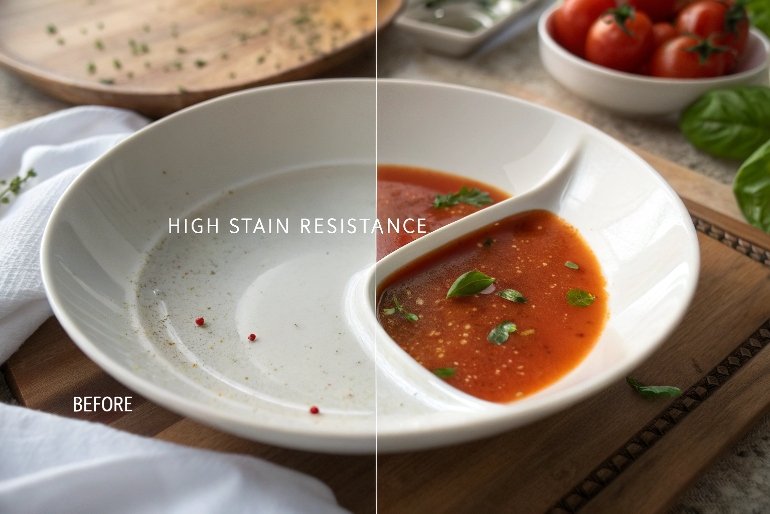
How surfaces age in real kitchens
Porcelain has a glassy glaze on top of a ceramic body 5. This glaze is the part you touch. When it is well formulated and fired correctly, it is very smooth and non-porous. It resists staining from coffee, tea, and tomato-based dishes. Utensil marks may appear over time on some glazes, but they often buff out with gentle cleaners.
Glass is glass all the way through. It does not have a separate glaze layer. This gives very good chemical resistance and a smooth surface. However, hard water and dishwasher detergents can leave a cloudy film on glass over time 6, especially on clear glass.
A simple comparison:
| Property | Porcelain (glazed) | Clear/opal glass |
|---|---|---|
| Stain resistance | Very good | Very good |
| Utensil marks | Possible on some glazes | Rare, but scratches show |
| Long-term clarity | White stays white | Can cloud with hard water |
| Color options | Wide range of glazes | Clear, tinted, opal |
For long-term whiteness, porcelain has a small advantage. If the glaze is good and you avoid harsh abrasives, a white porcelain plate can stay bright for many years. Opal glass also does well here because the body is opaque and the surface is tempered glass, which resists dyes and stains.
For glass clarity, the risk is mainly surface film, not deep staining. Regular rinsing, not overloading the dishwasher, and occasional vinegar soaks help remove mineral build-up and keep glass clear.
Printed designs add another layer. On porcelain, well-fired underglaze or in-glaze decorations are durable and resist fade. On glass, decals or prints vary a lot. Some are long-lasting, some scratch faster in dishwashers. If you rely on heavy daily dishwasher use, simpler, undecorated surfaces usually age better, no matter the material.
Overall, if you want a “blank canvas” plate that always looks neutral and clean, a mid-quality or better white porcelain line or a good opal glass line is very safe. Clear glass looks great too, but it asks for a bit more attention to water quality and detergent.
How do weight, stackability, and breakage compare in home kitchens?
Everyday plates should not feel like gym equipment. At the same time, nobody likes thin pieces that break when someone bumps the sink.
Porcelain often feels thin yet strong and chip-resistant, while standard glass is heavier at the same thickness. Tempered or laminated glass systems can be surprisingly light and stack neatly with good durability.
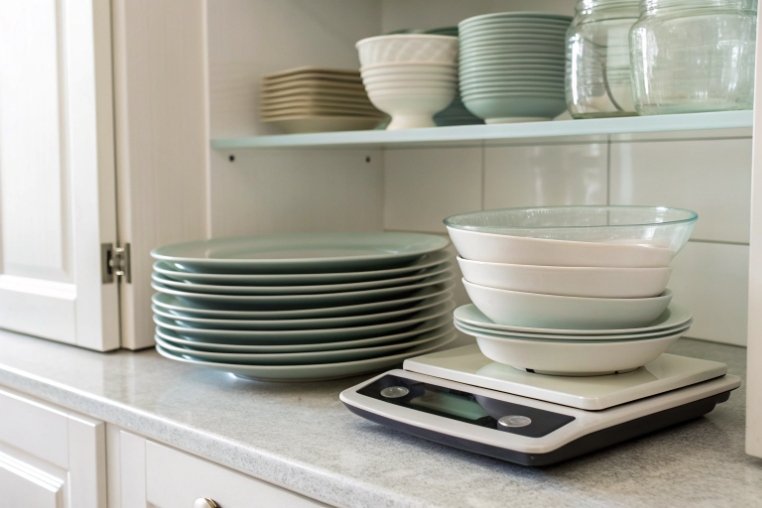
Handling and breakage in daily life
Weight and balance are easy to feel and hard to describe until you hold both materials. Porcelain, especially bone china or refined feldspar bodies, can be quite thin and light while staying strong. This helps with long meals, serving multiple plates at once, and stacking.
Glass, if made in similar thickness, often ends up heavier. So many manufacturers keep glass plates relatively thin to avoid extra weight. Tempering helps them stay strong at these thinner profiles.
Here is a rough comparison:
| Aspect | Porcelain | Standard glass | Tempered / laminated glass |
|---|---|---|---|
| Weight per plate | Medium, can be quite light | Often heavier at similar size | Often light for thickness |
| Stackability | Good, with foot-ring support | Good, depends on design | Very good in Vitrelle-type designs |
| Chip behavior | Rim chips more common | Chips and sharp fragments | Small pieces if it fully breaks |
| Impact resistance | Good for quality porcelain | Lower in non-tempered types | High for tempered |
In a home kitchen, typical break events are:
- A plate bumps the faucet.
- Someone stacks plates too fast and hits rim to rim.
- A child drops a plate from table height.
Porcelain tends to chip at rims rather than shatter. Often the plate is still usable, though less attractive. Non-tempered glass can crack across or break into sharp pieces. Tempered glass resists many small impacts, but when it finally fails, it breaks into many small fragments.
Opal and laminated glass sets are interesting here. They are designed to be thin, light, and stack very tight. Many families like them because you can stack a large number of plates in a small cabinet without stressing the shelves.
For small kitchens with tight storage, stackable tempered glass or opal sets can be very practical. For homes that value a slightly softer landing, comfortable weight, and rim strength, porcelain does well.
Which material presents food better for photography and entertaining?
Plates are the frame around the food. The right surface and color can turn a simple meal into something that looks like a restaurant dish in photos.
Glass excels at transparency, layering, and modern looks. Porcelain excels at neutral backgrounds, controlled gloss, and classic elegance. The best choice depends on your style and lighting.
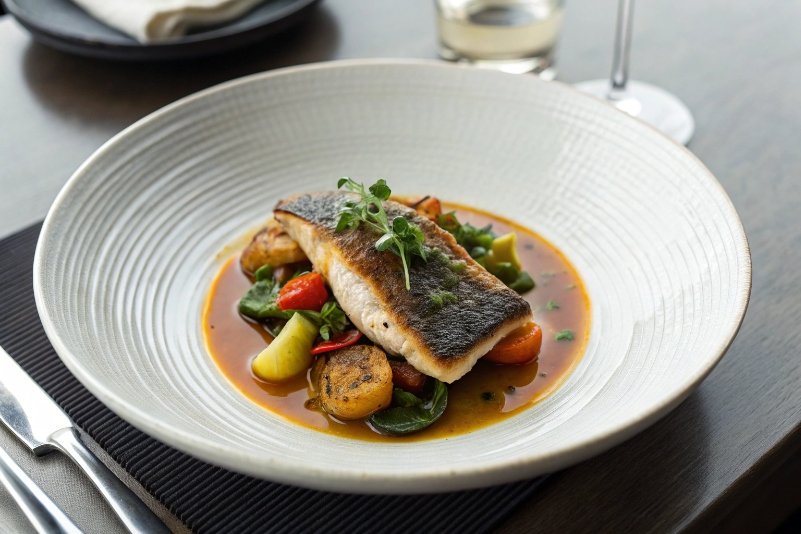
Visual impact on the table and on camera
For photography and entertaining, there are a few key points:
- Background color and tone
- Surface gloss level
- Edge and rim shape
- How the material reacts to light
Porcelain, especially in matte or soft-gloss white, gives a very neutral stage. Colors in the food stand out. Shadows look soft. Reflections are easy to control. This is why many restaurants and food stylists rely on white porcelain or stone-colored glazes.
Glass, especially clear glass, blends into the background. You can see placemats, wood, or fabric under the plate. This can look very light and modern. Colored glass, smoked tones, or opal glass can add mood. However, clear glass can also create strong reflections and highlights if the lighting is harsh.
A simple guide:
| Style goal | Better material choice | Why it works |
|---|---|---|
| Clean, “restaurant” look | White or off-white porcelain | Neutral, consistent, soft reflections |
| Modern, airy look | Clear or tinted glass | Transparency, subtle layering |
| Cozy family table | Opal glass or warm porcelain | Soft color, forgiving surface |
| Food photography basics | Matte porcelain or low-gloss glass | Less glare, easier editing |
For social media photos, white porcelain plates with a slight rim 7 work very well. They frame the food, hold sauces, and avoid busy distractions. Colored rims or subtle textures can add character without fighting the dish.
Clear glass plates can be beautiful for desserts, fruit, and layered dishes. You can play with interesting backgrounds like textured linen, wood, or slate under the plate. Just watch reflections from ceiling lights. Angling the plate or diffusing the light helps.
When hosting, porcelain has the advantage of flexibility. You can dress it up with linen and metal flatware for formal dinners, or keep it simple for everyday meals. Glass feels more casual and modern, unless you move into crystal or high-end high-white glass, which is more common for stemware than dinner plates.
Conclusion
For daily life, porcelain works best when you value heat performance and classic presentation, while tempered or opal glass works best when you want light weight, tight stacking, and casual durability, with a few special pieces added for photos and guests.
Footnotes
-
More on porcelain’s composition, firing temperatures, and strength compared with other ceramic tableware bodies. ↩︎ ↩
-
How to check if a dish is truly microwave safe and what the common safety symbols mean. ↩︎ ↩
-
Explanation of toughened glass processing, increased mechanical strength, and characteristic small-particle breakage pattern. ↩︎ ↩
-
Overview of borosilicate glass, low thermal expansion, and typical uses in cookware and laboratory equipment. ↩︎ ↩
-
What ceramic glazes are, how they’re applied, and why they protect porcelain from stains and absorption. ↩︎ ↩
-
Causes of cloudy dishwasher film on glass and step-by-step methods to remove and prevent it. ↩︎ ↩
-
Guide to choosing versatile white dinnerware that plates well for everyday meals, guests, and food photography. ↩︎ ↩






