
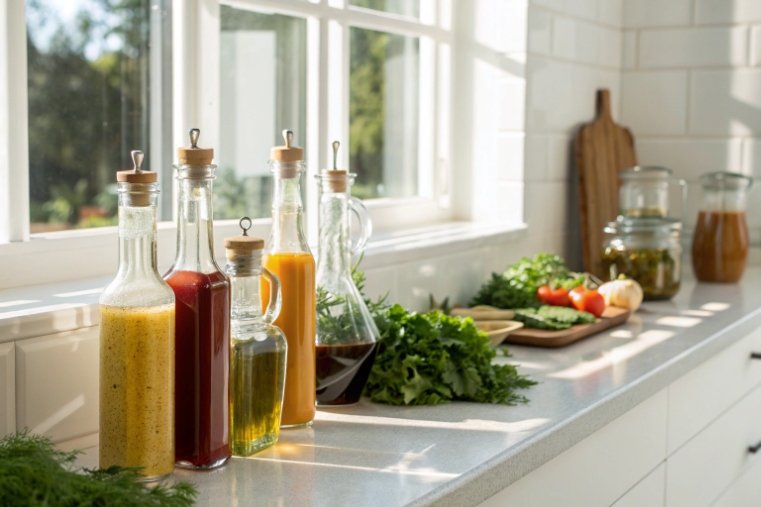
Choosing glass bottles for home use is not only about looks. Wrong capacity, neck finish, or glass type can cause leaks, cracks, and wasted food.
To choose glass bottles for home use, match the capacity and neck size to what you store, pick the right glass type for temperature changes, choose safe leakproof closures, and label clearly for pantry safety.
When bottles fit your daily habits, they feel “invisible” in use. You open, pour, wash, and store without thinking. The goal is to reach that point. So let’s go step by step: size, neck finish, closure, glass type, and safety.
Which capacities and neck finishes fit sauces, juices, or oils at home?
Small mistakes here show up fast: a bottle that is too big lets oil go rancid, and a neck that is too narrow makes tomato sauce hard to clean.
For home sauces, juices, and oils, pick 100–500 ml for sauces and dressings, 250–1000 ml for juices, and 250–750 ml for oils. Use wide mouths for filling and cleaning, and narrow mouths when you want a clean, controlled pour with fewer spills.
Matching capacity to real home habits
At home, capacity is less about theory and more about how fast your family finishes a bottle. If a hot sauce sits for months, a smaller bottle is safer. If juice disappears in one breakfast, a larger bottle is better.
Here is a simple way to think about it:
| Use case | Typical capacity | Why it works at home |
|---|---|---|
| Hot sauce / chili oil | 100–250 ml | Small, stays fresh, easy to control when pouring |
| Salad dressing | 150–350 ml | Fits fridge door, good for weekly refills |
| Cooking oils (daily) | 250–500 ml | Easy to handle, not too heavy or bulky |
| Olive oil “refill” size | 500–750 ml | Good if you cook often but want to avoid big 1L jugs |
| Fresh juice for 1–2 ppl | 250–500 ml | One meal or one day use |
| Fresh juice for family | 750–1000 ml | Covers breakfast for several people |
For home use, square bottles pack tightly in the fridge door or pantry. They waste less space, especially for sauces and oils. Round bottles clean faster and are better when you often switch contents, since there are no corners for residue to hide. When in doubt for everyday cooking, a 250–500 ml round bottle is a safe default.
Wide-mouth vs narrow-mouth: how to decide
Neck finish changes how you use the bottle every single day. A wide mouth feels friendly in the sink. A narrow one behaves well on the dining table.
You can use this rule:
- Wide mouth for fill and clean
- Narrow mouth for pour and carry
Some key points:
| Neck style | Best for | Pros | Cons |
|---|---|---|---|
| Wide mouth | Sauces, chunky dressings, infusions | Easy to fill, easy to clean, fits brushes | Easier to spill when pouring fast |
| Regular mouth | Most juices, basic oils | Good balance between pour and clean | May still need a funnel for thick sauces |
| Narrow mouth | Vinegar, soy sauce, thin oils | Precise pour, fewer leaks in transport | Harder to clean, needs small brush |
Wide-mouth bottles shine when you add herbs, garlic, chili flakes, or fruit inside. You can drop pieces in and pull them back out. They also handle ice cubes. Narrow-mouth bottles make more sense for a clean stream of soy sauce or vinegar at the table.
If you plan to carry juice or cold brew in a bag, a narrow or medium neck with a quality screw finish and gasket reduces leak risk. For a pantry bottle that rarely moves, a wide mouth makes your life easier with cleaning and refills.
What closure options—aluminum cap, pump, dropper, or swing top—are most practical?
The best glass bottle can still disappoint if the closure leaks, rusts, or clogs. Closures decide how clean, fast, and safe each pour feels.
For sauces and oils, screw caps with food-safe liners or pour spouts work best. For skincare or tinctures, use droppers or pumps. For carbonated drinks, use pressure-rated swing tops. Always choose closures with quality gaskets and, when possible, replaceable seals to extend bottle life.
How different closures behave in the kitchen
Each closure type fits a different “job” in daily life. Many people try to save money by reusing any cap they have. That often leads to sticky threads, slow leaks in bags, or flat kombucha.
Here is a quick guide:
| Closure type | Best for | Main strengths | Watch out for |
|---|---|---|---|
| Aluminum screw cap | Oils, sauces, juice fridge storage | Simple, compact, easy to replace | Needs good liner to avoid leaks |
| Pump | Dish soap, hand soap, syrups | One-hand use, portion control | Must match viscosity, tubes need trimming |
| Dropper | Tinctures, bitters, skincare | Very precise dosing, good for small volumes | Not ideal for thick sauces or large amounts |
| Swing top | Carbonated drinks, kombucha | Strong seal, pressure friendly, reusable | Needs pressure-rated glass and hardware |
For everyday sauces and oils, an aluminum screw cap with a food-grade gasket or liner is simple and reliable. It seals tightly and works well in the fridge or pantry. When you refill often, this type is easy to clean or swap.
For carbonated drinks or kombucha, swing tops are very popular. They keep pressure in and give a satisfying “pop” when opened. The important part is to use bottles that are rated for pressure, not just any thin juice bottle with a swing top added. The gasket on the swing cap is also a key piece. Choose ones where the gasket size is standard and easy to replace, so the bottle stays safe and leakproof over years of use.
Why gaskets and liners matter more than people think
In real use, leaks and stale flavors often come from worn or cheap seals, not from the glass itself. The gasket or liner is the small soft part inside the closure that makes the seal.
You get better performance when:
- The gasket is silicone or high-quality rubber, not stiff plastic.
- The gasket or liner is easy to remove and clean, so you do not trap smells.
- The gasket size is standard, so you can replace it when it gets hard or cracked.
If a bottle will travel in a backpack or picnic bag, test it at home. Fill with water, close the lid, and tip it on its side over a sink or towel. If the closure leaks with water, it will leak faster with thin liquids like vinegar.
For pumps and droppers used with oils or syrups, check that all parts that touch the liquid are food-safe. Rinse them before first use and check if any parts trap residue. If cleaning feels like a fight, that closure is not a good match for daily home use.
Should I pick soda-lime or borosilicate for hot-fill or cold-brew?
Not all glass behaves the same when hot and cold fight each other. Thermal shock cracks can happen without warning if glass is not made for sudden change.
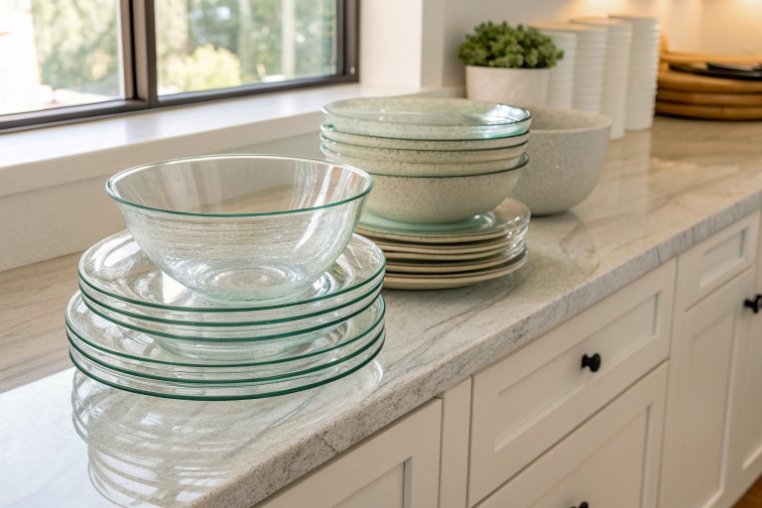
For cold-brew and fridge use, soda-lime glass 1 is usually enough. For hot-fill, boiling water, or large temperature jumps, borosilicate 2 is safer. It tolerates thermal shock better and is less likely to crack when you preheat or cool fast.
Understanding glass type in simple terms
In simple words, soda-lime glass is the “normal” glass used in many bottles and jars. It is strong under normal use and cost effective. But it does not like sudden heat changes. Pouring boiling liquid into a cold soda-lime bottle is risky.
Borosilicate glass handles heat better. That is why it often appears in lab glassware and some high-end kitchen items. It resists thermal shock much more, so it is a better choice when you:
- Pour boiling water into a bottle
- Fill with hot sauces straight from the stove
- Move containers from fridge to hot water or vice versa
Here is a simple comparison:
| Glass type | Best temperature range | Great for | Avoid for |
|---|---|---|---|
| Soda-lime | Cold to moderate warm | Cold brew, juices, pantry storage | Direct boiling fill, oven uses |
| Borosilicate | Cold to high heat, thermal shock | Hot tea, hot sauces, quick cooling | Extreme impact or rough handling |
Practical tips for hot-fill and cold-brew at home
If you like to hot-fill tomato sauce, broth, or herbal teas, borosilicate bottles give more safety margin. They still deserve respect. Sudden extreme changes can stress any glass, but borosilicate handles them much better.
A few simple rules help prevent cracks:
- Before hot-filling, pre-warm the bottle with hot tap water. This reduces thermal shock.
- Do not move a hot bottle straight to the fridge. Let it cool at room temperature first.
- Do not place a cold bottle straight into boiling water. Warm it in lukewarm water, then hotter water.
For cold-brew coffee and iced tea, soda-lime bottles usually work very well. The drink lives in the fridge, and there is no huge temperature jump. Here, the risk is more about impact and less about heat. You can add a silicone sleeve to give more grip and impact resistance, especially for tall bottles.
If you use swing tops for home-fermented drinks, check both the glass type and the bottle thickness. Some designs are reinforced at the bottom and shoulders for pressure. These are better for kombucha and soda. Thin, light bottles are better for still drinks, not gas.
What safety and labeling considerations matter for pantry storage?
Good pantry storage is about more than neat rows. Clear labels and the right bottle features help keep food safe, reduce waste, and avoid mix-ups.
For pantry storage, label every bottle with contents and date, use amber glass for light-sensitive items, and pick closures that stay airtight. Keep bottles away from strong light and heat, and choose shapes that do not tip easily on your shelves.
Light, oxygen, and labeling in everyday use
In a home pantry, the main enemies are light, air, and time. Oils, extracts, and tinctures suffer most. Light speeds up oxidation, which changes flavor and can create off smells.
Amber glass is very helpful for:
- Olive oil and nut oils
- Vanilla extract and other flavor extracts
- Herbal tinctures or DIY infusions
Clear glass is better when visibility matters. Sauces, grains, and snacks often look nice and are easy to identify by sight. So you can mix both: amber for sensitive items, clear for everything else.
Labeling should be simple and boring. That is what makes it safe. You only need three basic pieces:
- Name of the contents
- Date filled or opened
- Any special note like “spicy”, “diluted”, or “for external use”
A cheap label maker, painter’s tape, or reusable tags all work. What matters is that you can read them at a glance. This avoids confusing vinegar with oil, or using an old sauce that sat for too long.
Stability, cleaning, and long-term safety
Pantry bottles live long lives. Over time, small details matter a lot:
- Bottle shape: Short, wide bases are more stable than very tall, narrow ones. This matters on high shelves.
- Dishwasher safety: Check if the glass and closure are dishwasher-safe. Some caps, liners, and gaskets only like hand wash.
- Odor carry-over: Some sauces and oils leave strong smells. Choose bottles with simple, round shoulders and no deep corners so they clean better.
A basic safety loop that works well at home looks like this:
- Choose a bottle with a stable shape and an airtight closure.
- Label it clearly and store it in a cool, dark area.
- When you empty it, soak and inspect the gasket, liner, and threads.
- Replace worn gaskets instead of forcing old ones to keep sealing.
When you reuse commercial bottles, inspect them carefully. Look for chips on the rim, scratches inside, or weakened threads. Any damage on the mouth or sealing area can cause leaks or micro cracks. If a bottle has deep scratches or a chip on the lip, it is safer to recycle it.
Finally, keep food-safe liquids and non-food items in clearly separate zones. For example, glass bottles for dish soap or cleaning vinegar should not sit next to similar bottles used for drinks, unless they are very clearly labeled. Simple distance and clear tags prevent dangerous mix-ups.
Conclusion
Choose glass bottles by how you really live: match size, neck, glass type, and closures to your daily routines, then support them with clear labels and simple, safe care habits.






