
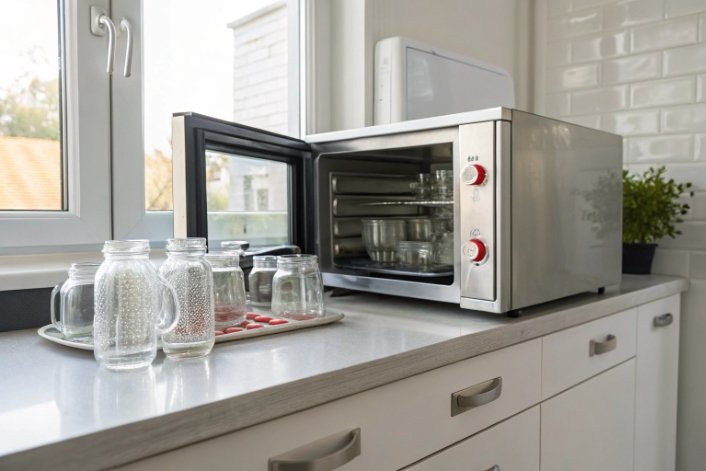
Most people think “it is glass, so it must be fine in the microwave.” In real use, that idea is wrong, and sometimes dangerous.
Not all glass containers are microwave-safe. Only glass that is designed, tested, and clearly labeled for microwave use should go into a microwave, and you must also check lids, seals, and metallic decorations.
When I talk with buyers or consumers, I always start from this simple point: the microwave does not care about marketing words like “premium” or “crystal.” It only cares about how the glass handles heat and how any metals behave in the field of the microwave. From there, we build a clear safety checklist.
Are all glass containers microwave-safe?
Many people put any random jar or drinking glass into the microwave. Sometimes it works. Sometimes it cracks, shatters, or overheats.
The short answer is no—not all glass containers are microwave-safe 1. Only glass that is labeled “microwave-safe” or tested for microwave use should be heated this way, and even then you must follow basic safety rules about lids, cracks, and sudden temperature changes.
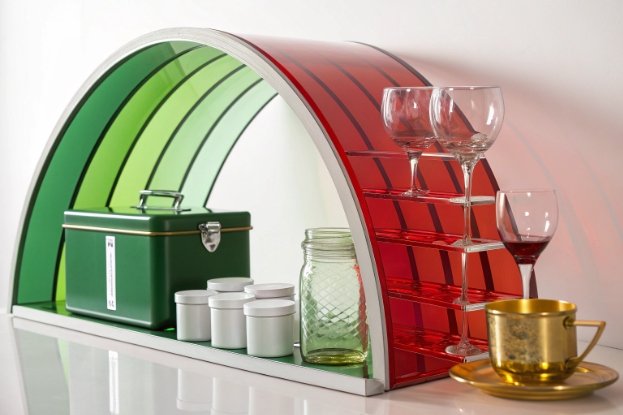
How to think about microwave safety for glass
Microwave safety depends on material, design, and condition, not just “glass vs plastic”.
-
Material and treatment matter
- Borosilicate glass and tempered soda-lime glass are usually chosen for microwave or oven products because they handle thermal shock better, especially when you use borosilicate glass food storage containers designed for microwave use 2.
- Ordinary, thin, non-tempered soda-lime glass, especially cheap cups or repurposed jars, is much easier to crack when one side gets hot fast.
-
Not all “nice” glass is safe
- Lead crystal and heavy, fancy glass can leach metals and may overheat or crack; leaded glass and microwave use 3 are a poor combination and should be avoided.
- Glass with metallic paint, gold rims, or mirror coatings can spark, arc, or create hot spots.
- Deep tints or special coatings may hide micro-cracks or metal pigments.
-
Condition is just as important
Any chip, hairline crack, or deep scratch is a weak point. Under microwave heating, stress builds around that flaw and the piece may fail suddenly. Once a piece is damaged, it should retire from microwave duty, even if the original product was “microwave-safe”.
Here is a simple overview you can share with customers or staff:
| Glass item type | Microwave use? | Notes |
|---|---|---|
| Borosilicate container labeled microwave-safe | Yes, when used as instructed | Best choice for frequent heating |
| Tempered glass container, clearly labeled | Usually yes | Let it cool gradually |
| Plain soda-lime jar with no label | Better to avoid | High risk of thermal shock |
| Lead crystal or unknown “crystal” | No | Metal content and cracking risk |
| Glass with metallic rim or mirror coating | No | Can spark and damage the microwave |
So the rule is simple: if it is not clearly marked or listed as microwave-safe, treat it as not suitable for microwave use.
How do borosilicate and tempered soda-lime perform in microwaves?
People often compare “borosilicate vs tempered glass” as if one is always safe and the other always dangerous. Both can be good choices when they are designed and labeled for microwave use.
Borosilicate glass usually handles heat changes better than soda-lime, while tempered soda-lime glass can also work in microwaves when it is designed for that job and used without sudden temperature shocks.
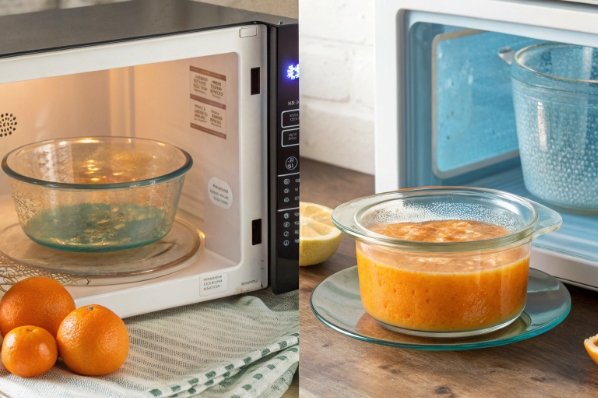
The real differences in use
Borosilicate glass
Borosilicate adds boron oxide to the glass mix. That lowers the thermal expansion. In simple words, the glass expands and contracts less with temperature change. This makes it more resistant to thermal shock.
For microwaves, that means:
- Better tolerance when food heats unevenly
- Lower risk when you move from warm to hot quickly
- Good performance when you reheat many times per week
This is why many lab-style and premium kitchen containers choose borosilicate. It is not unbreakable, but the margin of safety is higher.
Tempered soda-lime glass
Tempered glass starts as normal soda-lime, then goes through a special heat treatment. The surface cools faster than the core, which locks in compressive stress on the outside. If it breaks, it tends to shatter into small cubes instead of sharp knives.
For microwaves, tempered glass:
- Handles mechanical shock better (drops and bumps)
- Has improved thermal shock resistance compared with plain soda-lime, but still lower than borosilicate
- Fails in a dramatic way when something goes wrong, because of the stored stress
Tempered glass plates, bowls, and some storage dishes can be microwave-safe, but only when the manufacturer has tested and labeled them for that.
Comparing them in a practical way
| Feature | Borosilicate glass | Tempered soda-lime glass |
|---|---|---|
| Thermal shock resistance | Higher | Medium to high |
| Typical products | Lab-style containers, premium sets | Plates, bowls, some storage lids and bases |
| Microwave performance | Very good when labeled microwave-safe | Good when labeled microwave-safe |
| Behavior when it breaks | Cracks, can break into pieces | Sudden shattering into many small pieces |
| Cost | Higher | Usually lower |
From a brand view, borosilicate gives a strong performance story. From a cost and capacity view, tempered soda-lime can be more attractive. Both can support a microwave-safe claim, as long as you do proper design, testing, and clear instructions.
Which lids, seals, or metallic decorations are not microwave-safe?
Even when the glass body is fine, the closure system can create real hazards. This includes metal parts, airtight seals, and decorative coatings on the glass itself.
Lids with metal parts, airtight seals with no vent, and glass with metallic paint, foils, or trims are not microwave-safe; they can spark, trap pressure, or overheat food and glass.
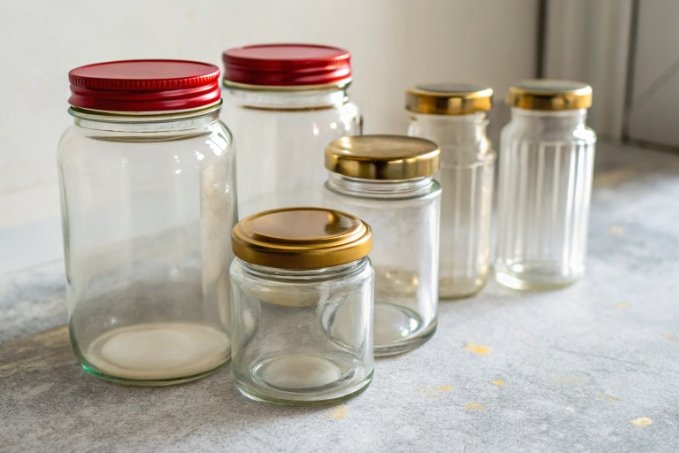
What to avoid around the microwave
-
Metallic lids and parts
- Full metal lids (twist-off caps, crown caps, lug caps)
- Pump and sprayer parts with metal springs exposed inside
- Stainless-steel bands or clamps on jars
In a microwave, metal can spark or arc. It can also reflect energy and create hot spots.
-
Metallic decorations on the glass
- Gold or silver rims on plates or bowls
- Metallic logos or foil-like decals
- Mirror or chrome coatings
These look beautiful but can act like tiny antennas in a microwave. Glassware with metallic trims or decorations can cause sparks or fires 4 and may damage the magnetron.
-
Airtight lids with strong seals
- Snap lids with silicone gaskets that seal fully
- Clip-top and canning closures that lock the lid tight
- Plastic lids without any vent hole
In a microwave, food and liquid expand and produce steam. If the lid cannot vent, pressure builds until something gives: the lid can pop off violently or the glass can crack. For reheating, lids should be vented or set loosely on top.
-
Liners and seals not rated for heat
- Foam liners that melt or deform
- Low-temperature plastics not designed for hot food
- Gaskets that absorb stains or break down under heat
From a design point of view, it helps to separate “storage closure” and “microwave closure” in your product line. For example, a product can ship with a tight seal lid for fridge storage plus a simple vented lid or open cover that the user switches to for reheating.
A simple list you can print on packaging:
| Component | Microwave-safe? | Safer practice |
|---|---|---|
| Glass base, microwave-safe | Yes, as instructed | Fine for reheating |
| Plastic vented lid | Usually, if labeled | Open vent or rest lid loosely |
| Tight silicone + clamp | No | Remove or open before heating |
| Metal lid or band | No | Remove before microwaving |
| Metallic trim on glass | No | Keep out of microwave |
What markings or tests indicate microwave suitability?
Consumers and even some buyers often guess. They see glass and assume all is fine. Clear markings and simple tests make life easier for both sides.
Microwave suitability is best confirmed by a clear “microwave-safe” symbol or wording from the manufacturer, supported by internal heat and thermal shock testing; a simple “water test” at home can give a quick practical check but does not replace lab tests.
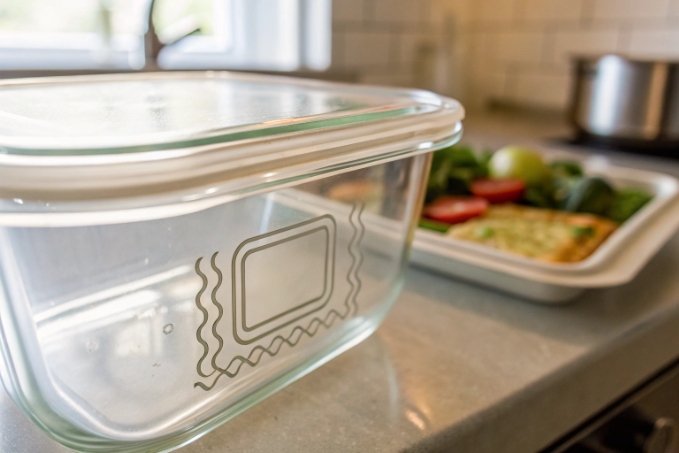
What brands should put on the product
Clear microwave-safe labels and symbols on glassware 5 help consumers choose the right container.
Most markets now expect:
- A microwave-safe icon (often a small microwave symbol or wavy lines)
- Plain text such as “Microwave-safe without lid” or “Microwave-safe, vent lid during use”
- Limits like “Max 1000 W, 3 minutes per cycle” for some products
These markings must be consistent with your internal testing. In the factory, that testing should include:
- Heating filled containers in a microwave to typical consumer conditions
- Checking for cracking, deformation, and lid ejection
- Measuring surface temperatures on handles and lids
- Thermal shock tests for hot-to-cold transitions that reflect real use
Simple practical check for home users
For education, you can share a simple cup-of-water microwave test for glass containers 6 in your content:
- Put the empty glass container in the microwave with a microwave-safe cup of water next to it.
- Heat on normal power for about 1 minute.
- After that time, the water should be hot, and the glass container itself should be warm but not burning hot.
If the empty glass gets very hot while the water is still cool, the glass or its decoration is likely absorbing microwave energy directly. That is a red flag. Users should avoid microwaving that item with food.
This is not an official certification test, but it is an easy sanity check that helps consumers pick safer pieces in a mixed kitchen.
How should brands write safe-use instructions for consumers?
Even the best glass and lids can fail when people use them in the wrong way. Clear, simple instructions are part of the safety system.
Brands should write short, direct microwave-use instructions that name what is allowed, what is forbidden, and what to check before each use, using common language rather than technical terms.
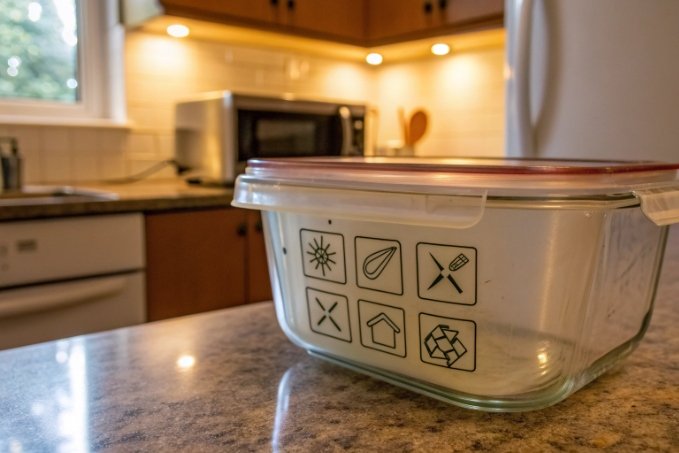
What good instructions include
Think of four simple questions:
-
Can this item go in the microwave?
- “Glass base is microwave-safe.”
- “Lid is not microwave-safe. Remove before heating.”
- “Do not microwave this product.”
-
How should it be used?
- “Use for reheating only, not for cooking from raw.”
- “Always place food or liquid inside. Do not heat empty.”
- “Avoid sudden temperature changes, such as freezer to microwave.”
-
How should pressure and steam be handled?
- “Loosen lid or open vent before heating.”
- “Do not clamp clips during microwaving.”
- “Stir and check temperature before serving, especially for children.”
-
When should the user stop using the item?
- “Do not use if glass is chipped, cracked, or badly scratched.”
- “Stop using if the product is dropped and shows visible damage.”
A sample instruction block could look like this:
Microwave use
– Glass container is microwave-safe for reheating food.
– Remove or vent lid before heating. Do not microwave with metal parts.
– Do not move directly from freezer to microwave. Let container reach fridge or room temperature first.
– Do not use if glass is chipped, cracked, or very scratched.
These messages line up well with consumer microwave oven safety tips from official agencies 7.
From a brand perspective, clear instructions reduce accidents, returns, and customer service issues. They also show that you understand how real people cook and reheat food at home, not only how the product looks in a catalogue.
Conclusion
Not all glass is microwave-safe. Real safety comes from the right glass type, the right lid design, clear markings, and simple, honest instructions that guide people to use your containers the way they were actually tested.
Footnotes
-
Overview explaining why some glassware is unsafe in microwaves and which types to avoid. Return ↩
-
Details how borosilicate glass resists thermal shock and why it suits microwave reheating and baking. Return ↩
-
Consumer guide describing hazards of leaded glass in microwaves and recommending safer drinkware choices. Return ↩
-
Manufacturer advice on metallic glazes and trims that can spark or arc inside microwave ovens. Return ↩
-
Explains glass microwave-safety factors, labels, and standardized symbols consumers should look for on containers. Return ↩
-
Shows a manufacturer-recommended water test for checking whether dishes or glassware are microwave-safe. Return ↩
-
USDA guidance on safe microwave cooking, container choice, reheating practices, and avoiding cold spots or burns. Return ↩






