
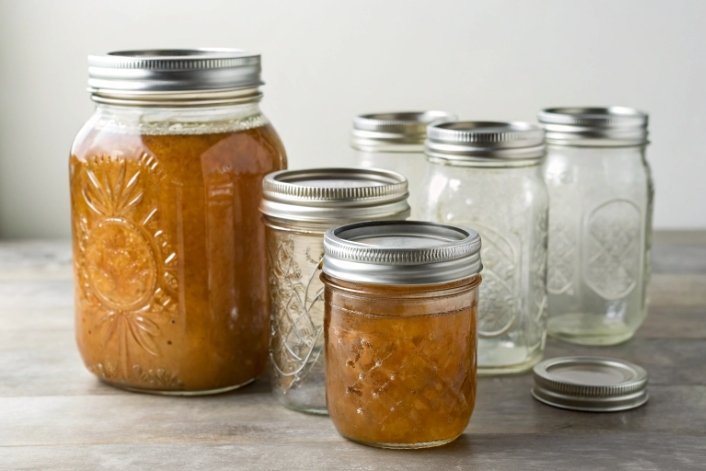
Many people use “Mason jar” and “canning jar” as the same thing. But in real projects, these two terms do not always point to the same grade of glass or the same safe use.
A Mason jar is a historic jar style, while a canning jar is any purpose-built glass container that is designed and tested for safe home food preservation. Some Mason-style jars are canning-grade, but many decorative or drink jars with “mason” in the name are not safe for water-bath or pressure canning.
When I work with buyers, I always ask one basic question first: “Is this jar for real heat-processing, or only for storage and display?” Once we make this clear, the choice between a Mason-style jar and a general canning jar becomes much easier and safer.
Are all Mason jars safe for water-bath or pressure canning?
Many people see the word “Mason” on a jar or in a product title and assume it is safe for canning. That is not always true. Some Mason-branded or mason-style jars are only for décor, drinks, or dry storage.
Not all jars sold as “Mason jars” are built and annealed for boiling-water or pressure canning. Only Mason-type jars that are specifically labeled and manufactured for home canning should go into a canner.
What really makes a jar “canning-grade”?
Extension services and the USDA guide are very clear: the best choice for home canning is regular- or wide-mouth Mason-type, threaded home-canning jars with self-sealing lids 1. :contentReference[oaicite:0]{index=0} These jars use tempered glass, controlled wall thickness, and standard neck sizes (like 70 mm and 86 mm) so they survive repeated hot-and-cold cycles and hold a stable vacuum.
By contrast, many mason-style products on the market today are:
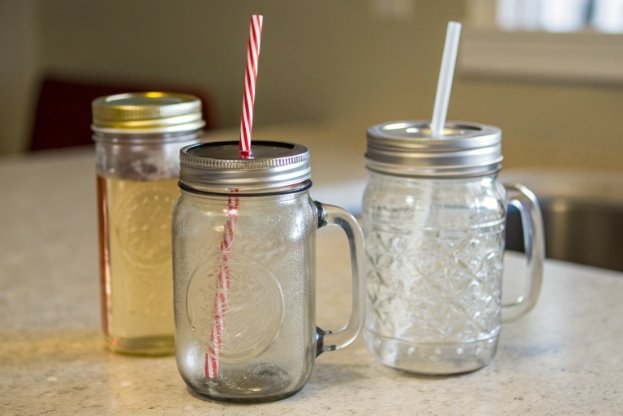
- Thin-walled drink mugs with handles
- Decorative jars with embossing or unusual shapes
- Vintage or antique jars long past their safe service life :contentReference[oaicite:1]{index=1}
- Re-used commercial sauce or mayo jars 2 that only passed lighter hot-fill or pasteurization tests :contentReference[oaicite:2]{index=2}
These may crack in a canner or fail to hold a safe seal, especially under pressure.
A simple way I explain it to buyers is:
| Jar type | Typical label / marketing | Water-bath canning? | Pressure canning? | Key risks if misused |
|---|---|---|---|---|
| Home-canning Mason jar (regular/wide) | “Mason-type”, “for home canning” | Yes, when used as directed | Yes, in tested sizes | Breakage if chipped, misused, or over-aged |
| Decorative mason-style drink mug | “drinking jar”, “decor”, handle on side | No | No | Thermal shock, shattering, no tested heat penetration |
| Re-used retail pasta / mayo jar | Brand label, twist-off lid | Strongly discouraged | No | Thin glass, non-standard finish, seal failure |
| Vintage wire-bale / glass-lid jar | “antique”, “vintage” | Only for dry storage / décor | No | Old glass fatigue, old rubber, uneven sealing |
University extensions even note that many jars that “look like canning jars” now carry a “not for canning” warning on the glass 3. :contentReference[oaicite:3]{index=3} As a manufacturer, when we build canning-grade lines, we follow thermal shock tests (such as ASTM C149 or EN 1183) to make sure jars survive rapid temperature changes during washing, hot-fill, or canning. :contentReference[oaicite:4]{index=4}
So the safe rule is simple:
- For water-bath or pressure canning, use only jars the maker states are safe for home canning.
- Treat all other “mason-style” items as storage or décor, not as processing containers.
How do two-piece lids compare to one-piece lug caps for sealing?
When people think of Mason jars, they usually picture a two-piece metal closure: a flat lid and a screw band. In retail shelves, many jars instead use a one-piece “lug cap” that twists on and off.
Both systems can hold a vacuum seal, but they are designed and tested for different processes.
Two-piece vs one-piece: what actually changes?
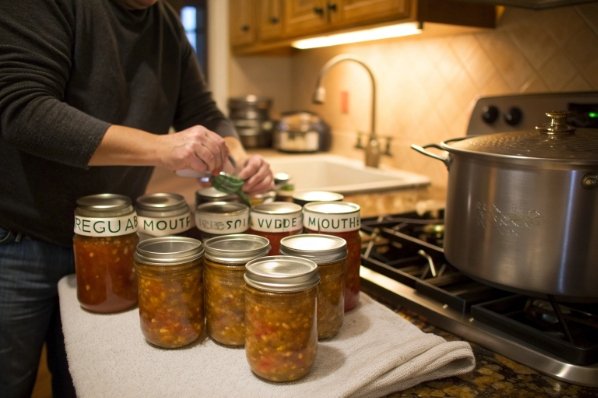
In modern canning guidelines for home food preservation 4, regular and wide-mouth Mason-type jars with two-piece self-sealing metal lids are the standard reference system. :contentReference[oaicite:5]{index=5} The flat lid has a plastisol sealing compound around the edge. During processing, the compound softens, air vents out, and then the lid cools and pulls down as a vacuum forms. The screw band only holds the lid in place while this happens; after cooling, you remove the band to check the seal.
Lug caps work differently. They are one-piece twist-off caps with a plastisol liner. They are popular for commercial hot-fill sauces, jams, and pickles because they are fast for automated lines. Many lug-cap systems are designed for industrial pasteurization or short hot-hold processes, not for home pressure canning. Only some brands test their lugs and jars as a system for higher thermal stress.
Here is a simple comparison I use in B2B talks:
| Feature | Two-piece Mason lid (flat + band) | One-piece lug cap |
|---|---|---|
| Typical use | Home canning (water-bath and pressure) | Retail hot-fill / pasteurization |
| Venting during process | Controlled venting through lid compound | Venting controlled by cap design |
| Re-use pattern | Band reusable, flat lid single-use | Cap often single-use in canning context |
| Consumer opening experience | Lid pops, band unscrews | Simple twist-off |
| Standard sizes | 70 mm, 86 mm Mason finishes | Many thread profiles and diameters |
| Canning guidance | Fully integrated into USDA / extension tests | Rarely covered in consumer canning guides |
For home canning, two-piece closures are the safe default because nearly all research-based recipes and processing schedules assume this system. Lug caps belong more to the world of commercial filling, where jar, cap, and process are validated together. :contentReference[oaicite:6]{index=6}
So my rule to buyers is:
- If your customer is a home canner, use Mason-style jars with two-piece lids.
- If your customer fills in a factory and uses hot-fill or tunnel pasteurization, a lug cap on a canning-grade retail jar can work very well, as long as the whole system passes validation.
When should I choose a Mason jar vs. a standard retail jar?
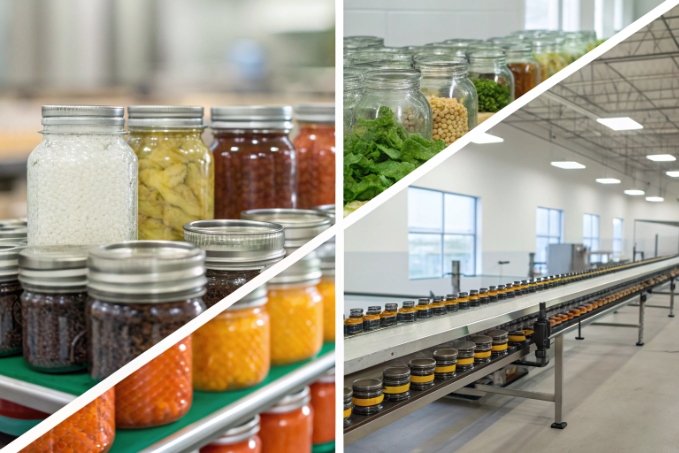
A Mason jar is not always the best business choice, even if it is safe for canning. Standard “retail jars” often win on filling speed, label space, and pallet efficiency. The right pick depends on use case, channel, and brand story.
Mason-type jars are best when the product must survive true home canning or must clearly signal “homemade, refillable, reusable” to consumers. Standard retail jars are better when the focus is industrial filling efficiency and shelf appearance.
Match jar type to real-world use
In my projects, four typical scenarios show up again and again:
-
Home-canning customers
- They want jars that match USDA-style instructions, can use off-the-shelf lids, and fit home canners.
- Regular- and wide-mouth Mason jars in tested sizes (half-pint, pint, quart) are ideal. :contentReference[oaicite:7]{index=7}
-
Brand that hot-fills once in factory, no further canning
- For jams, sauces, pickles, and condiments that are hot-filled and capped once, standard retail jars with lug caps often give better pallet utilization and cost.
- These jars still need canning-grade glass and food-contact compliance, but the neck finish follows lug standards rather than Mason threads.
-
Dry goods and lifestyle packaging
- For coffee, spices, bath salts, or candles, the jar does not see canner-level thermal shock.
- Here, mason-style jars, amber jars, or special shapes focus on aesthetics and brand value. The glass still needs food-contact compliance, but it does not have to follow Mason neck standards.
-
Refill and circular-packaging concepts
- Some brands want consumers to refill from bulk stations or return jars.
- A sturdy Mason-type jar with standardized mouth size and a strong shoulder is easier to reuse safely compared with many lightweight retail jars.
A simple decision table helps buyers:
| Main use case | Better choice | Why |
|---|---|---|
| Consumer home canning | Mason-type canning jar | Standard sizes, standard lids, tested heat penetration |
| Factory hot-fill, no consumer re-canning | Retail canning-grade jar | Better filling speed, lower weight, strong shelf look |
| Dry storage / décor | Mason-style or custom | Freedom in shape and color, no canner stress |
| Refill / reuse program | Thick Mason-type jar | Higher durability and strong consumer perception of quality |
So the real question is not “Mason vs not Mason”. The better question is: “What process, what channel, and what story do we need this glass to survive and carry?”
Which certifications define canning-grade glass for food use?
“Canning-grade glass” sounds like a single global standard, but in practice it is a mix of food-contact regulations, thermal shock tests, and factory-level quality systems.
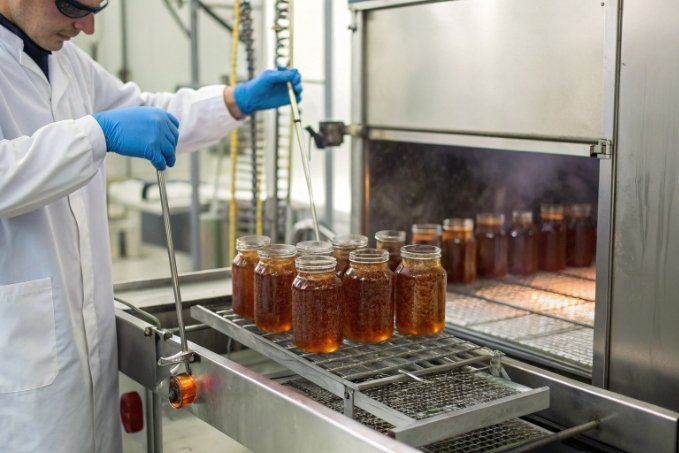
For food contact, the key rules come from agencies like the FDA in the U.S. 5 and Regulation (EC) No 1935/2004 6 in the EU. :contentReference[oaicite:8]{index=8} For durability, glass makers follow test methods for thermal shock and internal pressure. For overall process control, packaging plants often certify to ISO 22000 or FSSC 22000 food safety systems 7. :contentReference[oaicite:9]{index=9}
What should buyers look for in “canning-grade” claims?
Here is how I usually break it down when a customer asks for “jars safe for canning”:
-
Food-contact compliance by region
- United States: Materials in contact with food must follow FDA rules for food-contact substances and indirect additives, in Title 21 CFR Parts 170–189. :contentReference[oaicite:10]{index=10}
- European Union: Glass containers must comply with Framework Regulation (EC) 1935/2004 plus Good Manufacturing Practice rules (EC 2023/2006). :contentReference[oaicite:11]{index=11}
-
Thermal shock and mechanical tests
- Glass jars that must survive washing, hot-fill, pasteurization, or canning are tested for thermal shock resistance. Standards such as ASTM C149 and EN 1183 describe how to cycle jars between hot and cold water and check for failure. :contentReference[oaicite:12]{index=12}
- For internal pressure strength, glassmakers may use standards like ASTM C147 or similar methods to simulate pressure in carbonation or retort processing. :contentReference[oaicite:13]{index=13}
-
Plant-level food safety systems
- Many food-packaging plants use ISO 22000 or FSSC 22000 to show that they control hazards along the packaging chain. :contentReference[oaicite:14]{index=14}
- These certifications do not say “canning jar” directly, but they show that the plant has traceability, hazard analysis, and continuous improvement in place.
Here is an overview table that helps buyers ask the right questions:
| Region / aspect | Main standard or regulation | What it covers | What you should ask the supplier |
|---|---|---|---|
| U.S. food contact | FDA 21 CFR Parts 170–189 | Safety of materials in contact with food | Compliance statement and supporting lab reports |
| EU food contact | Regulation (EC) No 1935/2004 + 2023/2006 | Overall food-contact safety and GMP | Declaration of compliance, migration test results |
| Thermal shock | ASTM C149, EN 1183 | Resistance to sudden temperature changes | Test reports with ΔT and pass/fail criteria |
| Internal pressure | ASTM C147 and related methods | Strength under internal pressure | Data on burst pressure and safety margins |
| Food safety system | ISO 22000, FSSC 22000 | Factory food-safety management system | Valid certificates and audit scope including glass |
Right now, there is no single global “canning jar” logo that automatically covers all these points. So for serious water-bath or pressure canning projects, I always suggest three checks:
- Confirm the jar is sold and labeled for canning, not only storage.
- Confirm food-contact compliance for your target market.
- Confirm that the glass has thermal shock and strength testing suitable for the process (water-bath, pressure, hot-fill, or pasteurization).
When these boxes are all ticked, a mason-style jar and a non-Mason canning jar can both be truly “canning-grade”. The name on the glass matters less than the design, the testing, and the system behind it.
Conclusion
Mason jars are a famous style, but canning safety depends on purpose-built glass, tested closures, and real certifications, not just the word “mason” on a box.
Footnotes
-
Extension guide on recommended Mason-type jars and lids for safe home canning and why they are preferred. ↩︎ ↩
-
National Center for Home Food Preservation advice on commercial jars, breakage risk, and why they are discouraged for canning. ↩︎ ↩
-
Ohio State Extension explanation of decorative jars labeled “not for canning” and why they are unsafe in canners. ↩︎ ↩
-
USDA Complete Guide to Home Canning reference for tested jar types, lid systems, and processing recommendations. ↩︎ ↩
-
FDA overview explaining how packaging and other food-contact materials are regulated and evaluated for consumer safety. ↩︎ ↩
-
European Commission summary of Regulation (EC) 1935/2004 framework for food-contact materials, including glass packaging. ↩︎ ↩
-
ISO 22000 standard describing food safety management systems applicable to food and packaging manufacturers worldwide. ↩︎ ↩






