
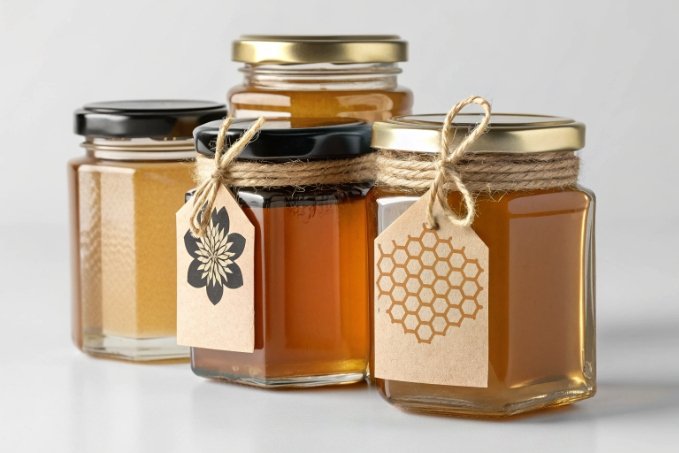
Honey tastes best when it stays pure. Poor packaging lets air, light, or smells creep in. Good glass solves this. Let’s make smart choices.
A glass honey jar is a purpose-built, airtight glass container for honey. It protects taste, blocks odors, shows color, and supports safe long-term storage and display.
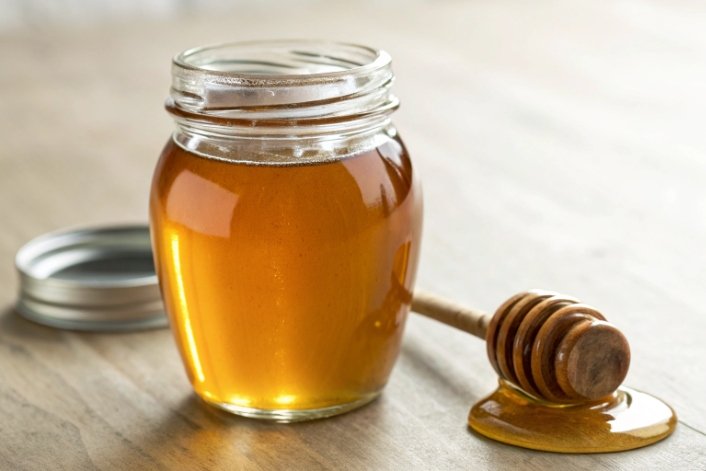
A jar is more than a bottle. Honey is hygroscopic and light-sensitive 1. So the right glass, closure, and handling matter. With a simple checklist, you avoid waste and returns.
Is glass or plastic better for long-term honey storage?
Honey is sensitive. Air adds moisture. Heat and light dull flavor and color. The container must be clean and tight.
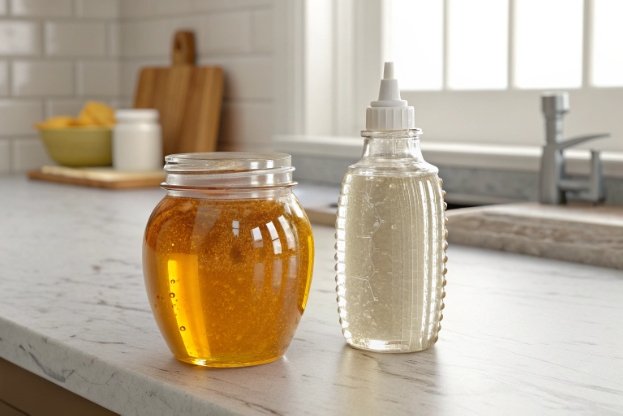
Glass wins for long-term storage. It is inert, non-porous, and odor-free. It does not leach. It holds a seal. Plastic is light and cheap, but it can absorb smells and scratch.
The deeper look: performance, quality, and shelf life
Glass is chemically stable and ideal for long-term honey storage 2. Honey has low pH and natural acids. Glass does not react. Plastic can pick up pantry odors. It can pass a faint taste into the product over time. That hurts brand trust. Glass is also a better oxygen barrier. This helps slow flavor fade and limits water uptake. Honey likes to pull moisture from air. If water creeps up near ~20%, fermentation risk rises. A tight glass closure stops that.
Light matters too. Light breaks down enzymes and raises HMF levels 3. Clear glass shows off color and clarity, which helps sales. Amber glass cuts light and protects quality. Both options can fit one label and one lid spec. For retail, use clear for visual appeal and amber for sensitive monoflorals or hot climates. Store at room temperature. Do not refrigerate. Cold speeds crystallization. If crystals form, a gentle warm water bath 4 returns flow.
Plastic has a place. It is light, unbreakable, and great for squeeze bottles used fast. For e-commerce drops, plastic can reduce damage claims. But for long-term storage, aging stock, premium lines, and export, glass is the better bet. It keeps flavor honest. It looks premium on the shelf. It recycles well. It signals care.
| Factor | Glass Jar | Plastic Bottle |
|---|---|---|
| Flavor / odor transfer | None | Possible over time |
| Oxygen / moisture barrier | Excellent | Good to fair |
| Light protection | Amber glass protects well | Opaque protects, but hides product |
| Break resistance | Lower | Higher |
| Look and brand feel | Premium, clear showcase | Casual, practical |
| Best use | Long-term, premium, export | Squeeze, kids, travel, fast turnover |
What sizes and shapes of glass honey jars are best for wholesale orders?
Size and shape drive cost, shelf fit, and brand story. Buyers also expect standard weights and necks.
Top sellers are 8 oz (½ lb), 12 oz, and 16 oz (1 lb) in Queenline, hex, round, and Muth styles. Standard necks (e.g., 48-400, 58-400, 63 mm lug) simplify lid sourcing.
The deeper look: formats, packaging density, and market fit
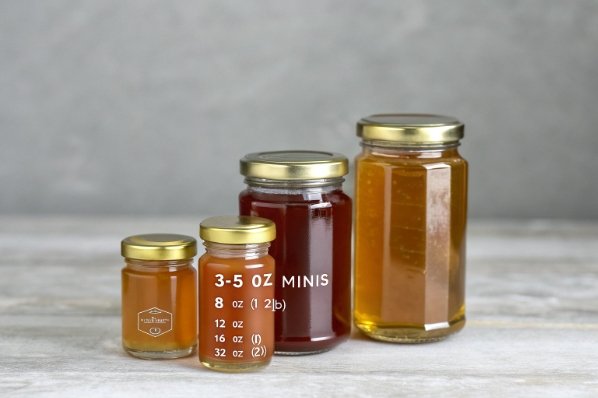
Honey sells in weight, but jars are sized by volume and finish. Plan your line around three anchors. The 8 oz (½ lb) for gifts and trials. The 12 oz for grocery mid-tier. The 16 oz (1 lb) for core SKUs. Add a 32 oz (2 lb) for families and foodservice. Keep neck finishes common, so you can order lids from multiple suppliers when demand jumps.
Shapes tell a story. Queenline jars have a tapered waist that shows color bands clearly. They signal tradition. Hexagonal honey jars 5 pack tight in cartons and look “honeycomb.” They stack visual value and save space. Round or oval jars feel modern and label easily on automatic lines. Muth jars (embossed, cork or screw top variants) speak to craft and heritage. For e-commerce, choose round or hex with wide shoulder radius to cut breakage. For gift sets, mix 3–5 oz minis. They ship light and invite sampling.
Think about pallet fit and case counts. A 12-pack case for 8–16 oz jars is common. Keep the case height under standard shelf constraints. Use partitions for hex and muth to avoid scuff marks. Choose flint (clear) for color-driven sales. Choose amber for delicate varietals or hot markets. Offer both under one label die line to cut prepress cost.
| Common Weight | Typical Volume | Popular Finish | Notes |
|---|---|---|---|
| ½ lb (8 oz) | ~240 ml | 48-400 / 58-400 | Trials, gift boxes, farmer’s market |
| 12 oz | ~355 ml | 58-400 / 63 lug | Mid-tier grocery, e-commerce set piece |
| 1 lb (16 oz) | ~473 ml | 63 lug / 63-400 | Core SKU, wholesale, export friendly |
| 2 lb (32 oz) | ~946 ml | 63-400 / 70 lug | Family size, foodservice, bakery |
| Mini (3–5 oz) | 90–150 ml | 43-400 / 48-400 | Samplers, wedding favors, gift packs |
Which lid and seal options (lug, twist-off, tamper-evident) work best for honey jars?
The lid locks quality. It manages headspace, oxygen, and leaks. It also carries your brand color.
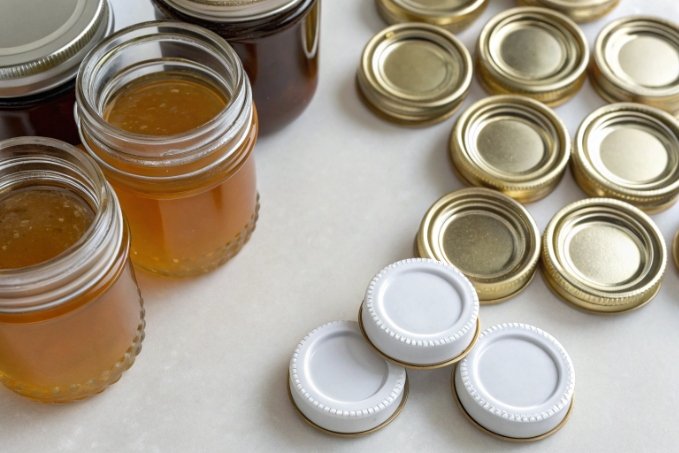
Use lug or continuous-thread (CT) metal caps with plastisol for tight seals. Add tamper-evident bands or shrink sleeves. For squeeze blends, use flip tops with pressure-sensitive liners.
The deeper look: closures, liners, and leak control
Lug (twist-off) caps seal fast and strong. They fit many honey necks like 63 mm lug. The cap turns a small angle and pulls down evenly. It is common in EU lines and large runs. CT (continuous-thread) caps, noted as 48-400, 58-400, 63-400, turn multiple times. They are flexible for hand filling and small automatic lines. Both can use plastisol liners 6 that set firm as the filled product cools. For hot-fill honey sauces or flavored honeys, this gives a robust seal.
For retail security, add tamper-evident features: perforated shrink bands, breakaway button caps, or TE lug caps. Shrink bands are simple, colorable, and cheap. Button caps signal seal integrity at a glance. For sticky products like honey, drip control matters. Choose a smooth-lip finish and consider a pressure-sensitive (PS) liner inside the cap for added leak protection during parcel shipment. For plastic flip tops on glass, use a matching 38/400 or 43/400 neck on specialty jars and specify a flow reducer or orifice if you are selling runny acacia or warm-climate stock.
Mind torque. Over-tight caps can “back off” after cooling. Under-tight caps can weep in transit. Validate closure torque on your line. Run drop tests and hot-room holds. If you export, confirm cap coating and steel grade to avoid rust in humid ports. Offer black, gold, white, and brushed metal colors to match brand tiers. Keep two colors in stock to hedge supply risk.
| Closure Type | Typical Neck | Liner/Seal | Best Use Case |
|---|---|---|---|
| Lug (TO) | 63 mm, 70 mm | Plastisol | Mid/large runs, EU specs, hot-fill |
| CT (400) | 48-400, 58-400, 63-400 | Plastisol / PS | Small lines, USA specs, flexible fill |
| TE Lug | 63 mm | Button + plastisol | Tamper show, export, retail chains |
| Shrink Band | Any | Heat-shrink PVC/PET | Simple TE, color branding |
| Flip Top | 38/400, 43/400 | PS or induction | Honey blends, sauces, squeeze control |
Can I customize glass honey jars with logo, color, and labels, and what are the MOQ and lead time?
Branding turns a jar into a product. Shape, color, and print carry your story from shelf to hand.
Yes. We support custom shape, embossing, frosting, spray color, hot stamp, screen print, decals, and labels. Standard MOQ is 10,000 pcs. Lead time is project-based with fast response.
The deeper look: decoration, components, and project flow
Customization starts with the vessel. Choose a stock shape to cut mold cost, or request a private mold for a unique outline or embossed logo. Stock shapes include queenline, hex, round, and muth. For color, pick flint (clear) to show clarity, or amber to protect from light. We offer spray-coated colors, frosting, UV coating, electroplating, and engraving. Add hot stamping for metallic accents. Silkscreen printing 7 gives durable graphics. For short runs or seasonal SKUs, use high-tack labels on a smooth panel; for heavy texture or hex, plan label die cuts that bridge edges cleanly.
Caps can match the look. Order gold, black, or white metal caps for classic lines. For premium tiers, specify wood-top or brushed metal effects. Add tamper-evident bands, perforated sleeves, or tear strips. If you sell in hot regions, consider induction liners or PS liners to stop weeping. We can bundle jar + cap + box + label to keep sourcing simple and timelines tight.
Project flow is simple: confirm size and neck finish → pick glass color and decoration → pick cap and liner → provide artwork → approve pre-production samples → run mass production → pack with partitions and export cartons. Our typical MOQ is 10,000 pcs for custom glass. For decoration on stock glass, MOQs can be lower per color or print. We operate multiple lines with an annual capacity of ~30,000 tons, so scale is not a problem. Lead time depends on mold work and decoration steps. Pilot samples come first, then full run. We give quick updates and track your order end to end.
| Custom Option | Methods Offered (examples) | Notes |
|---|---|---|
| Color / Finish | Spray coat, frosting, UV coat, electroplate | Amber helps light protection |
| Graphics / Logo | Silk screen, decal, hot stamping, engraving | Multi-color prints supported |
| Surface Texture | Frosted, matte, partial mask | Improves grip and premium feel |
| Emboss / Deboss | Private mold, shoulder or panel | Strong brand presence |
| Closures | Lug / CT, TE bands, flip tops | Color match available |
| Packaging | Labels, boxes, gift sets | One-stop kitting saves time |
| MOQ | 10,000 pcs (custom glass) | Lower MOQs for decorated stock items |
Conclusion
Choose glass for long-term honey quality. Pick proven sizes and lids. Seal tight, protect from light, and brand with care. Simple choices protect flavor and profit.
Footnotes
-
Explains why honey attracts moisture and reacts to light, impacting storage quality. ↩︎ ↩
-
Honey board guidance on storing honey at room temperature for best flavor and safety. ↩︎ ↩
-
Technical discussion of HMF development in honey and how light and heat accelerate it. ↩︎ ↩
-
Step-by-step instructions for safely decrystallizing honey using warm water without overheating. ↩︎ ↩
-
Supplier overview of standard hexagonal honey jar sizes and packing efficiency. ↩︎ ↩
-
Packaging guide comparing plastisol liners with other closure liners for hot-filled, viscous products. ↩︎ ↩
-
Decoration guide on silkscreen printing directly on glass containers for durable branding. ↩︎ ↩






